Plant Overview
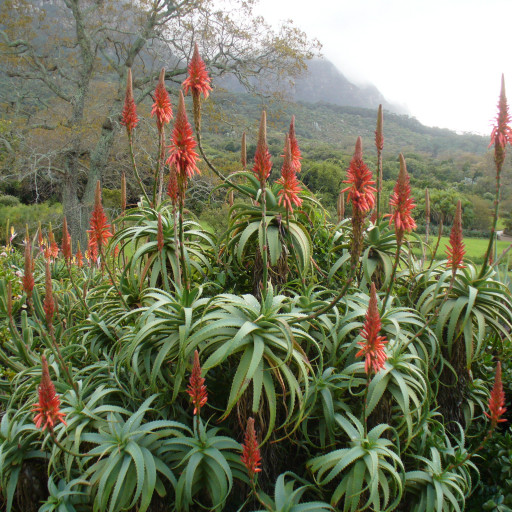
Often called the Krantz Aloe or Candelabra Aloe, this dramatic succulent is a majestic, woody cousin of the common Aloe Vera. Originating from the rocky ridges (or "krantzes") of South Africa, it is cherished worldwide for its architectural beauty and its vibrant, torch-like winter blooms that provide a vital nectar source for birds when other plants are dormant.
🔍 How to Identify
- 🌿 Growth Habit: Unlike many flat-growing succulents, this species forms a large, multi-stemmed shrub that can reach heights of 6 to 10 feet, resembling a massive, branched candelabra.
- 🍃 The Leaves: The succulent leaves are sword-shaped, deep green to blue-green, and arranged in dense rosettes. They feature conspicuous, pale-colored teeth along the margins.
- 🔥 The Flowers: It produces large, cone-shaped flower spikes in mid-winter. These "torches" are usually a fiery deep orange, though yellow and bicolor varieties occasionally appear.
🏡 In Your Garden
- 🛡️ Living Fences: Due to its massive size and prickly leaves, it is traditionally used in Africa as a "living fence" to keep livestock in or predators out. In a home garden, it makes an excellent, drought-tolerant security hedge.
- ☀️ The "Krantz" Strategy: In the wild, it clings to rocky cliffs. In your garden, this means it requires exceptional drainage. It hates "wet feet," so if your soil is heavy clay, plant it on a slope or in a raised rockery to prevent root rot.
⚠️ Safety & Toxicity
- 🐾 Pet Warning: This plant is considered toxic to dogs and cats. If ingested, the saponins and anthraquinones can cause vomiting, diarrhea, and tremors.
- 🧴 Skin Sensitivity: While the clear inner gel is widely used to soothe minor burns (similar to Aloe Vera), the yellow "bitter sap" found just under the skin can be a potent skin irritant and acts as a harsh laxative if consumed.
✨ Fun Fact
During the aftermath of the Hiroshima bombing in WWII, Aloe arborescens became famous in Japan for its use in treating radiation burns, leading to it being affectionately nicknamed "Iryo-yo Aloe" (Medical Aloe) in Japanese culture.

Detailed Care Instructions
| Color | Red To Orange |
| Soil Ph | 5-6.5 |
| Humidity | Dry |
| Lighting | Full Sun |
| Toxicity | Toxic |
| Soil Type | Sandy, Loamy |
| Bloom Time | Late Fall And Early Winter |
| Difficulty | Easy |
| Plant Type | Evergreen Shrub |
| Mature Size | Six To Nine Ft Height, Six To Nine Ft Width |
| Native Area | Eastern And Southern Africa |
| Temperature | 18°C - 30°C |
| Sun Exposure | Full Sun |
| Hardiness Zones | 9-11 |
To grow Aloe Arborescens plants, you can follow these steps:
- Select a suitable location: Choose an area that receives plenty of bright, indirect sunlight. Aloe Arborescens prefers warm temperatures, around 70-80°F (21-27°C), and cannot tolerate frost or extreme cold.
- Prepare the soil: Ensure the soil is well-draining and sandy. If the soil is heavy or compacted, consider adding some organic matter like sand or perlite to improve drainage.
- Acquire an Aloe Arborescens plant: You can purchase a young plant from a nursery or propagate one from an existing plant. To propagate, cut off a healthy side-branch from the mother plant and allow it to callous over for a few days before planting.
- Planting: Dig a hole in the prepared soil that is slightly wider and deeper than the root ball of your Aloe Arborescens. Place the plant in the hole, making sure the roots are covered with soil. Leave some space around the base of the plant to allow for water absorption.
- Watering: Aloe Arborescens is a succulent and requires watering only when the soil is dry. Water the plant thoroughly, allowing the excess water to drain away. Avoid overwatering, as this can lead to root rot.
- Fertilizing: Aloe Arborescens does not require frequent fertilization. Use a balanced, slow-release fertilizer or a succulent-specific fertilizer once or twice a year, following the recommended dosage on the package.
- Pruning: If your Aloe Arborescens becomes crowded or outgrows its space, you can prune it by removing older or damaged leaves at the base of the plant. Use clean, sharp scissors or pruning shears to avoid damaging the plant.
- Protection from cold: If you live in an area with cold winters or frost, bring your Aloe Arborescens indoors or provide some form of protection during the colder months. Aloe Arborescens is not frost-tolerant and can be damaged or killed by freezing temperatures.
By following these steps and providing proper care, your Aloe Arborescens plant should grow and thrive.

Place in a bright room that is sun drenched almost all day. Or directly in a south-facing window.

To water this plant, ensure that the soil is dry before watering it. Water it thoroughly by pouring water directly into the soil and avoid watering the leaves. Ensure that any excess water is drained away from the pot to prevent root rot. During the winter season, reduce watering to once a month to prevent over-watering.
To fertilize this plant, you should use a balanced fertilizer with a 10-10-10 NPK ratio. Fertilize once per month during the growing season (spring and summer). Apply the fertilizer to the soil around the base of the plant, being careful not to get any on the leaves. Water the plant after fertilizing to help the nutrients reach the roots. Avoid fertilizing during the plant's dormant period (fall and winter) as this can damage the plant.
Aloe Arborescens thrives in well-draining soil that is slightly acidic and contains a mix of organic matter and mineral soil components. It is important to provide soil with good drainage to prevent root rot, as well as sufficient nutrients to support growth. You can use a soil mix that contains perlite, coarse sand, and peat moss, mixed with potting soil or a mix of pumice and compost. Avoid using heavy, clay soils or those that hold too much moisture. Additionally, you can add compost or a slow-release fertilizer to the soil to provide additional nutrients.
Aloe arborescens is a succulent plant that can be propagated easily using cuttings. Here are the steps to propagate Aloe arborescens without using its common names:
- Use a clean, sharp blade to cut a stem from the Aloe arborescens plant. The stem should be healthy and free from any damage.
- Allow the cutting to dry for a day or two. This will help it to form a callus, which will protect it from infection when it is planted.
- Plant the cutting in a pot filled with well-draining soil. Make a hole in the soil using a pencil or your finger, and then place the cutting in the hole.
- Water the cutting lightly, then allow the soil to dry out before watering again. Aloe arborescens prefers dry soil, so do not over-water the plant.
- Keep the pot in a warm, bright location, but out of direct sunlight. Aloe arborescens can be propagated year-round, but it is best to do it in the spring or summer when the plant is actively growing.
- After a few weeks, the cutting should start to root and new growth should appear. Once the plant has established roots, it can be transferred to a larger pot or planted outside in a sunny, well-draining location.
By following these steps, you can easily propagate Aloe arborescens from a single cutting, and soon enjoy multiple plants in your collection.








