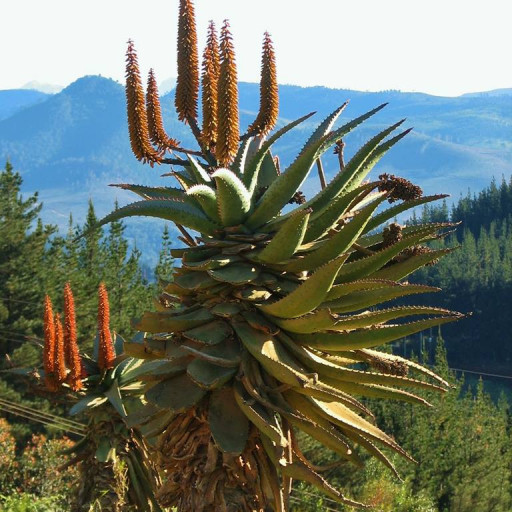
Plant Overview
Known as the Cape Aloe or Bitter Aloe, this South African giant is the rugged, architectural cousin of the common Aloe Vera. Standing tall with a thick, woody trunk and a crown of succulent leaves, it has been a staple in traditional medicine for centuries. In the wild, its fiery flower spikes act like a beacon for sunbirds and bees across the rocky landscapes of the Cape provinces.
🔍 How to Identify
- ⚔️ The Foliage: Broad, fleshy leaves that are dull green or blueish-gray. Unlike the smooth Aloe Vera, these leaves are armed with dark brown or reddish teeth along the edges and occasionally on the leaf surfaces.
- 🕯️ The Flowers: It produces a spectacular "candelabra" of flowers. These are dense, upright spikes of bright orange or deep red tubular blooms that tower above the leaves.
- 🪵 The Trunk: As the plant matures, it develops a single, sturdy stem (trunk) covered in the dried, persistent remains of old leaves, giving it a shaggy, "bearded" appearance.
🏡 In Your Garden
- ☀️ Sun-Seeker: This plant is a true sun-worshiper. To keep its structural "fierce" look and ensure it blooms in winter, it needs the brightest spot in the garden or a very sunny south-facing window.
- 🪨 Drainage is Key: Aloe ferox hates "wet feet." In its native habitat, it grows on rocky slopes where water drains away instantly. Use a cactus-specific gritty mix and a pot with large drainage holes to prevent root rot.
- 🌬️ Airflow: It prefers a breezy environment. Stagnant, humid air can lead to fungal spots on those beautiful blue-green leaves.
⚠️ Safety & Toxicity
- 🐾 Pets: Toxic to cats and dogs. The plant contains saponins and anthraquinones which, if ingested, can cause vomiting, tremors, and digestive distress.
- 🩹 Humans: While the inner clear gel is often used for skin burns, the yellow sap (found just under the skin) is an extremely potent laxative. Do not ingest any part of the plant without professional medical guidance.
- 🧤 Physical Hazard: The "Ferox" in its name means "fierce." Its spines are sharp and can easily puncture skin; always wear thick gardening gloves when repotting or pruning.
✨ Fun Fact
The yellow sap of the Bitter Aloe is so intensely bitter that it has been used for generations as a "weaning aid" to stop thumb-sucking or nail-biting. It is also the primary ingredient in "Cape Aloes," a medicinal resin traded globally since the 1700s!

Detailed Care Instructions
| Humidity | Dry |
| Lighting | Full Sun |
| Toxicity | Poisonous |
| Difficulty | Easy |
| Hibernation | Cold Period |
| Temperature | 21°C - 35°C |
| Hardiness Zones | 9 - 11 |
To grow an Aloe Ferox plant, you can follow these steps:
- Select a suitable location: Aloe Ferox plants require bright but indirect sunlight. Choose a spot in your home or garden where they will receive ample light throughout the day.
- Planting: Use a well-draining potting mix or soil with added sand or perlite. Fill a pot or garden bed with the soil mixture and create a hole large enough for the plant's roots to fit comfortably. Place the Aloe Ferox plant in the hole and backfill with soil, gently firming it around the base of the plant.
- Watering: Aloe Ferox is a drought-tolerant plant, so it is important not to overwater. Water it sparingly, allowing the soil to dry between watering sessions. During the winter months, reduce watering frequency further.
- Temperature and humidity: Aloe Ferox plants prefer warm temperatures between 70-85°F (21-29°C) during the day and slightly cooler temperatures at night. They can tolerate humidity but thrive in drier conditions.
- Fertilizing: Aloe Ferox does not require much fertilization. You can use a balanced, water-soluble fertilizer diluted to half strength once a month during the growing season (spring and summer).
- Pruning: If necessary, trim any dead or damaged leaves using clean, sharp shears. This will promote a healthier appearance and prevent the spread of diseases.
- Propagation: Aloe Ferox can be propagated by separating the offshoots (pups) from the main plant. Wait until the pups are at least three to four inches tall before gently removing them and planting them in a separate container or area. Allow the cut to callous over for a few days before planting.
- Pests and diseases: Aloe Ferox plants are generally resistant to pests and diseases. However, keep an eye out for common houseplant pests such as mealybugs or scales. If you notice any infestation, treat it promptly with organic or chemical insecticides.
Remember to research and understand the specific care requirements of Aloe Ferox to ensure its healthy growth and development.

Place in a bright room that is sun drenched almost all day. Or directly in a south-facing window.

To water this succulent plant, select a well-draining soil mixture that will prevent water from accumulating around the roots. Wait until the soil has almost entirely dried out before watering, then give it a deep watering, allowing excess water to drain out of the drainage holes. Avoid overwatering, as this can rot the roots and cause damage to the plant. Keep it in a sunny area with good ventilation, and only water once every 2-3 weeks during the growing season, reducing to once a month during dormant periods.
- Use a balanced, water-soluble fertilizer.
- Dilute the fertilizer according to the instructions on the package.
- Apply the fertilizer to the soil around the base of the plant.
- Water the plant lightly after fertilizing to help the nutrients soak in.
- Fertilize once a month during the growing season (spring and summer).
The ideal soil for Aloe Ferox plant is one that is well drained and rich in minerals, organic matter, and nutrients. A mixture of sand, clay, and peat moss can provide the right texture and structure for the plant to thrive. The soil should also have a pH between 6 and 7, which is slightly acidic to neutral. Adding perlite or vermiculite can enhance drainage and aeration, preventing waterlogging and root rot. As Aloe Ferox is sensitive to overwatering, the soil should be allowed to dry out between watering. Therefore, a soil with good drainage is essential.
To propagate this plant, you can take a cutting, which is a smaller piece of the plant that can grow roots and become a new plant. Cut off a piece of the stem using a sharp, sterile blade or scissors. Make sure the cutting is at least a few inches long and includes a few leaves.
Once you have your cutting, let it dry for a few days to allow the cut to callus over. This helps prevent the cutting from rotting when you plant it. After it has callused over, plant the cutting in well-draining soil. You can also dip the cut end in rooting hormone to encourage root growth.
Water the cutting sparingly until it has established roots and new growth. Avoid overwatering, as this can cause root rot. Keep the plant in a bright, sunny area until it is ready to be transplanted into a larger pot or outdoors.








