Plant Overview
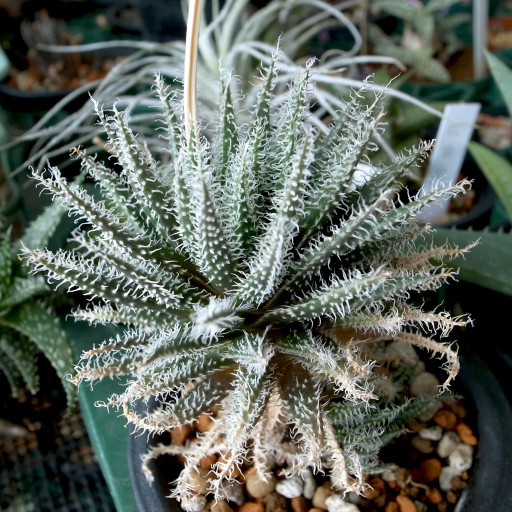
Often called the "Haworthia-leaved Aloe," this tiny Malagasy treasure is a master of mimicry. It looks so much like its cousins in the Haworthia genus that even experts sometimes have to look twice! Native to the high-altitude granite outcrops of Madagascar, this miniature succulent is perfect for collectors who love intricate, "frosty" textures and compact growth.
🔍 How to Identify
- 🌵 The Rosette: It grows in tight, low-to-the-ground rosettes that rarely exceed 3 or 4 inches in diameter, often forming dense clumps over time.
- 🪶 White Bristles: The most striking feature is the "beard" of soft, white, hair-like spines (cilia) that cover both the edges and the surface of the dark green leaves.
- 🌸 The Bloom: It sends up a surprisingly tall, slender flower spike topped with tiny, pale orange or reddish-pink tubular flowers that attract hummingbirds in their natural habitat.
🏡 In Your Garden
- ⛅ Light Nuance: Because it naturally grows tucked into rocky crevices, it prefers bright, indirect light rather than the scorching, direct sun that larger Aloes crave. If the leaves turn a deep reddish-bronze, it’s likely getting a bit too much sun.
- 🪨 Substrate Choice: This plant has a very fine root system compared to its bulkier cousins. It thrives in a grittier, faster-draining mix (like a 50/50 blend of potting soil and pumice) to prevent the roots from "suffocating" in moisture.
⚠️ Safety & Toxicity
- 🐾 Mildly Toxic: Like many species in the Aloe genus, it contains saponins and anthraquinones which are defense mechanisms against herbivores.
- 🚫 Keep Away from Pets: If ingested by cats or dogs, it can cause stomach upset, lethargy, or diarrhea. While it isn't usually life-threatening, it is best kept on a high shelf out of reach of curious nibblers.
✨ Fun Fact
- 🔬 A Botanical Twin: The species name haworthioides literally means "resembling a Haworthia." This is a classic example of convergent evolution, where two different plants evolve similar appearances because they live in similar environmental niches!

Detailed Care Instructions
| Lighting | Full Sun |
| Hardiness Zones | Min 9B |
To grow Aloe Haworthioides, also known as the Zebra Aloe, follow these steps:
- Choose the right location: Place your plant in an area that receives bright indirect sunlight. It can tolerate some direct sunlight, but too much can cause sunburn. It thrives in temperatures between 65-80°F (18-27°C).
- Select the right soil: Use a well-draining cactus or succulent mix. Alternatively, you can create your own mix by combining regular potting soil with perlite or sand in a 2:1 ratio.
- Pots and containers: Use a pot with drainage holes to prevent overwatering and root rot. A clay or terracotta pot works well as it allows excess moisture to evaporate.
- Watering: Water your Aloe Haworthioides thoroughly, allowing the soil to dry out completely before the next watering. It is better to underwater than to overwater, as this plant stores water in its leaves. Too much water can lead to root rot. During winter months, reduce watering frequency as the plant goes into a period of dormancy.
- Fertilization: Use a balanced succulent or cactus fertilizer during the growing season (spring to early fall). Follow the packaging instructions for proper application.
- Propagation: Aloe Haworthioides can be propagated through offsets, which are the small plants that grow around the base of the mother plant. Gently remove the offsets and plant them in well-draining soil. Allow the cut area to dry for a day or two before watering.
- Pruning: Remove any dead or damaged leaves by snipping them off at the base. This will help maintain a neat appearance and prevent any potential disease spread.
- Pests and diseases: Aloe Haworthioides is generally resistant to pests and diseases. However, watch out for common succulent pests such as mealybugs and spider mites. Treat infestations with suitable organic or chemical pest control methods.
Remember that each plant has specific preferences, and it's important to observe and adjust care as needed. Enjoy watching your Aloe Haworthioides grow and thrive!

Place in a bright room that is sun drenched almost all day. Or directly in a south-facing window.

To water this plant, you should wait until the top inch of soil is completely dry before watering. When it is time to water, you should thoroughly soak the soil until water drains out of the bottom of the pot. It is important to avoid getting water on the leaves or in the rosette, as this can lead to rot or other issues. This plant prefers well-draining soil and should never be left in standing water. In general, it is best to err on the side of underwatering rather than overwatering, as this plant is quite drought-tolerant.
To fertilize this plant, use a water-soluble fertilizer that contains equal parts of nitrogen, phosphorus, and potassium. Dilute the fertilizer to half-strength and apply it to the soil once a month during the growing season. Do not fertilize during the winter months. Over-fertilizing can cause damage to the plant's roots.
When planting Aloe Haworthioides, it is important to choose a soil that is well-draining and rich in nutrients. The soil should have a balanced pH level, typically ranging from 6.0 to 7.0, which will provide optimal growing conditions for the plant. A mixture of sand, perlite, and peat moss is commonly used for planting Aloe Haworthioides as it mimics their natural soil habitat. This mixture will ensure that the soil provides adequate drainage while also retaining moisture, which is essential for the plant's health. It is important to avoid using heavy soil or soils with high clay content as these can cause water to accumulate and lead to root rot. Aloe Haworthioides also thrives in well-aerated soil, so adding organic matter such as compost or leaf mold can help improve the soil structure and provide essential nutrients for your plant.
To propagate this plant, you will need to first gather a healthy leaf from the mother plant. Next, allow the leaf to dry out for a few days in a warm, dry place. Once the leaf has dried out, cut it into sections with a sharp, sterile knife.
Dust the cut ends with rooting hormone powder to help encourage root growth. Then, plant the cuttings into a well-draining soil mix and water sparingly. Place the pot in a bright, indirect light location and keep the soil evenly moist.
After a few weeks, the cuttings should start to root and new growth will appear. At this time, you can transplant the new plants into their own separate pots with fresh soil. Keep them in a warm, bright location and continue to water sparingly until they are established.








