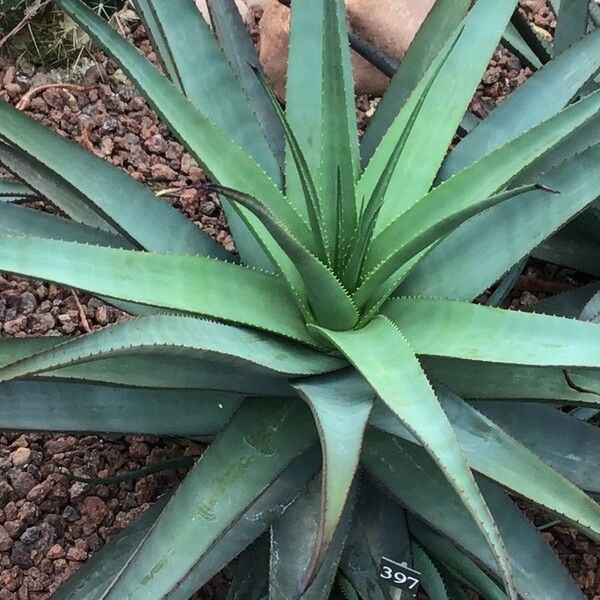
Plant Overview
Often called the Malelane Aloe, this striking succulent is a master of color transformation, shifting from lime green to a brilliant golden-yellow when exposed to the intense sun. Unlike many solitary aloes, Aloe lutescens is a social plant that loves company, naturally forming dense, sprawling carpets of thorny rosettes that can cover large patches of ground. Native to the rocky hills of South Africa and Swaziland, it brings a dramatic, sun-kissed "glow" to any arid landscape or rock garden.
🔍 How to Identify
- 🎨 The "Golden" Glow: The species name lutescens means "becoming yellow," referring to the leaves' ability to turn from pale green to a bright yellowish-gold in full sunlight.
- 📐 Recurved Leaves: The leaves are long, slender, and distinctly curved backward, featuring small, sharp reddish-brown teeth along the margins.
- 🌿 Clumping Habit: It is highly suckering, meaning it produces many "pups" at the base to form large, multi-stemmed groups rather than staying as a single rosette.
- 🔥 Winter Blooms: During the colder months, it sends up branched flower stalks topped with cylindrical racemes of tubular flowers that transition from bright orange to yellow.
🏡 In Your Garden
- ☀️ Sun-Seeker: To achieve its iconic yellow hue, this plant requires direct, intense sunlight; in shady spots, it will remain a standard dull green and may become "leggy."
- 🏜️ Drainage is Key: Because it originates from rocky slopes, it hates "wet feet." Plant it in a cactus mix or sandy soil, and only water when the soil is bone-dry to the touch.
- 🐝 Pollinator Magnet: The winter flowers are rich in nectar, making this plant a vital food source for bees and sunbirds during the months when other plants are dormant.
⚠️ Safety & Toxicity
- 🌵 Physical Hazard: The leaf margins are lined with small but sharp teeth that can easily scratch skin or snag clothing; handle with gloves when dividing clumps.
- 🐾 Pet Safety: Like most Aloes, the sap contains saponins and anthraquinones. If ingested by dogs or cats, it can cause digestive upset, lethargy, or diarrhea.
- 👶 Keep Out of Reach: While not "deadly," the bitter sap and sharp edges make it a plant better suited for the back of a garden bed rather than near a child's play area.
✨ Fun Fact
In its native habitat near the Kruger National Park, Aloe lutescens is often found growing in "granite whalebacks"—large, smooth rock outcroppings where it clings to shallow pockets of soil, proving just how little it needs to thrive!

Detailed Care Instructions
To grow Aloe Lutescens (Yellow Aloe) successfully, follow these steps:
- Choose the right location: Ensure your Aloe Lutescens gets plenty of sunlight. It thrives in full sun but can tolerate partial shade as well. Indoors, place it near a sunny window.
- Soil and pot selection: Use well-draining soil suitable for succulents. A mix of cactus soil combined with perlite or pumice will work well. Select a pot with drainage holes to prevent waterlogging.
- Planting: Gently remove the plant from its nursery container and loosen the roots. Place it in the new pot, ensuring the base of the plant is level with the soil surface. Fill in with additional soil, pressing it gently around the roots to secure the plant.
- Watering: Aloe Lutescens is drought-tolerant, so it is important not to overwater it. Allow the soil to dry out completely between waterings. During summer, water every 2-3 weeks, and reduce watering during winter. Avoid letting water sit in the saucer, as it can lead to root rot.
- Fertilization: Apply a balanced, water-soluble fertilizer formulated for succulents or cacti every 2-3 months during the growing season. Follow the instructions on the product for proper dilution and application.
- Winter care: Aloe Lutescens can tolerate mild frost but prefers temperatures above 50°F (10°C). If you live in a colder climate, move the plant indoors. Place it near a sunny window and reduce watering during this period.
- Pruning: Remove any dead or damaged leaves to encourage new growth. Use clean and sharp pruners to avoid introducing diseases.
- Propagation: Aloe Lutescens can be propagated easily through offsets or "pups" that grow around the base of the parent plant. Wait until the offsets are one-third the size of the main plant, then carefully separate them and transplant them into their own pots.
With proper care and appropriate conditions, your Aloe Lutescens plant will gradually grow into a beautiful specimen.
To water this plant, first check the soil moisture level by sticking your finger about 1 inch into the soil. If it feels dry, it's time to water. Use a watering can or jug with a narrow spout to carefully pour water around the base of the plant, avoiding any water on the foliage.
The frequency of watering will depend on the temperature and humidity of the plant's environment, as well as the type of soil it's planted in. Typically, this plant prefers well-draining soil that is allowed to dry out slightly between waterings, so avoid over-watering. If the soil becomes waterlogged, this can lead to root rot and other issues.
During the winter months when this plant is dormant, water less frequently as it requires less water. In summer, the plant may need to be watered more often to accommodate for the hotter temperatures and increased evaporation.
It's also important to avoid pouring water directly onto the leaves of the plant as this can lead to rot and fungal diseases.
Overall, the key to successfully watering this plant is to monitor the soil moisture level and adjust watering accordingly, while avoiding over-watering and pouring water on the foliage.
To fertilize this plant, mix a balanced liquid fertilizer with water according to the instructions on the label. Apply the fertilizer to the soil around the base of the plant, being careful not to get any on the leaves. Fertilize once every two weeks during the growing season, and reduce frequency during the dormant period. Make sure to allow the soil to dry out before fertilizing again.
The best soil for the plant is well-draining soil that is loose and aerated. It should have good water holding capacity and should not be too dense or compact. It is recommended to use soil mixtures that contain a combination of sandy and peaty soil mixed with perlite, vermiculite, or small stones to enhance drainage. The soil should be slightly acidic with a pH level ranging between 6.0 to 7.0. The use of organic fertilizers can also help in improving the plant's growth and overall health. It is important to monitor the moisture levels of the soil and avoid overwatering to prevent root rot.
To propagate this plant, you will need to first select a healthy, mature plant to take cuttings from. Using a sharp, clean tool, make clean cuts at the base of the stem, taking care not to damage the plant. The cuttings should be at least 4 inches long and have several leaves on them. Allow the cuttings to dry for several days to a week before planting to allow the cut ends to callus over.
Once the cuttings have dried, plant them in well-draining soil in a pot with good drainage holes. Water the soil lightly and place the pot in a bright location where it will receive indirect sunlight. Be careful not to overwater the plant, as it can cause root rot.
Over time, the cuttings will develop roots and new growth. Once they have grown to a suitable size, you can transplant them into larger pots or into the ground. With proper care and attention, your propagated Aloe Lutescens plant will continue to thrive and grow.








