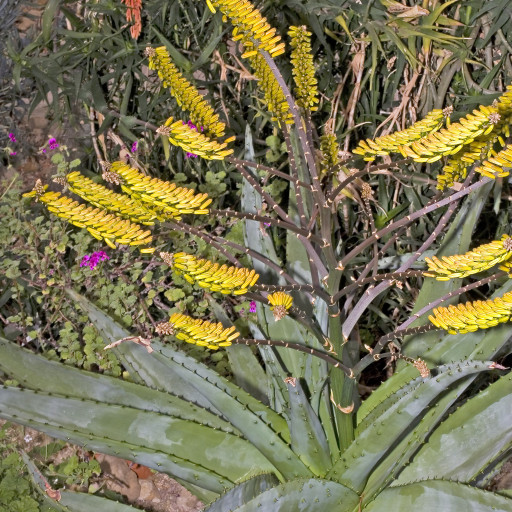
Plant Overview
Often called the Mountain Aloe, Aloe marlothii is a true titan of the succulent world. Standing like a prehistoric guardian of the South African landscape, this architectural masterpiece is famous for its massive size and "cluttered" appearance of old dried leaves that form a protective "petticoat" around its trunk. In its native habitat, it creates vast "aloe forests" that look like something straight out of a fantasy novel.
🔍 How to Identify
- 🌵 The Spiny Armor: Unlike many smooth-leaved aloes, this species features sharp, reddish-brown thorns not just on the leaf edges, but often scattered across the flat surfaces of the leaves themselves.
- 📏 Stately Stature: It typically grows on a single, thick stem that can reach over 10 feet in height, crowned by a dense rosette of fleshy, grey-green leaves.
- 🏮 Horizontal Blooms: The flower spikes are its most unique giveaway; they branch out horizontally (rather than vertically), resembling multi-tiered candelabras dripping with orange-to-yellow nectar.
🏡 In Your Garden
- 🦅 A Bird Magnet: If you plant this in your landscape, prepare for visitors. The horizontal flowers are perfectly designed as "perches" for sunbirds and other pollinators to sit on while they feast on the nectar.
- ☀️ Sun and Space: This is not a "windowsill" plant for long. It requires full, blazing sun to maintain its structural integrity and needs plenty of room to spread, as its massive root system provides the anchor for its heavy trunk.
- 🪨 Drainage is King: While it is incredibly drought-tolerant, it will rot quickly if its feet stay wet. Use a very gritty, mineral-heavy soil mix and avoid watering the center of the rosette where moisture can trap and cause decay.
⚠️ Safety & Toxicity
- ⚔️ Physical Hazard: The primary danger of Aloe marlothii is its sharp spines. The teeth are hooked and can easily puncture skin or snag clothing, so it should be planted away from walkways or play areas.
- 🐶 Pet Safety: Like most aloes, the leaves contain saponins and anthraquinones. If ingested by dogs or cats, it can cause vomiting, lethargy, or diarrhea, though the prickly exterior usually discourages nibbling.
- 🧪 Skin Sensitivity: The yellow-bitter sap can be a skin irritant for some individuals; it is best to wear gloves when pruning or handling damaged leaves.
✨ Fun Fact
The Zulu people traditionally used the dried, ground-up leaves of the Mountain Aloe as a snuff, and the prickly leaves were once used as a natural "grater" to prepare animal skins for clothing!

Detailed Care Instructions
To grow an Aloe Marlothii plant, you can follow these steps:
- Choose a suitable location: Aloe Marlothii plants thrive in full sun, so choose a spot in your garden or balcony that receives at least six hours of direct sunlight each day.
- Prepare the soil: Aloe Marlothii plants prefer well-draining soil. Use a mix of garden soil, sand, and compost to create a loose, nutrient-rich soil.
- Planting: Dig a hole in the prepared soil that is slightly larger than the root ball of the Aloe Marlothii plant. Place the plant in the hole and backfill it with the soil mixture. Firmly press the soil around the plant to remove any air pockets.
- Watering: Water the plant thoroughly after planting to help it settle in. However, avoid overwatering as Aloe Marlothii plants are drought-tolerant. Water only when the top inch of soil feels dry.
- Fertilizing: Aloe Marlothii plants do not require much fertilizer. You can apply a balanced, slow-release fertilizer during the growing season, following the instructions on the label.
- Pruning: Aloe Marlothii plants may produce offsets or pups around the base. Once these offsets are a decent size (approximately one-third the size of the mother plant), you can carefully remove them and replant them to grow new plants.
- Protection: Aloe Marlothii plants can tolerate a range of temperatures, but they may need protection from frost in colder regions. Consider covering the plants or moving them indoors during extreme cold spells.
- Pest and Disease Management: Aloe Marlothii plants are generally resistant to pests and diseases. However, keep an eye out for common succulent pests like mealybugs or scale insects. Treat any infestations promptly with insecticidal soap or horticultural oil.
Remember to research the specific growing requirements of Aloe Marlothii as some regional variations may exist. Regular monitoring, care, and maintenance will help your Aloe Marlothii plant grow successfully.

Place in a bright room that is sun drenched almost all day. Or directly in a south-facing window.

To water this plant, wait until the soil is completely dry before watering thoroughly. It is important to water deeply and then allow the excess water to drain out of the bottom of the pot. Avoid watering the leaves as this can cause them to rot. Water sparingly during the winter months, as the plant goes into a dormant phase and requires less water.
- Use a balanced fertilizer (10-10-10) for Aloe Marlothii plant.
- Dilute the fertilizer with water according to package instructions.
- Water the soil thoroughly before fertilizing.
- Apply the fertilizer to the soil around the base of the plant, avoiding contact with the foliage.
- Repeat the fertilization process every 2-3 months during the growing season (spring and summer).
- Avoid fertilizing during the dormant season (fall and winter).
- Monitor the plant for any signs of over-fertilization, such as burnt or yellowing leaves, and adjust the frequency and amount of fertilization accordingly.
Aloe Marlothii plants thrive in well-draining soil with a slightly acidic to neutral pH level. A suitable soil mixture for these plants should consist of a blend of sand, perlite, and organic matter such as peat moss or coconut coir. This combination ensures that the soil remains loose and aerated, allowing for proper water drainage and root development. Additionally, using a soil mixture with good drainage properties helps prevent waterlogged conditions that can lead to root rot in Aloe Marlothii plants. It is important to avoid heavy, compacted soils that retain too much moisture, as this can be detrimental to the plant's health. Overall, a well-draining soil mix that provides adequate aeration and moisture retention is ideal for cultivating healthy Aloe Marlothii plants.
To propagate this plant, you will need to first prepare a cutting. Make sure the cutting is taken from a healthy plant and is at least several inches long. Using a clean and sterilized sharp pair of scissors or knife, cut the stem at a 45-degree angle. Then, allow the cut to dry and callus over for a day or two.
Next, prepare the soil. Aloe Marlothii does well in well-draining soil, so make a mixture of equal parts sand, perlite, and regular potting soil. Once the cutting has callused over, you can plant it in the soil mixture. Make sure the soil is moist, but not too wet, and keep the cutting out of direct sunlight for a few days.
After a week or two, you can water the cutting more regularly, but always make sure the soil drains well and does not become too wet. The cutting should root within a few months. Once it has developed a root system, you can replant it in a larger pot or in the ground outside. With proper care, the new plant will grow and thrive.








