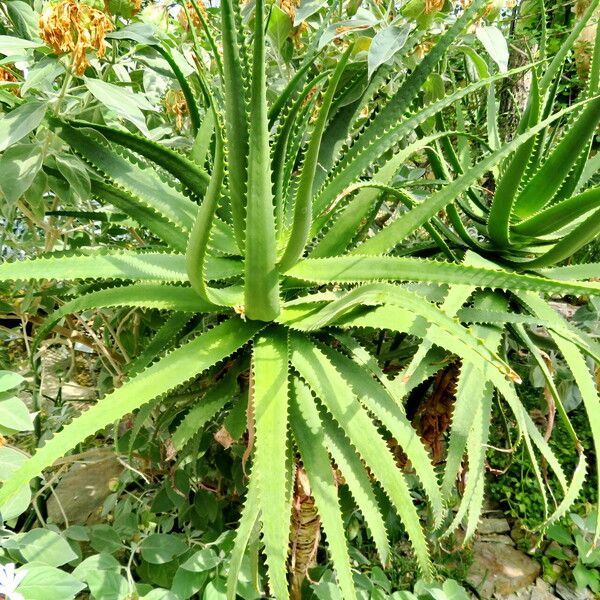
Plant Overview
Known as the "Palm-shaped Aloe," Aloe palmiformis is a rare and striking succulent originating from the rocky highlands of Angola. Unlike the common squat, ground-hugging aloes, this species lives up to its name by developing a shrubby, branching trunk that resembles a miniature palm tree. It is a prized find for succulent collectors who want to add vertical interest and a touch of African "mountain-style" architecture to their garden.
🔍 How to Identify
- 🌴 Growth Habit: It grows into a many-branched shrub, reaching heights of up to 5 feet. Each branch is topped with a dense rosette of leaves, creating a tufted, palm-like silhouette.
- 🍃 Leaf Texture: The leaves are long, slender, and slightly recurved. They are typically a bright, grassy green with small, firm teeth along the margins that are sharp but not needle-like.
- 🔥 Fiery Blooms: It produces branched flower stalks bearing cylindrical clusters of orange-to-red tubular flowers. These typically emerge in winter, providing a vital nectar source for birds.
🏡 In Your Garden
- 🏜️ Drainage is Vital: Because it originates from rocky outcrops, its roots are highly susceptible to rot if kept in soggy soil. It prefers a very gritty mix—think more pumice and sand, less peat.
- ☀️ Sun Seeker: To maintain its "palm" shape and prevent it from becoming "leggy" or weak, it needs bright, direct sunlight. In lower light, the stems may lean or lose their structural integrity.
- 🌬️ Air Circulation: It appreciates breezy spots. In stagnant, humid environments, it can develop "black spot" fungus on the leaves, so give it plenty of breathing room from neighboring plants.
⚠️ Safety & Toxicity
- 🐾 Pet Warning: Like most members of the Aloe family, it contains saponins and anthraquinones. If ingested by dogs or cats, it can cause vomiting, lethargy, and diarrhea.
- 👶 Child Safety: While the gel inside isn't typically dangerous to touch, the small teeth along the leaf edges can scratch sensitive skin. It is best placed out of reach of curious toddlers.
✨ Fun Fact
Despite its palm-like appearance, Aloe palmiformis is actually more closely related to lilies than to true palms. Its specific name, palmiformis, was chosen specifically because early botanical explorers were struck by how much it looked like a desert palm from a distance!

Detailed Care Instructions
To grow Aloe Palmiformis, here are some steps you can follow:
- Choose a suitable location: Aloe Palmiformis thrives in full sun or partially shaded areas. It is important to select a well-draining spot as the plant does not tolerate wet feet.
- Prepare the soil: Aloe plants prefer sandy or sandy loam soil that is slightly acidic. If your soil is heavy clay, consider adding organic matter, such as compost or peat moss, to improve drainage and aeration.
- Propagation: You can grow Aloe Palmiformis either from seeds or by dividing offsets (pups) from an established plant. Offsets can be gently separated from the parent plant and planted in a separate pot or area.
- Planting: If growing from seeds, sow them on the soil surface and lightly cover them with a thin layer of soil. Water the seeds and place the container in a warm location with indirect light. Keep the soil slightly moist until germination occurs.
If growing from offsets, dig a hole in the soil and place the pup gently, ensuring that its roots are covered. Water the plant thoroughly to settle the soil.
- Watering: Aloe Palmiformis is drought-tolerant and requires infrequent watering. Allow the soil to dry out between waterings, and avoid over-watering, as it can lead to root rot.
- Fertilization: Feed the plant with a balanced, water-soluble fertilizer diluted to half strength every 3-4 months during the growing season (spring and summer). Do not fertilize during the dormancy period (fall and winter).
- Pruning: Remove any dead or decaying plant material regularly. Trim off any damaged or overly long leaves, but be cautious not to remove too many leaves at once as it can stress the plant.
- Pests and diseases: Aloe Palmiformis is generally resistant to pests and diseases, but watch out for common issues such as mealybugs and root rot. If necessary, treat these problems accordingly with appropriate insecticides or fungicides.
Remember, it is always beneficial to research further or consult with local gardening experts for specific advice tailored to your location and growing conditions.
To water the Aloe Palmiformis plant, you may follow these guidelines:
- Assess the soil moisture: Before watering, check the moisture level of the soil. Insert your finger about an inch deep into the soil. If it feels dry, it is time to water the plant.
- Choose the watering method: You have a few options for watering the plant. One way is to use a watering can with a narrow spout, which enables gradual pouring and prevents excessive water flow. Another option is using a watering bottle with a long and pointed spout to reach the base of the plant without splashing water on the leaves.
- Water at the base: Pour the water directly onto the soil at the base of the plant, avoiding contact with the leaves. This helps prevent rot and fungal diseases which can be caused by moisture accumulation on the foliage.
- Be mindful of the frequency: Aloe Palmiformis prefers well-draining soil, so it's essential not to overwater the plant. Water it thoroughly but wait until the top inch or two of soil is dry before watering again. The frequency can vary depending on factors such as temperature, humidity, and the size of the pot.
- Adjust watering during seasons: During the active growing season, typically spring and summer, the plant may require more frequent watering. However, in winter or dormant periods, reduce the watering frequency to avoid waterlogged soil.
- Avoid stagnant water: After watering, make sure there is no water sitting in the saucer or tray below the pot. Excess water can lead to root rot and damage the plant. Empty the saucer if any water accumulates after watering.
- Observe the plant's response: Pay attention to the plant's appearance to gauge its watering needs. Overwatering may result in yellowing leaves, soft or mushy stems, or a foul odor, while underwatering can cause wilting or shriveling of the leaves. Adjust your watering schedule accordingly.
Remember, these instructions are general guidelines, and it is always helpful to consider the specific needs of your Aloe Palmiformis plant, the conditions in your environment, and any advice from experts or experienced gardeners.
To fertilize Aloe Palmiformis, follow these instructions:
- Choose a balanced, water-soluble fertilizer with a NPK ratio of 10-10-10 or 20-20-20. This will provide necessary nutrients without causing excessive growth.
- Dilute the fertilizer according to the manufacturer's instructions. Typically, a concentration of 1/4 to 1/2 strength should suffice for aloe plants.
- Apply the diluted fertilizer to the soil around the base of the plant, avoiding direct contact with the leaves or stem. Slowly pour the solution to ensure even distribution.
- Fertilize the Aloe Palmiformis once every two to four weeks during the active growing season, which usually occurs from spring to early fall. Reduce or halt fertilization during the winter when the plant goes into a dormant period.
- Be cautious not to over-fertilize, as this can lead to fertilizer burn or other negative effects. Always err on the side of providing less rather than more fertilizer.
- Water the plant thoroughly after fertilization to help dissolve and distribute the nutrients in the soil.
- Monitor the plant's response to fertilization. If it shows signs of yellowing or leaf burn, reduce the frequency or concentration of fertilizer application.
Please note that specific instructions may vary depending on the fertilizer brand or the specific needs of your Aloe Palmiformis plant. Always follow the product instructions and consider consulting a gardening professional for personalized advice.
When choosing soil for the Aloe palmiformis plant, it is important to consider its natural habitat and growth requirements. A suitable soil choice for this plant would typically consist of a well-draining, sandy or loamy mix. This type of soil composition ensures that excess moisture can easily drain away, preventing root rot.
Aloe palmiformis naturally grows in arid regions, where the soil tends to be sandy or rocky. Therefore, incorporating some sand or small pebbles into the soil mix can help mimic its preferred growing conditions. This not only aids in drainage but also promotes healthy root development.
In addition, Aloe palmiformis thrives in nutrient-poor soils. Hence, it is advisable to choose a soil mix with low fertility to prevent over-fertilization, which can be detrimental to the plant's health. This can be achieved by using a standard potting mix and adding some perlite or pumice to increase drainage while reducing nutrient content.
Furthermore, the pH level of the soil for Aloe palmiformis should ideally range from slightly acidic to neutral (around 6.0-7.0). This can be monitored using a pH testing kit or strips available at gardening centers. Adjusting the pH, if necessary, can be done by incorporating amendments like peat moss or lime.
Overall, the Aloe palmiformis plant thrives in a well-drained, sandy or loamy soil with low fertility and a slightly acidic to neutral pH. Following these guidelines will help create a suitable soil environment that promotes healthy growth and development for this plant.
To propagate Aloe palmiformis, you can follow these steps:
- Start by identifying a healthy and mature Aloe palmiformis plant. Look for a specimen that has strong, well-developed leaves and a well-established root system.
- Prepare a clean working area and gather all the necessary tools and materials, including a sharp and sterilized knife or gardening shears, a clean and well-draining potting mix, a small container or pot, and rooting hormone (optional).
- Carefully remove the Aloe palmiformis plant from its current pot or garden bed, taking care not to damage the roots or leaves. Gently shake off excess soil to expose the roots.
- Examine the plant's base and identify any offshoots or offsets, which are smaller Aloe plants growing from the main plant. These offsets can be removed and propagated to create new plants.
- Use the sterilized knife or shears to carefully separate the offsets from the main plant. Make clean cuts close to the base of the offset, ensuring that each one has a sufficient portion of the root system attached.
- If desired, you can dip the cut ends of the offsets into rooting hormone to promote better root development. This step is optional but can enhance the chances of successful propagation.
- Prepare the small container or pot by filling it with a well-draining potting mix. Make a small hole in the center using your finger or a pencil to accommodate the offset.
- Place the offset into the hole, ensuring that the cut end is in contact with the potting mix. Gently firm the soil around the offset, providing enough stability for it to remain upright.
- Water the newly potted offset lightly, being careful not to overwater. Keep the soil slightly moist but not soggy. Avoid exposing the newly propagated plant to direct sunlight for a couple of weeks to prevent stress.
- Place the potted offset in a warm and well-lit location, preferably with indirect sunlight. Aloe palmiformis plants prefer bright but filtered light, which mimics their natural habitat.
- Monitor the growth and progress of the newly propagated plant over several weeks. You should observe new roots forming and signs of new growth emerging from the center of the plant. Adjust watering and light conditions accordingly to promote healthy growth.
By following these steps, you can successfully propagate Aloe palmiformis and create new plants to enjoy or share with others.








