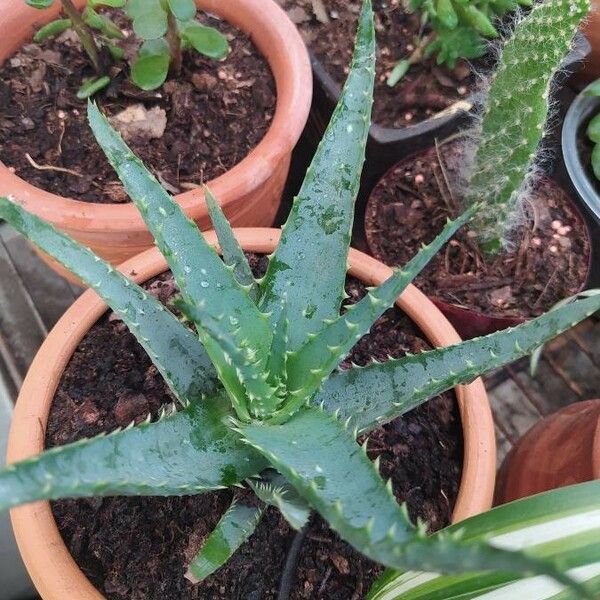
Plant Overview
Known affectionately as the Gold Tooth Aloe, this striking hybrid is a garden favorite for those who want the look of a wild desert landscape without the massive size of its ancestors. It is a cross between the towering Torch Aloe and the petite Spider Aloe, resulting in a perfectly sized "Goldilocks" succulent that packs a punch with its vibrant winter blooms and architectural shape.
🔍 How to Identify
- 🌵 The Rosettes: It forms dense, low-growing clumps of deep green, sword-shaped leaves that curve slightly upward, creating a sprawling, spider-like silhouette.
- 🦷 Gold Teeth: The leaf edges and sometimes the undersides are lined with prominent, firm, yellowish-white spines (the "teeth") that seem to glow when back-lit by the sun.
- 🔥 The Bloom: In winter and early spring, it sends up tall, sturdy spikes topped with thick clusters of tubular, fiery orange-red flowers that stand out against the green foliage.
🏡 In Your Garden
- 🏜️ Hybrid Vigor: This plant is tougher than many purebred Aloes; it grows quickly and fills out pots or garden beds with ease, provided it has gritty, fast-draining soil to prevent root rot.
- ☀️ Sun Blushing: While it loves bright light, the leaves can turn a beautiful reddish-bronze "stress color" if it gets high heat or intense direct sun, which many succulent collectors find highly desirable.
- 💧 Drought Strategy: It stores a massive amount of water in its fleshy leaves, meaning it prefers the "soak and dry" method—only water it when the soil is completely bone-dry to the touch.
⚠️ Safety & Toxicity
- 🐾 Toxic to Pets: Like most members of the Aloe family, the Spinosissima contains saponins and anthraquinones. If ingested by cats or dogs, it can cause vomiting, lethargy, and digestive upset.
- 👶 Prickly Texture: While the "teeth" aren't as dangerous as a cactus needle, they are firm and sharp enough to scratch sensitive skin. It is best placed away from narrow pathways where children or guests might accidentally brush against it.
✨ Fun Fact
🐦 The Hummingbird Diner: Despite being a man-made hybrid, this plant produces a high volume of nectar. It serves as a vital "fast-food station" for hummingbirds during the winter months when most other garden flowers have gone dormant.

Detailed Care Instructions
Aloe × spinosissima, commonly known as the spiny aloe, is a hybrid succulent that can be relatively easy to grow if you provide the right conditions. Here are some tips to help you successfully grow this plant:
1. Light Requirements
- Sunlight: Aloe × spinosissima thrives in bright, indirect sunlight. It can tolerate direct sunlight, but too much can scorch its leaves. Aim for 6-8 hours of light per day.
2. Soil
- Well-Draining Soil: Use a well-draining potting mix designed for cacti or succulents. You can create your own mix by combining potting soil, coarse sand, and perlite or pumice.
3. Watering
- Watering Schedule: Allow the top inch (2.5 cm) of soil to dry out before watering. During the growing season (spring and summer), water more frequently, but in the dormant season (fall and winter), reduce watering significantly.
4. Temperature and Humidity
- Temperature: Aloe × spinosissima prefers warm temperatures, ideally between 65°F to 80°F (18°C to 27°C). Protect it from frost and extremely cold temperatures.
- Humidity: Low humidity is preferable for succulents, so avoid overly humid environments.
5. Fertilization
- Fertilize Sparingly: Use a diluted, balanced fertilizer during the growing season once a month. Avoid fertilizing in the winter while the plant is dormant.
6. Potting
- Container: Use a pot with drainage holes to prevent water accumulation. Terracotta pots are a good choice since they allow moisture to evaporate.
7. Propagation
- Offsets: Aloe × spinosissima can be propagated through offsets (pups) that develop at the base of the plant. Gently remove them from the mother plant and replant them in a suitable soil mix.
8. Pests and Problems
- Watch for Pests: Common pests include mealybugs and scale. Treat infestations promptly with insecticidal soap or neem oil.
- Rot Prevention: Ensure good air circulation and proper watering habits to avoid root rot.
9. Location
- Indoors/Outdoors: If growing indoors, place the plant near a sunny window. If placed outdoors, ensure it’s in a sheltered spot that protects it from harsh sunlight and frost.
By following these guidelines, you should be able to successfully grow and care for your Aloe × spinosissima plant. Enjoy your gardening!
Watering the Aloe × Spinosissima requires a careful approach to ensure optimal health of the plant. Here’s a detailed guide:
- Soil Type: Ensure that the plant is potted in well-draining soil. A mix designed for cacti or succulents is ideal, as it allows excess moisture to escape easily, preventing root rot.
- Watering Frequency: Watering should be infrequent. Allow the top 1-2 inches of soil to dry out completely before you water again. This typically means watering every 2-3 weeks, but it can vary depending on the environment.
- Seasonal Adjustments: During the growing season (spring and summer), the plant may require more frequent watering as it actively takes up moisture. In fall and winter, reduce the frequency, as the plant enters a dormant phase and requires less water.
- Water Method: When watering, do so thoroughly. Water the soil directly and ensure that water flows through the drainage holes at the bottom of the pot. Avoid getting water on the leaves to prevent the risk of rot or fungal infections.
- Indicators of Need: Watch for signs of dehydration, such as wrinkled leaves, or overwatering, indicated by mushy or discolored leaves. Adjust your watering schedule accordingly.
- Environmental Conditions: Consider the plant's location as temperature and humidity can affect watering needs. Warmer and dryer conditions will require more frequent watering, while cooler and more humid environments will necessitate less.
- Use of Room Temperature Water: It’s best to use water that is at room temperature to avoid shocking the roots, promoting optimal absorption.
By following these guidelines, you will help ensure the plant remains healthy and thriving.
Fertilizing instructions for Aloe × Spinosissima are as follows:
- Type of Fertilizer: Use a balanced, water-soluble fertilizer with a low nitrogen ratio, such as a 10-10-10 or a specialized succulent fertilizer.
- Dilution: Dilute the fertilizer to half-strength. Succulents can be sensitive to high nutrient concentrations, so a weaker solution is preferred.
- Frequency: Fertilize during the growing season, which is typically spring and summer. Apply the diluted fertilizer every 4 to 6 weeks.
- Application Method: Water the plant lightly before applying fertilizer to prevent root burn. Then, apply the diluted fertilizer to the soil around the base of the plant.
- Avoid Fertilizing: Do not fertilize in the fall and winter when the plant is typically dormant, as these are months of reduced growth.
- Signs of Over-Fertilization: Watch for yellowing leaves or a decrease in growth, which could indicate over-fertilization. If you observe these signs, stop fertilizing and flush the soil with plain water to help remove excess nutrients.
- Soil Conditions: Ensure that the plant is in well-draining soil. The right soil mix will help to avoid root problems and allows the nutrients to be effectively absorbed.
By following these guidelines, you can promote healthy growth in your Aloe × Spinosissima while preventing potential nutrient-related issues.
For cultivating Aloe × Spinosissima, a well-draining, sandy soil mix is essential to prevent waterlogging, which can lead to root rot. You should aim for a soil that has the following characteristics:
- Texture: Utilize a coarse, gritty soil mixture, often achieved by incorporating materials like pumice, perlite, or coarse sand. This promotes aeration and facilitates drainage.
- Organic Matter: While these plants can tolerate lean soils, adding some organic matter, such as compost, can provide necessary nutrients. However, keep it minimal to avoid retaining too much moisture.
- pH Level: The ideal pH for this plant is slightly acidic to neutral, typically between 6.0 and 7.0. It's beneficial to test the soil to ensure it falls within this range.
- Commercial Cactus Mix: Consider using a commercial soil mix specifically formulated for cacti and succulents, which is designed to facilitate drainage and provide the right balance of aeration and nutrients.
- Customization: You can create a custom mix by blending equal parts of potting soil, perlite, and coarse sand. This combination enhances drainage and aeration while still providing some content for nutrient absorption.
Overall, the focus should be on ensuring excellent drainage while avoiding overly moisture-retentive materials.
To propagate Aloe × Spinosissima, follow these steps:
1. Select the Method of Propagation
- Offsets: This species commonly produces offsets (pups) that can be separated from the parent plant.
- Leaf Cuttings: While less common and less reliable, leaf cuttings can also be attempted.
2. Propagation by Offsets
- Timing: The best time to propagate is during the growing season, typically in spring or early summer.
- Identifying Offsets: Look for new shoots emerging from the base of the parent plant.
- Preparation:
- Use a sterile, sharp tool to cut the offset away from the parent plant, ensuring that it has some roots attached if possible.
- Allow the cut end of the offset to dry for a few hours to allow the wound to callous over. This step helps prevent rot.
- Use a sterile, sharp tool to cut the offset away from the parent plant, ensuring that it has some roots attached if possible.
- Potting:
- Use a well-draining potting mix, formulated for succulents or cacti.
- Plant the offset in a small pot filled with the prepared mix, and ensure it is positioned upright.
- Use a well-draining potting mix, formulated for succulents or cacti.
- Watering: Water sparingly after potting; allow the soil to dry completely before the next watering. The focus should be on enabling the roots to establish.
- Environment: Place the newly potted offset in a warm, bright location with indirect light. Avoid direct sunlight, as this can scorch the delicate new plant.
3. Propagation by Leaf Cuttings (if desired)
- Preparation:
- Select a healthy leaf from the parent plant.
- Cut the leaf into sections, ideally around 3-4 inches long, making sure each section has a cut end.
- Let the cut sections dry for a few days to callous over.
- Select a healthy leaf from the parent plant.
- Potting:
- Prepare small pots with a well-draining soil mix.
- Insert the cut end of each section into the soil, burying it just enough to stand upright.
- Prepare small pots with a well-draining soil mix.
- Care:
- Water lightly to moisten the soil and then refrain from watering until roots develop.
- Provide bright, indirect sunlight until roots begin to grow, which may take several weeks to a few months.
4. Monitoring and Care
- Water lightly to moisten the soil and then refrain from watering until roots develop.
- Check regularly for signs of root development or growth, whether propagating by offsets or leaf cuttings.
- Adjust watering practices based on environmental conditions and moisture levels in the soil.
- Once established, acclimate the new plants to brighter light and gradually increase their exposure to direct sunlight.
5. Transplanting (if needed)
- Once the new plants have adequate root systems and show signs of healthy growth, they can be transplanted into larger pots as needed.
With patience and care, propagation of this succulent should result in healthy new plants that can thrive long-term.







