Plant Overview
Commonly known as the Zebra Leaf Aloe, this striking succulent is a master of camouflage and survival hailing from the arid savannahs of Southern Africa. Unlike its more famous cousin, the Aloe Vera, Aloe zebrina is prized more for its dramatic, striped aesthetics than its gel, earning its name from the bold, horizontal white bands that dance across its fleshy leaves.
🔍 How to Identify
- 🦓 Leaf Patterns: Look for lance-shaped, succulent leaves that feature distinct white, rectangular spots. These spots often align into jagged horizontal bands, mimicking the stripes of a zebra.
- 🦷 Marginal Teeth: The edges of the leaves are lined with sharp, reddish-brown triangular teeth. While they look fierce, they are primarily a defense mechanism against thirsty animals in the wild.
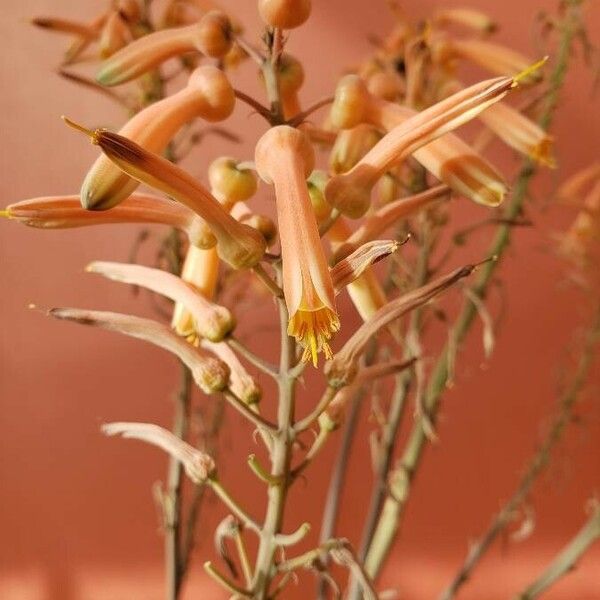
- 🌸 Bloom Structure: When it matures, it sends up a tall, branched stalk (inflorescence) topped with tubular flowers that range from a dusty pink to a vibrant coral red.
🏡 In Your Garden
- 🏜️ Drainage is Vital: This Aloe is a "dry-feet" enthusiast. It has evolved to survive in rocky, sandy soils where water disappears quickly. If kept in heavy potting soil, its roots will suffocate and rot almost overnight.
- ☀️ Sun Stressing: While it loves bright light, the plant will tell you if it’s getting "too much" of a good thing. Under intense summer sun, the leaves may take on a beautiful reddish or bronzed hue—this is a natural sunscreen called anthocyanin.
- 👯 The "Pup" Maker: One of the joys of growing Aloe zebrina is its tendency to produce "pups" (offsets) around its base. These can be easily separated to start new plants for friends or other parts of your home.
⚠️ Safety & Toxicity
- 🐾 Pet Warning: This plant is considered toxic to cats and dogs. It contains saponins and anthraquinones, which can cause vomiting, lethargy, and diarrhea if ingested.
- 🖐️ Skin Sensitivity: While some use the sap medicinally in its native range, the yellow "latex" found just under the skin of the leaf can be a skin irritant for many people. It is best to admire its beauty without breaking the leaves.
✨ Fun Fact
In many Southern African cultures, Aloe zebrina is more than just a decorative plant; it has been used traditionally for centuries as a natural "guard" for homesteads and is occasionally used in traditional medicine to treat everything from stomach ailments to skin sores.

Detailed Care Instructions
To grow Aloe zebrina plant, you can follow these steps:
- Choose the right pot: Select a well-draining pot with drainage holes to prevent waterlogging. Aloe zebrina prefers being slightly root-bound, so a small to medium-sized pot is adequate.
- Soil: Use a well-draining soil mix that is specifically formulated for cacti and succulents, or create a mix by combining regular potting soil with perlite or coarse sand to enhance drainage.
- Sunlight: Place the plant in a location that receives bright, indirect sunlight. Aloe zebrina thrives in partial shade or dappled sunlight. Avoid placing the plant directly under harsh, intense sunlight.
- Watering: Allow the soil to dry out between waterings and avoid overwatering. A good rule of thumb is to water thoroughly until the excess water drains out of the bottom of the pot, and then wait until the top inch or two of soil is dry before watering again. In winter, as it enters a period of dormancy, reduce watering frequency.
- Temperature and humidity: Aloe zebrina prefers warm temperatures ranging from 65-85°F (18-29°C). It can tolerate slightly cooler temperatures but should be protected from frost. Average indoor humidity levels are usually sufficient for the plant.
- Fertilizer: Feed the plant with a balanced, water-soluble fertilizer designed for succulents or cacti during the growing season (spring and summer). Follow the package instructions for the correct dosage and frequency of application.
- Pruning: You can remove any dead or damaged leaves by cutting them near the base. Additionally, if the plant becomes overcrowded or too top-heavy, you can divide and repot it every few years.
- Propagation: Aloe zebrina can be propagated by separating offshoots that grow from the base of the plant. Gently remove the offshoot with roots attached and plant it in a separate pot with well-draining soil.
By following these steps, you can successfully grow and care for Aloe zebrina plant.

Place in a bright room that is sun drenched almost all day. Or directly in a south-facing window.

A good way to care for this plant is to water it deeply but infrequently, allowing the soil to dry out slightly between watering. When watering, pour water directly onto the soil around the base of the plant, avoiding getting any water on the leaves or stem. It is important not to overwater, as this can cause root rot. Check the soil moisture level by sticking your finger about an inch into the soil; if it feels dry, it is time to water. In addition, ensure that the plant is in a well-draining soil mix and placed in a location with bright, indirect sunlight.
To fertilize the Aloe plant, mix a balanced fertilizer with a 1:1:1 or 2:1:2 NPK ratio. Dilute the fertilizer to half strength and apply to the soil once a month during the growing season. Avoid fertilizing during the dormant season. Water the plant thoroughly after fertilizing to prevent fertilizer burn.
A soil that is well-draining, rich in minerals, and has good aeration is ideal for Aloe Zebrina. Avoid using heavy soils that retain moisture for long periods, as this can lead to root rot. Mix in some perlite or coarse sand to improve drainage and provide air pockets in the soil. Additionally, the soil should have a pH range of 6.0 to 7.5, which is slightly acidic to neutral. Using a cactus or succulent-specific soil mix can also work well for Aloe Zebrina.
To propagate this plant, you will need to select a healthy leaf from the parent plant. Make sure it is at least 4-6 inches long and has no signs of damage or disease.
Using a clean, sharp knife, cut the leaf off the plant as close to the stem as possible. Allow the wound to air-dry for a day or two to prevent fungal infection.
Prepare a well-draining potting mix and fill a small pot with it. Use your finger or a pencil to make a hole in the soil.
Insert the cut end of the leaf into the hole, ensuring that at least half of it is buried in the soil. Gently firm the soil around the leaf.
Place the potted leaf in a warm, bright, and partially shaded spot and water it sparingly. Too much water can cause the leaf to rot.
After a few weeks, the leaf should begin to root and form new leaves. Once the new plant has several leaves, it can be transplanted into a larger pot or planted outdoors if weather conditions are suitable.








