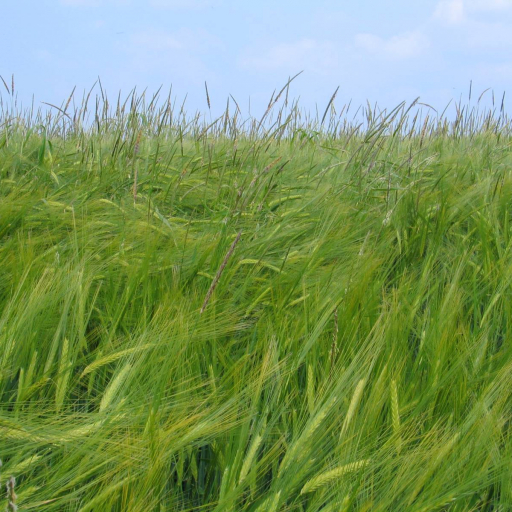
Plant Overview
Known widely among farmers as "Black-grass," this slender annual grass is often called the "villain of the wheat field." While it may look like a delicate, swaying meadow ornament, it is a master of survival that has outsmarted modern agriculture for decades. Originating in Europe and Asia, it is now a world-traveling pioneer that thrives wherever the soil is heavy and the moisture is plentiful.
🔍 How to Identify
- 🌾 The "Foxtail" Spike: Unlike the bushy tails of other grasses, its flower head is very slender, cylindrical, and tapers at both ends—resembling a thin green or purple pencil.
- 💜 The Dark Shadow: As the plant matures, the seed heads often take on a distinct purplish-black tint, which is how it earned the nickname "Black-grass."
- 🌱 The Kinked Base: The stems are usually upright but often feature a "knee-bend" (geniculate) at the very bottom joint before stretching toward the sun.
🏡 In Your Garden & Nature
- 🚜 The Arable Invader: You are more likely to find this in a grain field or a disturbed roadside than a manicured lawn. It loves heavy clay soils and areas that stay damp during the winter months.
- ⏳ A Patient Survivor: This plant plays the "long game." A single plant can drop up to 6,000 seeds, and those seeds can lie dormant in the soil for over five years, waiting for the perfect moment to sprout.
⚠️ Safety & Toxicity
- 🟢 Non-Toxic: Alopecurus myosuroides is generally considered non-toxic to humans, dogs, cats, and livestock.
- 🌾 Agricultural Threat: While not "poisonous" in the traditional sense, it is a severe threat to food security. It is highly competitive and has evolved a remarkable resistance to many common herbicides, making it a "super-weed" in the eyes of ecologists.
✨ Fun Fact
Black-grass is a textbook example of rapid evolution. Because farmers have used the same chemicals to fight it for years, the plant has "learned" to detoxify those chemicals within its own cells, making it one of the most expensive weeds for the global agricultural economy to manage!

Detailed Care Instructions
Alopecurus Myosuroides, commonly known as black-grass, is a weed that can be difficult to control in agricultural settings. If you specifically want to grow this plant for ornamental purposes, it is important to note that it is considered an invasive species in many areas and may not be suitable for cultivation.
However, if you are determined to grow Alopecurus Myosuroides, here are some general tips for cultivation:
- Soil: Black-grass prefers moist, well-drained soil with a pH range of 5.5 to 8.0.
- Sunlight: Plant in full sun for best growth.
- Watering: Keep the soil consistently moist, but not waterlogged.
- Temperature: Black-grass is a cool-season plant and thrives in cooler temperatures. It may struggle in hot climates.
- Maintenance: Keep the area weed-free to prevent competition with other plants. This may involve regular weeding or mulching.
- Propagation: Black-grass can be propagated by seed. Sow seeds in early spring or fall, and lightly cover with soil. Keep the soil moist until germination occurs.
- Pruning: Trim back any dead or damaged foliage to promote healthy growth.
It is important to be mindful of the potential invasiveness of black-grass and consider the impact it may have on the surrounding ecosystem before deciding to grow this plant.

Place in a bright room that is sun drenched almost all day. Or directly in a south-facing window.

To water this specific plant, it is recommended to thoroughly saturate the soil around the base of the plant. It is important to avoid getting water on the leaves or stem, as this can contribute to disease. Additionally, it is important to not over water, as this can lead to root rot and other plant health issues. A good rule of thumb is to allow the top inch of soil to dry out before watering again. It is also recommended to water in the morning or early afternoon to allow the plant to absorb the water before it gets too hot.
To fertilize the Alopecurus Myosuroides plant, apply a balanced fertilizer with equal parts nitrogen, phosphorus, and potassium. Fertilize in early spring before new growth appears and again in late spring or early summer. Avoid over-fertilizing, as this can lead to excessive vegetative growth and decrease flowering. Water the plant thoroughly after applying fertilizer to help distribute the nutrients to the roots.
The ideal soil for growing this plant should be well-draining and fertile. The soil pH should be slightly acidic to neutral, with a range of around 5.5 to 7.5. It should be rich in organic matter, with the ability to hold moisture without becoming waterlogged. This plant prefers a soil that is slightly heavy, but not claylike, with good structure and aeration. It will not tolerate dry or compacted soils, so regular watering and cultivation may be necessary to maintain optimal soil conditions. Avoid using soils that are sandy or too alkaline, as these may not provide the necessary nutrients and moisture for the plant to thrive.
Alopecurus Myosuroides plant can be propagated through division, seeds, or stem cuttings. To propagate through division, carefully dig up a mature plant and separate the roots into clumps. Replant these clumps in a new location with well-draining soil and adequate sunlight.
To propagate through seeds, collect mature seeds from the plant and plant them in a seed-raising mix in a sunny location. Keep the soil moist and the seeds should germinate within a few weeks. Once the seedlings are large enough, they can be transplanted to their permanent location.
To propagate through stem cuttings, select a healthy stem from the plant and carefully cut it with a sharp, clean knife. Plant the cutting in a well-draining soil mixture and keep it moist until roots develop. Once the cutting has developed roots, it can be transplanted to a new location.








