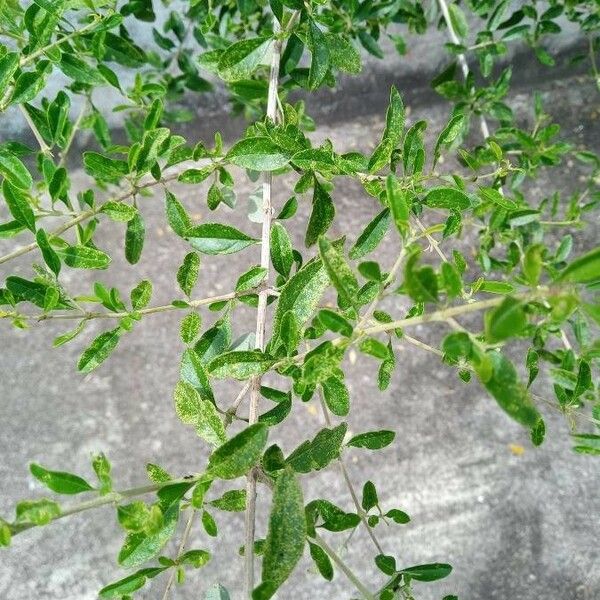
Plant Overview
Often called "Whitebrush" or "Beebrush," Aloysia gratissima is a wild beauty native to the American Southwest and South America. It is most famous for its intoxicating, vanilla-honey fragrance that can perfume an entire landscape, especially after a summer rain. It is a favorite among those looking to create a sensory garden that thrives in harsh, arid conditions.
🔍 How to Identify
- 🌸 Flower Spikes: Look for long, slender clusters (racemes) of tiny, almond-scented white flowers, sometimes tinged with a hint of violet or blue.
- 🍃 Foliage: The leaves are small, narrow (lance-shaped), and grayish-green. They have a slightly rough texture and release a spicy, herbal aroma when crushed.
- 🪵 Growth Habit: It grows as a multi-stemmed, deciduous shrub with an airy, somewhat "leggy" appearance, often reaching heights of 6 to 10 feet in the wild.
🏡 In Your Garden
- ☀️ Sun-Lover: This plant is a true sun worshipper. It requires full sun to produce its signature heavy blooms; if kept in the shade, it will become spindly and refuse to flower.
- 🏜️ Drainage is Key: Aloysia gratissima thrives in "lean" soil. It loves rocky, limestone-heavy, or sandy environments and will suffer from root rot if the soil stays wet or heavy with clay.
- ✂️ Pruning Nuance: Because of its wild growth habit, it can look a bit "scraggly" in a formal garden. Cutting it back significantly in early spring helps maintain a dense, attractive shape and encourages more flowering stems.
⚠️ Safety & Toxicity
- 🐴 Equine Warning: While generally safe for humans and typical household pets, this plant is highly toxic to horses. Ingesting the leaves and flowers can cause "Whitebrush poisoning," leading to weakness and neurological issues.
- 🧤 Skin Sensitivity: The stems can be somewhat stiff and brittle; while not thorny, they can cause minor scratches, so wear gloves when pruning a large specimen.
✨ Fun Fact
In the beekeeping world, "Whitebrush Honey" is a legendary prize. Because the plant only blooms intensely following heavy desert rains, the honey produced from its nectar is rare, exceptionally clear, and considered one of the finest-tasting honeys in the world.

Detailed Care Instructions
To successfully grow Aloysia gratissima (commonly known as the whitebrush or beebrush), follow these steps:
- Climate: Aloysia gratissima thrives in warm climates with full sun exposure. It is native to Southwestern United States, Mexico, and Central America.
- Soil: Plant the Aloysia gratissima in well-draining soil that is sandy or loamy. The soil should be slightly acidic to neutral pH.
- Planting: Choose a suitable location in your garden or yard, preferably away from high-traffic areas. Dig a hole twice as wide and deep as the plant's root ball. Place the plant in the hole and backfill it with soil, gently firming it around the roots.
- Watering: During the establishment phase, water the plant regularly to keep the soil consistently moist but not waterlogged. Once established, the plant is drought-tolerant and requires less frequent watering.
- Pruning: Regularly trim back any dead or damaged branches to maintain plant health and shape. Promote bushier growth by selectively pruning the tips of branches.
- Fertilizer: Apply a balanced slow-release fertilizer in the spring and early summer, following the manufacturer's instructions. Avoid excessive fertilization as it can promote leggy growth.
- Pests and diseases: Aloysia gratissima is generally resilient to pests and diseases. However, aphids and spider mites can occasionally infest the plant. Regularly inspect the plant for any signs of pests and treat accordingly with environmentally friendly methods.
- Propagation: Aloysia gratissima can be propagated via seeds or stem cuttings. Collect mature seeds or take cuttings from healthy plants during the growing season. Plant the seeds or cutting in a well-draining potting mix and keep it moist until roots develop.
Remember to check the specific needs and requirements of Aloysia gratissima in your region, as conditions may vary.

Place in a bright room that is sun drenched almost all day. Or directly in a south-facing window.

To water this plant, you should ensure that the soil is moist but not waterlogged. This can be achieved by watering slowly and deeply, allowing the water to soak through the soil. It's important not to let the soil become completely dry, as this can cause stress to the plant. You may want to use a moisture meter to help determine when it's time to water. Additionally, it's best to water in the morning or early evening when the temperatures are cooler to reduce the risk of evaporation and water stress.
- Use a balanced fertilizer with equal amounts of nitrogen, phosphorus, and potassium.
- Apply the fertilizer during the growing season, which is typically in the spring and summer months.
- Mix the fertilizer with water according to the instructions on the label.
- Apply the fertilizer to the soil around the base of the plant, avoiding direct contact with the foliage.
- Water the plant thoroughly after fertilizing to help distribute the nutrients.
- Avoid over-fertilizing, as this can lead to burnt foliage and other negative effects.
- Monitor the growth and health of the plant after fertilizing and adjust your fertilizing schedule accordingly.
The recommended soil for Aloysia Gratissima plant is one that is well-draining and has a good level of fertility. It should contain a mixture of organic matter, such as compost or peat moss, and inorganic matter, such as sand or perlite. The pH level of the soil should be around 6.0 to 7.5, which is slightly acidic to neutral in nature. It is important to ensure that the soil is not too compact or dense, as this can impede root growth and cause root rot. Regular watering is essential to keep the soil moist but not waterlogged, as this can also lead to root rot. Adding a slow-release fertilizer to the soil can help provide essential nutrients to the plant over time. Overall, the soil should have good drainage, be nutrient-rich, and have a pH level compatible with the Aloysia Gratissima plant's growth requirements.
To propagate this plant, you can take stem cuttings either in the spring or summer. Select a healthy stem about 6-8 inches in length and remove any leaves from the lower half of the stem. Dip the cut end in rooting hormone powder to encourage root development. Plant the stem cutting in a well-draining rooting medium, such as perlite or vermiculite. Keep the cutting moist and in a warm, bright location, but out of direct sunlight. Once roots have developed, which can take up to several weeks, transplant the cutting to a well-draining potting soil mix. Keep the new plant in a warm and moderately humid location, and gradually acclimate it to brighter light conditions.








