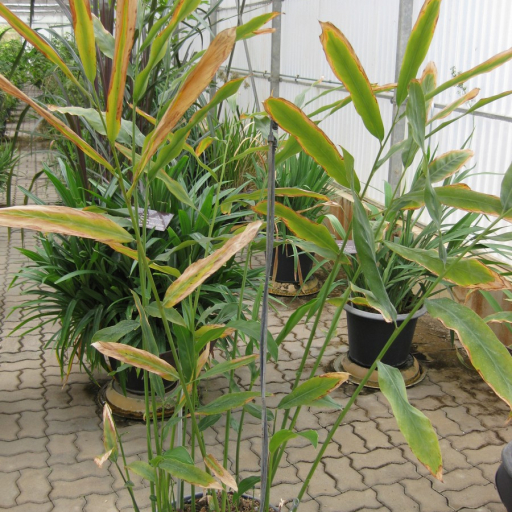
Plant Overview
Known as "Greater Galangal" or "Siamese Ginger," Alpinia galanga is a tropical powerhouse that brings both architectural beauty and pungent flavor to the landscape. While it looks similar to common ginger, this plant is taller, tougher, and carries a distinct piney, citrus-like aroma that has been a staple of Southeast Asian medicine and royal kitchens for centuries.
🔍 How to Identify
- 🌿 Growth Habit: It forms impressive, cane-like clumps that can reach heights of 6 to 7 feet, giving it a lush, jungle-like presence in any space.
- 🍃 Foliage: The leaves are long, blade-shaped, and leathery, arranged in an alternating pattern along the upright stems.
- 🌸 Flower Texture: It produces small, orchid-like flowers that are greenish-white with striking crimson streaks on the lip, usually appearing in dense clusters at the top of the stalks.
🏡 In Your Garden
- 🌱 Root Room: Galangal grows from thick, woody rhizomes that creep horizontally. Because it develops a heavy, dense root system, it prefers to stay put; frequent transplanting can stress the plant and stunt its growth.
- 💧 Tropical Cravings: It thrives in high humidity and rich, well-draining soil. In cooler climates, it must be moved indoors or heavily mulched, as the "tropical heart" of this plant cannot tolerate frost or freezing ground temperatures.
⚠️ Safety & Toxicity
- ✅ Status: Generally safe and widely used as a culinary spice.
- 🐶 Pet Safety: While non-toxic to humans, the high concentration of essential oils in the rhizome can cause mild digestive upset in cats or dogs if consumed in large quantities. It is best to keep curious diggers away from the root zone.
✨ Fun Fact
In the Middle Ages, Galangal was so highly prized in Europe that it was believed to have magical properties. It was frequently used as an aphrodisiac and a "stomach-warmer," and it remains the secret ingredient that gives Thai Tom Kha soup its signature woody, citrusy kick!

Detailed Care Instructions
| Lighting | Full Sun |
| Hardiness Zones | 9A - 10B |
To grow Alpinia Galanga, also known as Galangal, you can follow these steps:
- Obtain a Galangal rhizome: Purchase a fresh and healthy Galangal rhizome from a reputable nursery or online plant store.
- Prepare the planting location: Choose a well-draining area in your garden that receives partial shade to full sun.
- Soil preparation: Galangal prefers a slightly acidic soil with a pH level of 6.0 to 7.0. Amend the soil with organic matter like compost to improve its fertility and texture.
- Planting the rhizome: Dig a hole deep enough for the rhizome to be covered with 2-3 inches of soil. Place the rhizome horizontally with the buds facing upwards. Cover it lightly with soil, leaving the tips exposed.
- Watering: Keep the soil consistently moist but not waterlogged. Galangal needs regular watering, especially during hot and dry periods.
- Mulching: Apply a layer of organic mulch around the plant to help retain soil moisture and suppress weed growth.
- Fertilizing: Feed the Galangal plant with a balanced organic fertilizer every 4-6 weeks during the growing season. Avoid excessive use of nitrogen-rich fertilizers, as it may promote leaf growth at the expense of rhizome development.
- Pests and diseases: Monitor the plant for pest infestations, such as aphids or mealybugs, and treat them accordingly. Ensure good air circulation around the plant to prevent fungal diseases.
- Harvesting: Wait until the plant is at least 8-10 months old before harvesting some rhizomes. Gently dig up the rhizomes by loosening the soil and cutting the portions needed. Leave some rhizomes in the ground for continuous growth.
- Storage: Once harvested, clean the rhizomes and store them in a cool, dry place away from direct sunlight. They can last for several weeks if properly stored.
By following these steps, you can successfully grow Alpinia Galanga in your garden and enjoy its aromatic roots for culinary or medicinal purposes.

Place in a window with dappled sun or a spot in the middle of a room. Or directly in a window facing west or east.

To water this particular plant, you'll want to make sure that the soil is consistently moist, but not waterlogged. Aim to water it deeply once every week or two, depending on the climate and the condition of the soil. You can check whether the soil needs water by sticking your finger about an inch deep into it; if it feels dry, it's time to water. When you do water, make sure to give enough water to soak through the root system, typically until the soil feels moist down to a depth of several inches. Avoid getting water on the leaves or stem of the plant, as this can promote fungal growth. Instead, aim to water at the soil level, and tip any excess water out of the saucer within a few minutes to prevent the plant from sitting in a puddle.
To achieve optimum growth for this plant, it is recommended to fertilize once every 2-3 months. Use a well-balanced fertilizer with equal amounts of nitrogen, phosphorus, and potassium. Apply the fertilizer around the base of the plant and water thoroughly. Avoid over-fertilizing as it may lead to burnt leaves and stunted growth. Additionally, ensure the soil has good drainage as this plant does not tolerate waterlogged soil.
Alpinia Galanga plant requires well-draining soil that is rich in organic matter. The soil should be slightly acidic, with a pH range of 6.0-6.5. It is recommended to use a mix of peat moss, perlite, and coarse sand to create a well-draining soil blend. Additionally, adding compost or manure to the soil mix can provide essential nutrients for the plant's growth and development. The soil should be kept moist but not waterlogged, as excessive moisture can cause root rot. It is best to fertilize the plant regularly with a balanced fertilizer to promote healthy growth.
Alpinia Galanga can be propagated through several methods including division of the rhizomes, root cuttings, and stem cuttings.
To propagate through division, carefully dig up the mature plant and gently separate the rhizomes, making sure each division has multiple healthy root systems and shoots. Plant each division in a pot filled with well-draining soil and water thoroughly.
To propagate through root cuttings, select a healthy section of roots with several nodes and cut it into small pieces, ensuring each piece has at least one node. Plant these cuttings in a pot filled with moist soil, burying them about an inch deep and water thoroughly.
To propagate through stem cuttings, select a healthy stem and cut it into several pieces, ensuring each piece has at least one node. Plant the cuttings in a pot filled with well-draining soil and keep it moist till the plant is established.
Whichever method you choose, Alpinia Galanga requires warmth, humidity, and frequent watering to ensure that the roots or cuttings take hold and start to grow. Once established, continue to care for the plant by providing it with ample sunlight, regular watering, and occasional fertilization.
Common pests of the siamese-ginger include Scale insect, mealybugs, spider mites, aphids, thrips. Make a habit of checking your siamese-ginger frequently for pests so that any infestations can be caught and managed early.








