Plant Overview
Often called the "Common Tree Fern," Alsophila dregei is a living relic from a prehistoric era. Native to the mist-covered mountains and riverbanks of Southern Africa, it brings a dramatic, Jurassic-scale elegance to any landscape. Unlike many of its more delicate fern cousins, this species is a rugged survivor, standing like a silent, leafy sentry that can live for nearly a century.
🔍 How to Identify
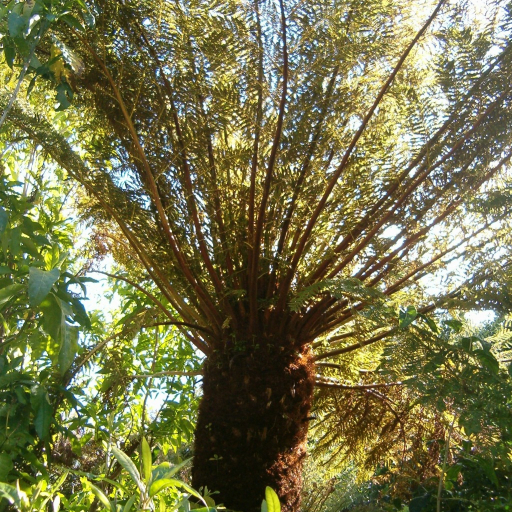
- 🌴 The Trunk: A thick, dark, and fibrous "stem" that can eventually reach heights of over 5 meters. This isn't wood, but a vertical rhizome covered in a dense mat of old leaf bases and roots.
- 🌿 The Fronds: Massive, arching green leaves that can stretch up to 3 meters in length. They have a delicate, lace-like appearance but feel surprisingly leathery to the touch.
- 🌀 The Fiddleheads: In spring, new growth emerges as tightly coiled "croziers" covered in protective brown scales, looking remarkably like the scroll of a violin.
🏡 In Your Garden
- 💧 The Crown Connection: While most plants want water at their roots, this tree fern loves having its trunk and "crown" (the top where leaves emerge) misted. This mimics the mountain mists of its natural habitat.
- ☀️ Sun & Shelter: It is more sun-tolerant than many other tree ferns, but it strictly demands "cool feet." Thick mulch around the base is essential to keep the root system from overheating in the summer.
- ❄️ Frost Resilience: It is surprisingly hardy for a tropical-looking plant. While it may lose its leaves in a hard freeze, the thick, fibrous trunk protects the core, allowing it to flush with new green life once spring returns.
⚠️ Safety & Toxicity
- 🐾 Pet Safety: Alsophila dregei is generally considered non-toxic to dogs, cats, and horses, making it a safe choice for family backyards.
- 🧤 Skin Irritation: The fine, hair-like scales on the stems and the underside of the leaves can sometimes cause mild skin irritation or "itchiness" for sensitive individuals. It is best to wear gloves when pruning old fronds.
✨ Fun Fact
Tree ferns like Alsophila dregei are so ancient that they predated the evolution of flowers. They reproduce via millions of tiny spores released from the underside of their leaves, a method of survival that has remained largely unchanged for over 300 million years.

Detailed Care Instructions

Place in a window with dappled sun or a spot in the middle of a room. Or directly in a window facing west or east.

Water-loving plants flourish in wet or sloppy soil and near ponds. The extensive root system enables these plants to absorb plenty of water. The surface of the soil should be kept moist at all times. Place your pot in a container filled with water to guarantee that plants get enough water. If the ground becomes dry, it is recommended that you water it well. Plants in smaller pots will need to be watered more frequently. Water the soil in which the plant is standing thoroughly using a watering can.








