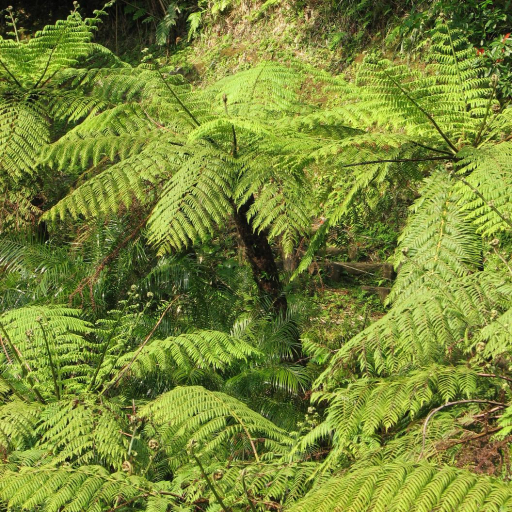
Plant Overview
Known as the "Flying Spider Monkey Tree Fern," Alsophila spinulosa is a majestic living relic from the age of the dinosaurs. This prehistoric giant brings a Jurassic-period atmosphere to any landscape, characterized by its towering trunk and a sprawling umbrella of lacy fronds. It is highly prized by collectors for its ancient lineage and its ability to turn a shaded corner into a tropical sanctuary.
🔍 How to Identify
- 🪵 The Spiny Trunk: The "trunk" is actually a vertical rhizome covered in dark, mahogany-colored scales and small, sharp spines (which gives it the name spinulosa).
- 🌿 Lacy Fronds: It features massive, tripinnate (thrice-divided) leaves that can reach lengths of 2 to 3 meters. These fronds are deep green and have a delicate, almost see-through texture when held against the light.
- 🐒 The "Monkey" Croziers: The emerging young leaves, or fiddleheads, are tightly coiled and covered in dense, golden-brown hairs. These fuzzy coils are said to resemble a monkey’s paw, which is where its whimsical nickname originates.
🏡 In Your Garden
- 💧 The Humidity Rule: This fern is a child of the rainforest. It breathes through its fronds as much as its roots, meaning it requires high ambient humidity. If you live in a dry climate, regular misting or a nearby water feature is essential to prevent the leaf tips from browning.
- 🍃 Dappled Protection: Because it naturally grows under the forest canopy, it hates direct, scorching afternoon sun. It performs best in "bright shade"—think of the light that filters through a straw hat.
- ⛰️ Soil & Drainage: It prefers a "humus-rich" diet. Mix plenty of compost and leaf mold into the soil. While it loves moisture, it cannot stand in stagnant water, which can cause the base of the trunk to rot.
⚠️ Safety & Toxicity
- ✅ Non-Toxic Status: This plant is generally considered non-toxic to humans, cats, and dogs. It does not contain the harsh alkaloids found in some other fern species.
- 🌵 Physical Irritant: While not poisonous, the "spiny" part of its name is a warning. The trunk and the base of the fronds are covered in sharp scales and stiff hairs that can cause skin irritation or minor scratches if handled without gloves.
✨ Fun Fact
Alsophila spinulosa is a true "Living Fossil." Fossil records show that very similar species existed over 150 million years ago. When you look at this fern, you are looking at the exact same foliage that likely provided shade for roaming Stegosauruses!

Detailed Care Instructions

Place in a window with dappled sun or a spot in the middle of a room. Or directly in a window facing west or east.

When the top few inches of soil dry out, water your plants. If the top few inches of soil are still moist, do not water your plant. Wait a few days, then poke your finger into the soil to see if anything has changed. Overwatering poses a disease risk, such as the development of fungal diseases in the roots. These plants have adaptations in there leaves that allow them to survive in low water supply.








