Plant Overview
Known commonly as Hard Milkwood or Batino, Alstonia macrophylla is a stately tropical evergreen that commands attention with its symmetrical growth and glossy foliage. Originating from the lush rainforests of Southeast Asia and the Pacific, this tree is a favorite in large landscapes for its ability to provide deep, cooling shade and its surprisingly fragrant blossoms.
🔍 How to Identify
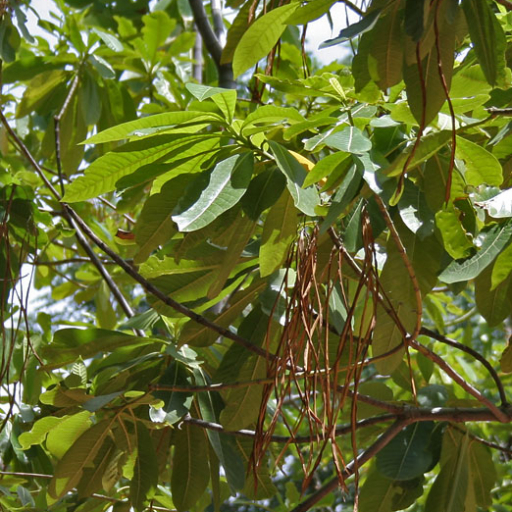
- 🍃 The Foliage: Look for large, leathery, lance-shaped leaves that grow in elegant "whorls" (circles) of three to four around the branch. They are dark green on top and a paler, velvety green underneath.
- 🌼 The Flowers: It produces clusters of tiny, star-shaped greenish-white flowers. While small, they emit a heavy, sweet perfume that is especially noticeable during the evening.
- 🧪 The Sap: Like many members of its family, if a leaf or twig is broken, the plant will leak a thick, milky white latex (sap).
- 🥢 The Seed Pods: After flowering, it develops very long, slender, twin-hanging pods that can reach up to 12 inches, looking almost like green noodles.
🏡 In Your Garden
- 🚀 A Rapid Pioneer: This tree is famous for being a "pioneer species," meaning it grows incredibly fast in open, sunny spaces. It is often used for reforestation or to quickly establish a privacy screen in large tropical gardens.
- 🪵 Soil & Space: It isn't picky about soil but requires excellent drainage. Because it can grow quite tall (reaching 20 meters or more in the wild), it should never be planted too close to house foundations or power lines.
- 🌬️ Wind Resistance: Despite its height, it has a sturdy trunk and flexible branches, making it a resilient choice for areas prone to heavy tropical winds.
⚠️ Safety & Toxicity
- 🚫 Toxic if Ingested: All parts of the Batino tree contain alkaloids. If eaten, it can cause digestive distress, vomiting, or more serious symptoms.
- 💧 Skin Irritant: The milky latex sap can be highly irritating to the skin and eyes. Always wear gloves when pruning and keep curious pets or children away from fresh cuttings.
✨ Fun Fact
The wood of the Alstonia macrophylla is surprisingly light and easy to work with, earning it the nickname "Big-leaved Cheese Wood." In some cultures, the wood was traditionally used to carve light household items and even floating net-floats for fishermen!

Detailed Care Instructions
To grow Alstonia Macrophylla plants, you can follow these steps:
- Select a suitable location: Alstonia Macrophylla plants thrive in full sun to partial shade. Choose a spot with well-draining soil that is rich in organic matter.
- Propagation: You can propagate Alstonia Macrophylla plants through seeds or stem cuttings. If using seeds, soak them in water for 24 hours before planting. For stem cuttings, take a 4-6 inch cutting from a healthy plant and remove the lower leaves.
- Planting: Dig a hole in the prepared soil that is slightly larger than the root ball. Place the seed or stem cutting in the hole and cover it with soil, gently firming it around the plant.
- Watering: Keep the soil evenly moist, but not waterlogged. Water the plants regularly, especially during dry spells. Avoid overwatering as it can lead to root rot.
- Fertilization: Use a balanced fertilizer during the growing season to promote healthy growth. Follow the manufacturer's instructions for application rates.
- Pruning: Regularly prune Alstonia Macrophylla plants to maintain their shape and promote bushier growth. Remove any dead or diseased branches.
- Pests and diseases: Alstonia Macrophylla plants are generally resistant to pests and diseases. However, keeping an eye out for common garden pests like aphids, mealybugs, and scale insects is essential. Use appropriate pesticides or insecticidal soaps if necessary.
- Support: As Alstonia Macrophylla plants mature, they may benefit from staking or trellising to support their growth and prevent them from toppling over.
- Mulching: Apply a layer of organic mulch around the base of the plant to conserve moisture, suppress weed growth, and regulate soil temperature.
- Winter care: If you live in a cooler climate, protect the Alstonia Macrophylla plant from frost by covering it or bringing it indoors during winter.
By following these steps and providing proper care, you can successfully grow Alstonia Macrophylla plants.
Watering this plant requires regular attention to its soil moisture level. The best approach is to water it once a week, but it may vary depending on the size and location of the plant. When watering, make sure to thoroughly saturate the soil to a depth of at least 6 inches. It is important to avoid allowing water to puddle around the base of the plant, as this can lead to root rot. If the plant is located outside, be sure to watch for rainfall and adjust watering accordingly. In addition, avoid watering during the hottest part of the day, as this can cause the water to evaporate before it has a chance to soak into the soil.
- Choose a well-draining soil mix that is rich in organic matter.
- Use a slow-release fertilizer, either granular or liquid, that is formulated for woody plants.
- Apply the fertilizer once a month during the active growing season, which is usually spring and summer.
- Follow the recommended dosage on the packaging, as over-fertilizing can harm the plant.
- Water the plant thoroughly before and after fertilizing to help distribute the nutrients evenly.
- Avoid fertilizing the plant during the dormancy period in winter unless it shows signs of nutrient deficiency.
- Monitor the plant for any signs of over or under-fertilization, such as yellowing leaves or burnt leaf tips, and adjust the fertilization schedule accordingly.
When planting the Alstonia Macrophylla, it is best to use well-draining soil that is nutrient-rich. The soil should have a pH level of around 6.0 to 7.5. A mix of organic compost, peat moss, and sand or perlite can improve drainage and create a suitable soil composition. It is important to avoid using soil that is too heavy or compact, as this can prevent the roots from getting adequate oxygen. Additionally, the plant prefers moist soil, but not waterlogged soil, so watering should be done carefully and the soil should be allowed to dry out slightly between waterings.
To propagate a certain plant species, select a healthy and mature plant from which to obtain cuttings. With clean and sharp gardening shears, make a diagonal cut through a stem below a node, or the point where leaves emerge from the stem. Remove any leaves from the lower half of the cutting, and dip that end in rooting hormone. Plant the cutting in damp, sandy soil in a pot. Place the pot in a warm, brightly lit area, and keep the soil moist. After a few weeks, the cutting should develop roots and can be moved to a larger pot or planted outside.








