Plant Overview
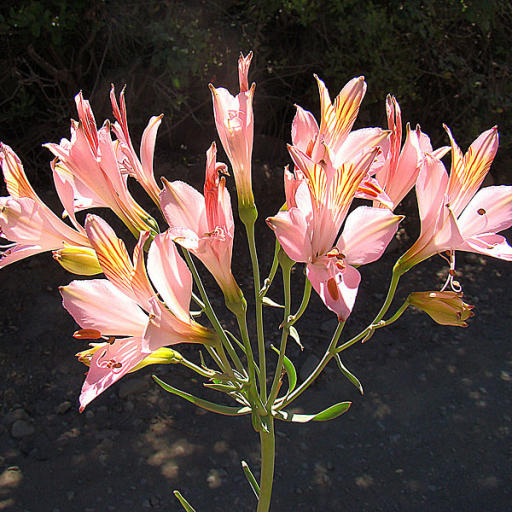
Often called the "Chilean Lily" or "Lily of the Incas," this plant is a burst of living confetti for the garden. Native to the rugged slopes of the Chilean Andes, Alstroemeria ligtu has traveled from mountain peaks to become a global floral superstar. It is beloved for its "painted" appearance, looking as though a miniature artist spent the morning detailing every single petal.
🔍 How to Identify
- 🌸 The "Painted" Petals: Funnel-shaped flowers that usually appear in shades of coral, flame orange, or lilac. The inner petals are almost always streaked with dark, whisker-like "nectar guides."
- 🍃 Twisted Leaves: The slender, lance-shaped leaves have a unique habit of twisting at the base so that the underside of the leaf actually faces upward.
- 📏 Elegant Clumps: The plant grows in upright, leafy stems topped with a circular cluster (an umbel) of multiple blossoms, creating a dense crown of color.
🏡 In Your Garden
- 🧤 The "Don't Touch My Toes" Rule: This species grows from very brittle, fleshy tubers. It absolutely hates being moved once it is established; transplanting often results in the roots snapping, which can stunt the plant for a season.
- ☀️ Sun-Seeker with Cool Feet: While the blooms need plenty of sunlight to reach their full color potential, the plant thrives best when its root zone is kept cool and moist with a thick layer of organic mulch.
- ✂️ The "Pull, Don't Cut" Method: To encourage more blooms and keep the plant tidy, experienced gardeners "pluck" the spent flowering stems from the base with a sharp tug rather than cutting them, which stimulates the tuber to produce new growth.
⚠️ Safety & Toxicity
- 🐱 Pet Sensitivity: While not as "deadly" as true Lilies (Lilium), Alstroemeria contains Tuliposide A. If ingested by cats or dogs, it can cause significant mouth irritation, drooling, and digestive upset.
- 🧤 Contact Dermatitis: Some gardeners are sensitive to the sap. Handling the stems or broken leaves without gloves can lead to "Alstroemeria dermatitis," a red, itchy skin rash.
✨ Fun Fact
🏺 The Long-Distance Runner: Alstroemeria is a favorite in the floral industry because of its incredible "vase life." A single stem can remain vibrant and fresh in a bouquet for over two weeks, far outlasting most other garden flowers!

Detailed Care Instructions
To grow Alstroemeria (also known as Peruvian lily) Ligtu plants, follow these steps:
- Choose a suitable location: Alstroemerias prefer a sunny spot with well-draining soil.
- Prepare the soil: Amend the soil with compost or well-rotted manure to improve drainage and fertility.
- Plant the rhizomes: Plant the rhizomes in spring, leaving about 1-2 feet of space between each plant. Ensure the rhizomes are buried about 4 inches deep.
- Watering: Keep the soil consistently moist, but not waterlogged. Alstroemerias prefer regular watering, especially during dry periods.
- Mulching: Apply a layer of organic mulch around the plants to help retain moisture and suppress weed growth.
- Provide support: Alstroemerias can grow quite tall, so it is advisable to provide support such as stakes or trellises to prevent them from falling over.
- Fertilization: Feed the plants with a balanced slow-release fertilizer in early spring and midsummer to promote healthy growth and flowering.
- Deadheading: Remove spent flowers to encourage continuous blooming.
- Overwintering: In colder regions, protect the plants during winter by adding a layer of mulch or moving potted plants indoors. Alstroemerias are generally hardy in USDA zones 8-10.
- Dividing: Every 3-4 years, divide the clumps in early spring. Lift the rhizomes and separate them into individual sections to promote new growth and maintain plant vigor.
By following these guidelines, you can successfully grow Alstroemeria Ligtu plants and enjoy their vibrant blooms.

Place in a window with dappled sun or a spot in the middle of a room. Or directly in a window facing west or east.

To properly water this plant, pay attention to the soil moisture levels. Water the plant deeply but infrequently, allowing the soil to dry out slightly between watering. Do not let the soil become completely dry, as this can cause stress to the plant and may lead to premature wilting. It is also important to avoid over-watering, as this can lead to root rot and other issues. When watering, aim to saturate the soil to a depth of 6-8 inches. Avoid getting water on the leaves or blooms, as this can lead to disease. In general, this plant prefers evenly moist but well-draining soil. Be sure to adjust your watering schedule based on the conditions in your specific growing environment.
To fertilize this flowering plant, apply a balanced fertilizer with equal parts nitrogen, phosphorus, and potassium. Apply the fertilizer at the base of the plant, spreading it evenly across the soil. Water the plant immediately after fertilizing to help the nutrients sink into the soil. Repeat fertilizing every two weeks during the growing season to encourage healthy growth and abundant blooms. Avoid over-fertilizing, as this can lead to excessive foliage growth at the expense of flowers.
Alstroemeria Ligtu requires a well-draining soil mix that is rich in nutrients and organic matter. A recommended blend is composed of one-third coarse sand or perlite, one-third peat moss, and one-third sterilized soil or compost. The soil mix should have a pH level of around 6 to 7.5 and should be slightly acidic to neutral. It is important to ensure that the soil is well-aerated but also retains moisture evenly. Avoid using heavy clay soils that can compact and restrict root growth. The soil should also be free of pests, diseases, and weed seeds. It is advisable to use a potting mix specifically formulated for flowering plants or to amend the soil with a slow-release fertilizer containing balanced amounts of nitrogen, phosphorous, and potassium.
To propagate this plant, you will need to first identify a healthy parent plant that is strong and disease-free. Cut a stem from the parent plant that is about 4-6 inches long and has at least one node. Remove any leaves from the bottom third of the stem.
Next, dip the cut end of the stem into rooting hormone. This will help stimulate root growth. Plant the stem in a pot filled with a well-draining potting mix that is moist but not too wet. Firm the soil around the stem to ensure good contact, and place the pot in a bright, warm location. Keep the soil moist but not soggy and mist the cutting regularly to keep it humid.
After 4-6 weeks, check for signs of new growth. Once roots have formed and the plant seems established in the pot, it can be transplanted to a larger container or into the garden.








