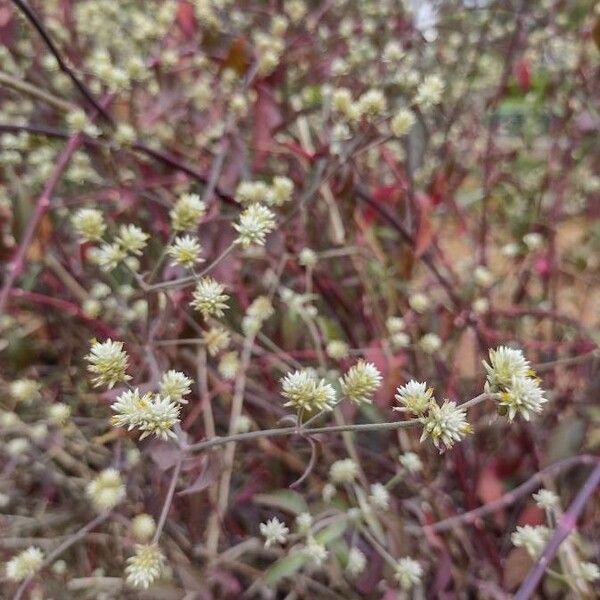
Plant Overview
Often called the Yellow Joyweed, Alternanthera flavescens is a resilient tropical wanderer that feels right at home in the sun-drenched coastal regions of Florida and the Caribbean. This hardy perennial is a master of the "scrub," often found sprawling over sandy dunes or tucking itself into the edges of hammocks, providing a lush, tangled backdrop where more delicate plants might wither.
🔍 How to Identify
- 🌿 The Stems: It features sprawling, multi-branched stems that can grow quite long, often becoming slightly woody at the base as the plant matures.
- 🍃 Leaf Shape: The leaves are simple and grow opposite one another along the stem. They are typically an elongated oval or lance shape with a smooth, vibrant green finish.
- 🌼 Flower Clusters: Look closely at the "axils" (where the leaf meets the stem). You’ll find small, round, papery flower heads that are white to straw-yellow, resembling tiny, dry pom-poms.
🏡 In Your Garden
- 🏝️ Salt Tolerance: This is a premier choice for seaside gardeners. It has a high tolerance for salt spray and sandy soil, making it an excellent "pioneer plant" for stabilizing soil in coastal landscapes.
- ✂️ Growth Habit: Because it is a vigorous spreader, it works beautifully as a wilder groundcover. However, in a manicured garden, it requires regular "haircuts" to prevent it from rambling over its neighbors and becoming unruly.
⚠️ Safety & Toxicity
- ✅ Low Risk: Alternanthera flavescens is generally considered non-toxic to humans and common household pets.
- 🐾 Mild Sensitivity: While not poisonous, like many members of the Amaranth family, it can contain traces of oxalates. If a curious cat or dog eats a large amount, they might experience a mild upset stomach, so it's best kept as a visual treat rather than a snack.
✨ Fun Fact
- 🐜 Ant Protection: In the wild, the dense mats formed by Yellow Joyweed provide a perfect "micro-fortress" for beneficial insects and small lizards, helping to create a tiny, bustling ecosystem right at the soil level!

Detailed Care Instructions
To grow Alternanthera Flavescens, also known as Yellow Joyweed or Jacob's Ladder, follow these steps:
- Choose a suitable location: Select a spot that receives partial to full shade, as too much direct sunlight can scorch the leaves. The plant can also tolerate some drought conditions but prefers moist, well-draining soil.
- Prepare the soil: Loosen the soil and mix in organic matter like compost or well-rotted manure to improve fertility and drainage. The soil pH should ideally be slightly acidic to neutral (around 6.0 to 7.0).
- Sow seeds or plant cuttings: You can either start the plant from seeds or propagate it from stem cuttings. Sow the seeds in pots or trays filled with seed-starting mix and lightly cover them with soil. Keep the soil moist until germination. Alternatively, place stem cuttings into a moist rooting medium and provide bottom heat to facilitate rooting.
- Transplant seedlings or rooted cuttings: Once the seedlings have grown a few inches tall or the cuttings have rooted, transplant them into the prepared garden soil, making sure you space them at least 12 inches apart.
- Watering: Water the plants regularly, keeping the soil consistently moist but not waterlogged. Providing a layer of organic mulch around the plants can help retain moisture and regulate soil temperature.
- Fertilization: Feed the plants with a balanced, slow-release fertilizer every 4-6 weeks during the growing season to promote healthy growth. Follow the package instructions for dosage.
- Pruning: Prune the plants occasionally to maintain their shape and encourage bushiness. Pinching off the tips of the stems will help prevent the plant from becoming too leggy.
- Pest and disease control: Alternanthera Flavescens is generally resistant to pests and diseases. However, keep an eye out for aphids, mealybugs, or fungal issues. Use organic insecticides or fungicides if necessary.
By following these steps, you should be able to successfully grow Alternanthera Flavescens and enjoy its vibrant foliage in your garden or as a container plant. Remember to adjust the care according to your local climate and conditions.

Place in a window with dappled sun or a spot in the middle of a room. Or directly in a window facing west or east.

To water this plant, first assess the moisture level of the soil by sticking your finger about 1 inch deep into the soil. If it feels dry, it's time to water. Use room temperature water and pour it slowly over the soil until it starts to drain out the bottom of the pot. Make sure not to overwater as this plant prefers slightly moist soil, not soggy conditions. Allow the top inch of soil to dry out before watering again. Avoid getting water on the leaves as this can encourage fungal growth.
To fertilize this plant, use a balanced fertilizer with an N-P-K ratio of 10-10-10 or 20-20-20. Apply the fertilizer every two weeks during the growing season, which is typically from spring to summer. Dilute the fertilizer according to the packaging instructions and follow recommended application rates. Avoid over-fertilizing, as it can lead to burnt tips on the leaves or yellowing of the plant. Water the plant thoroughly after fertilization to ensure the nutrients are absorbed properly.
Alternanthera Flavescens plant prefers well-draining soil that is rich in nutrients and has a neutral to slightly acidic pH level. The soil should be loose and airy to allow for good drainage and proper aeration around the roots. It is important to avoid heavy clay or compact soil as it can suffocate the roots and cause root rot. Organic matter such as compost or aged manure can be mixed into the soil to enhance its nutrient content. It is recommended to water the plant regularly to keep the soil moist but not soaking wet.
- Take cuttings from a healthy Alternanthera Flavescens plant. The cuttings should be about 4-6 inches in length and should include at least two nodes.
- Remove the leaves from the lower 1-2 inches of the cutting.
- Dip the cut end of the cutting in rooting hormone powder.
- Plant the cutting in a well-draining soil mixture. Make sure the soil is moist but not waterlogged.
- Cover the cutting with a plastic bag or dome to create a humid environment.
- Place the cutting in a warm, brightly lit area, but out of direct sunlight.
- Monitor the cutting daily and mist the leaves with water if they appear to be drying out.
- After a few weeks, new growth should appear, indicating that the cutting has rooted and is ready to be transplanted into a larger pot or garden bed.








