Plant Overview
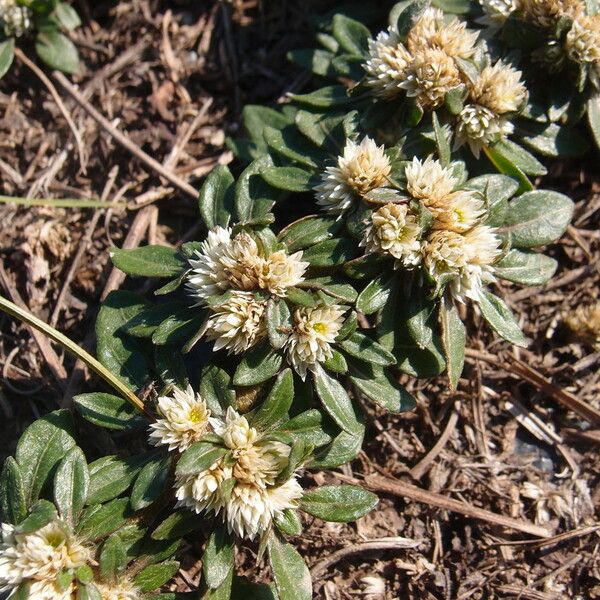
Often referred to as the Smooth Chaff-flower, Alternanthera paronychioides is nature’s resilient green carpet. Originating from the tropical regions of the Americas, this low-creeping perennial has traveled the globe, often found "hugging" the ground in sunny gardens or peeking through sidewalk cracks. It is a master of the "prostrate" growth habit, forming dense mats that protect the soil like a living mulch.
🔍 How to Identify
- 🍃 The Foliage: Small, spoon-shaped (spatulate) leaves that grow in opposite pairs. While usually a vibrant green, they can take on a bronzed or reddish tint when exposed to intense, direct sunlight.
- 🌿 The Stems: Its stems are reddish or green and tend to be slightly hairy. They trail along the ground and have the unique ability to "creep," sending out new roots wherever a joint (node) touches the soil.
- 🌸 The Flowers: Look closely at the leaf joints for tiny, stalkless clusters of white or papery-cream flowers. They aren't flashy, but they have a dry, "chaff-like" texture that gives the plant its common name.
🏡 In Your Garden
- 🌱 The Living Carpet: This plant is incredibly "trample-tolerant." Because it stays so low to the ground, it is often used as a gap-filler between stepping stones or as a groundcover where other plants might be crushed.
- 💧 Moisture Lover: While it can survive dry spells once established, it truly thrives in damp, disturbed soil. If you have a spot in your garden that stays a bit soggy, the Smooth Chaff-flower will happily claim it.
⚠️ Safety & Toxicity
- ✅ Safe Status: Alternanthera paronychioides is generally considered non-toxic to humans and common household pets.
- 🐾 Pet Friendly: It does not possess thorns or irritating saps, making it a safe choice for gardens where dogs or cats roam. However, as with any ornamental plant, it’s best to discourage pets from grazing on it to avoid minor digestive upset.
✨ Fun Fact
The "Chaff-flower" name comes from the Greek word achyranthes, referring to the papery, scale-like bracts of the flower that resemble the "chaff" (the dry husks) separated from grain during harvest. Small but tough!

Detailed Care Instructions
To grow Alternanthera paronychioides plants, follow these steps:
- Choose a suitable location: Select a spot that receives moderate to full sunlight for at least 4-6 hours a day. The plant can tolerate both shade and direct sunlight, but it prefers a brightly lit area.
- Prepare the soil: Alternanthera paronychioides prefers well-draining soil with a pH range of 5.6-7.5. If your soil is heavy or has poor drainage, amend it by adding organic matter like compost or sand to improve the texture.
- Planting: Dig a hole twice as wide and as deep as the plant's root ball. Gently remove the plant from its container, being careful not to damage the roots. Place the plant in the hole, ensuring the base of the stem is level with or slightly above the soil surface. Backfill the hole, gently firming the soil around the roots.
- Watering: Initially, water the plant thoroughly after planting to settle the soil around the roots. Afterwards, water regularly to keep the soil consistently moist but not waterlogged. Alternanthera paronychioides plants prefer slightly moist conditions, so monitor the soil and adjust the watering frequency accordingly.
- Fertilization: Apply a balanced, slow-release fertilizer to the soil before planting, following the package instructions. Additionally, you can feed the plant every 6-8 weeks during the growing season with a water-soluble, all-purpose fertilizer to promote healthy growth.
- Pruning: Alternanthera paronychioides may require occasional pruning to maintain its shape and promote bushier growth. Trim back any leggy or overgrown stems to encourage branching. You can use the trimmed stems for propagation if desired.
- Propagation: Alternanthera paronychioides can be propagated through stem cuttings. Take 3-5 inch (8-13 cm) stem cuttings from a healthy plant, remove the lower leaves, dip the cut end in a rooting hormone powder, and plant it in a well-draining growing medium. Keep the cutting in a warm, humid environment until it develops roots.
- Protection from frost and pests: Alternanthera paronychioides plants are frost-sensitive and should be protected during cold weather. Also, inspect the plant regularly for pests such as aphids or spider mites, and treat them with suitable insecticides if necessary.
By following these guidelines, you should be able to successfully grow Alternanthera paronychioides plants and enjoy their vibrant foliage.

Place in a bright room that is sun drenched almost all day. Or directly in a south-facing window.

The Alternanthera Paronychioides plant should be watered frequently but not over-watered. The soil should be allowed to dry out slightly between watering to prevent root rot. The plant prefers well-draining soil, and the water should be applied at the base of the plant to prevent wetting the foliage. The watering schedule should be adjusted according to the plant's location, temperature, and humidity. It is important to monitor the plant's soil moisture levels and adjust the watering frequency as needed. During the winter months, the plant may require less water, but the soil should never be allowed to completely dry out.
To fertilize the plant, mix a balanced, water-soluble fertilizer that contains equal parts of nitrogen, phosphorus, and potassium. Dilute the fertilizer to half strength and apply it to the soil around the base of the plant once every two weeks during the growing season, which is typically from spring to autumn. Be careful not to over-fertilize, as this can lead to excessive growth and weak stems. Alternatively, you can add a slow-release fertilizer to the soil at planting time, following the manufacturer's instructions for application rate.
The ideal soil for the Alternanthera Paronychioides plant would be well-draining, fertile, and rich in organic matter. A soil pH of 6.0-7.0 is preferred for optimal growth. Heavy clay soils should be avoided as they tend to retain too much moisture, which can lead to root rot. Sandy soils can be amended with organic matter to improve moisture retention and nutrient availability. A mix of equal parts garden soil, peat moss, and perlite or vermiculite would be a good option for planting the Alternanthera Paronychioides plant. It's important to ensure the soil remains consistently moist but not waterlogged, as this plant prefers moist conditions.
To propagate this plant, take stem cuttings from a healthy parent plant. Choose a stem that is at least 4-6 inches long and has multiple leaves on it. Cut the stem just below a leaf node, and remove the leaves from the bottom half of the stem.
Dip the bottom end of the cutting in rooting hormone powder and place it in a container filled with moist potting soil. Cover the container with a clear plastic bag to create a greenhouse effect and keep the soil moist but not too wet.
Place the container in a bright area but not in direct sunlight, and keep the temperature between 70-80°F. After several weeks, the cutting should start to form roots and new growth.
Once the new plant has grown a few inches tall and has several leaves, it can be transplanted into a larger pot or directly into the ground in a well-drained, sunny location. Water the new plant regularly and fertilize it with a balanced, all-purpose fertilizer.








