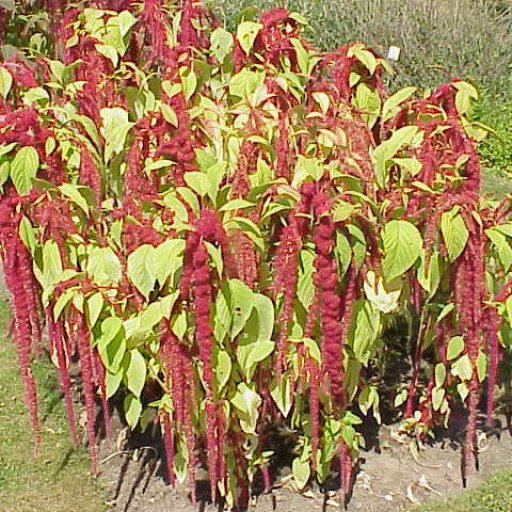
Plant Overview
Often called Love-Lies-Bleeding, this striking heirloom has been a garden favorite since the Victorian era, where it famously symbolized hopeless love or desertion. Native to the Andes, its dramatic, drooping crimson tassels look like velvet ropes cascading toward the soil from a sturdy, upright stem. It is more than just an ornamental showstopper; it has been a vital "superfood" for centuries, known as Kiwicha to the indigenous people of South America.
🔍 How to Identify
- 🌸 The Tassels: Long, rope-like flower clusters (panicles) that hang vertically, often reaching 12 to 24 inches in length.
- 🍃 The Foliage: Large, light-green, oval-to-lance-shaped leaves that provide a lush, textured backdrop to the vibrant blooms.
- 📏 The Stature: A robust, bushy grower that can reach 3 to 5 feet in height, making it a natural focal point in any landscape.
🏡 In Your Garden
- 🌱 The Taproot Rule: This plant develops a deep taproot early on and "hates" being moved. For the best results, sow seeds directly into the garden rather than transplanting, as disturbing the roots can stunt the spectacular flower display.
- ☀️ Heat Lover: Thriving in the peak of summer, it requires full sun and well-draining soil to reach its full potential. It is remarkably drought-tolerant once established but needs consistent water during its initial growth spurt.
- ✂️ Support Systems: Because the flower tassels are heavy, the plant may need staking in windy areas to prevent the main stem from snapping under the weight of its own beauty.
⚠️ Safety & Toxicity
- 🐕 Pet Safety: While generally non-toxic, the plant contains oxalates. If consumed in large quantities by curious cats or dogs, it can lead to drooling, stomach upset, or lethargy.
- 🥗 Human Edibility: The seeds and young leaves are highly nutritious and edible for humans. However, individuals prone to kidney stones should consume the leaves in moderation due to the presence of oxalic acid.
✨ Fun Fact
🏛️ Ancient Power: The Aztecs and Incas considered Amaranth a "miracle grain." It was so central to their religious ceremonies—often ground into flour and mixed with honey or even blood to form statues of gods—that Spanish conquistadors actually banned its cultivation for a time in an attempt to suppress native traditions.

Detailed Care Instructions
To grow Amaranthus caudatus, also known as Love-Lies-Bleeding, you can follow these steps:
- Choose the right location: Amaranthus caudatus prefers full sun to partial shade. Find a well-drained area with good air circulation.
- Prepare the soil: The plant is not too picky about soil, but a fertile soil with organic matter will support its growth. Mix compost or well-rotted manure into the soil before planting.
- Sow the seeds: The best time to sow the seeds is after the last frost in spring. Sow the seeds about 1/8 inch deep and 12-18 inches apart. You can also start seeds indoors a few weeks before the frost is expected to end and transplant them outdoors later.
- Watering: Keep the soil consistently moist but not waterlogged. Water regularly, especially during dry periods. Avoid overhead watering to prevent fungal diseases.
- Fertilizer: Amaranthus caudatus doesn't require heavy fertilization. You can apply a general-purpose fertilizer once or twice during the growing season.
- Support the plant: As the plant grows, it might lean or fall over due to its top-heavy structure. Use stakes or trellises to support the plant and prevent it from breaking or sprawling on the ground.
- Weed control: Regularly remove weeds from around the plant to prevent competition for nutrients and water.
- Harvesting: The flower spikes of Amaranthus caudatus are the main attraction. Once the flowers have bloomed and turned deep red, you can cut them for floral arrangements or allow them to dry on the plant for ornamental purposes.
- Pest and disease control: Amaranthus caudatus is relatively resistant to pests and diseases. However, occasional aphids or caterpillars may appear. Remove them by hand or use insecticidal soap if necessary.
- Saving seeds: If you want to save the seeds for future planting, allow a few flowers to fully mature and dry on the plant. Harvest the dry flower spikes and thresh the seeds from the flowers. Store the seeds in a cool, dry place until ready for planting.
Remember to check your local climate and specific variety requirements for additional guidance on growing Amaranthus caudatus successfully.

Place in a bright room that is sun drenched almost all day. Or directly in a south-facing window.

To water this plant, it is important to first check the soil moisture level. Stick your finger into the soil to a depth of 2-3 inches. If the soil feels dry at this depth, it is time to water. When watering, provide enough water so that the soil is thoroughly dampened. Avoid letting the soil become waterlogged, as this can lead to root rot. One way to prevent over-watering is to use well-draining soil and a pot with good drainage. As a general rule, water this plant when the top inch of soil is dry to the touch.
To fertilize this plant, use a balanced fertilizer with equal parts nitrogen, phosphorus, and potassium. Apply the fertilizer during the growing season every two weeks. Be sure to water the plant thoroughly before and after applying the fertilizer to prevent root burn. Avoid over-fertilizing, as this can lead to excessive growth and weakened stems. If the leaves start turning yellow, reduce the amount of fertilizer or frequency of application.
Amaranthus caudatus requires a soil type that is well-drained and has a neutral pH level. The soil should be rich in organic matter and have a good nutrient content. A loamy soil is ideal, as it provides good drainage while also retaining moisture. The plant is susceptible to root rot, so it is important to ensure that the soil is not waterlogged. A sandy soil can be used, but it requires more frequent watering to ensure that the plant does not dry out. It is also important to avoid using soil that is too heavy or compact, as this can impede root growth and ultimately lead to poor plant health. When planting amaranthus caudatus, it is recommended to amend the soil with compost or other organic materials to ensure that the plants have the necessary nutrients to thrive.
Amaranthus Caudatus is a plant that can be propagated easily through seed or stem cuttings. To propagate it through seed, collect the mature seeds from the plants and sow them in well-draining soil. Cover the seeds with a thin layer of soil and keep them moist until they germinate. Once the seedlings have grown a few sets of true leaves, transplant them into their permanent location.
To propagate through stem cuttings, take a cutting from a mature plant that has several nodes. Remove the leaves from the bottom half of the stem and dip the cut end in rooting hormone. Place the stem cutting in a container with well-draining soil and keep it in a warm, humid location. Mist the cutting regularly to keep it hydrated and within a few weeks, roots should form and new growth will appear. Transplant the new plant into a permanent location once it has established itself.
Common pests of the purple amaranth include Larvae. Make a habit of checking your purple amaranth frequently for pests so that any infestations can be caught and managed early.








