Plant Overview
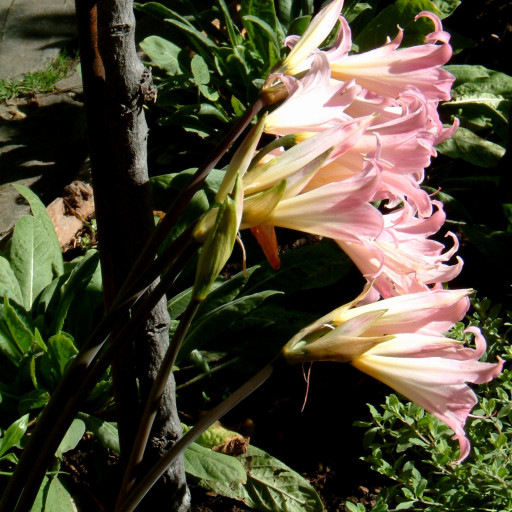
Known famously as the "Naked Lady" because its stunning, trumpet-shaped flowers burst from the bare earth long after its foliage has withered away. This South African native brings a touch of dramatic pink to late summer landscapes, filling the air with a sweet, bubblegum-like fragrance. While many people call indoor holiday lilies "Amaryllis," this species is the only "true" Amaryllis in the botanical world.
🔍 How to Identify
- 🌸 The "Naked" Stem: Sturdy, leafless, and often purple-tinged stalks that can reach up to 2 feet tall, appearing suddenly from seemingly dormant soil.
- 🎺 Trumpet Blooms: Clusters of 6–12 large, elegant flowers at the top of the stalk, ranging from pearly white to deep rose pink.
- 🍃 Delayed Foliage: Long, strap-like green leaves that grow during the winter and spring but completely die back and disappear before the flowers emerge in late summer.
🏡 In Your Garden
- ☀️ Summer Baking: These bulbs thrive on a "summer bake." They require a period of dry, intense heat while dormant to trigger their spectacular flowering cycle.
- 🌱 Root Sensitivity: They possess a deep, fleshy root system and notoriously hate being disturbed. If you transplant them, they may refuse to bloom for several years while they settle back in.
- ⏳ Patience is Key: It is common for these plants to skip a flowering season if the previous winter wasn't wet enough or if the bulb hasn't reached a mature size.
⚠️ Safety & Toxicity
- 🚫 Highly Toxic: Every part of the Amaryllis Belladonna contains the alkaloid lycorine, which is poisonous to both humans and animals.
- 🐾 Pet Warning: The bulbs are the most concentrated source of toxins. Keep curious dogs and cats away from garden beds, as ingestion can lead to severe vomiting, tremors, and respiratory distress.
✨ Fun Fact
The name "Belladonna" translates to "Beautiful Lady" in Italian. In Greek mythology, Amaryllis was a shy shepherdess who pierced her heart with a golden arrow to prove her love; the vibrant pink flowers were said to have sprung from her drops of blood.

Detailed Care Instructions
| Humidity | Dry |
| Lighting | Full Sun |
| Difficulty | Medium |
| Temperature | 18°C - 24°C |
To grow Amaryllis Belladonna plants, follow these steps:
- Choose a suitable planting location: Amaryllis Belladonna plants prefer full sun or partial shade. They need well-draining soil with plenty of organic matter.
- Planting time: The best time to plant Amaryllis Belladonna bulbs is in late summer or early autumn, as they require a period of dormancy in winter.
- Prepare the soil: Dig a hole about 8-10 inches deep and mix it with compost or well-rotted manure to enhance the soil's fertility and drainage.
- Planting the bulbs: Place the bulbs in the prepared hole with the pointed end facing up. Space them about 8-10 inches apart.
- Fill the hole: Cover the bulbs with soil and gently firm it around them.
- Watering: After planting, water the bulbs thoroughly to settle the soil around them.
- Maintenance: Keep the soil consistently moist but not waterlogged. Once the plants start growing, they will need regular watering during dry spells. However, avoid excessive watering, as amaryllis belladonna bulbs can rot in waterlogged soil.
- Fertilization: Feed the plants with a balanced fertilizer, high in phosphorus, during their active growing phase, usually in spring and autumn. Follow the fertilizer package instructions for the correct dosage.
- Mulching: Apply a layer of organic mulch around the plants to help retain moisture, suppress weeds, and protect the bulbs during winter.
- Pruning: Remove any dead or yellowing leaves, but avoid cutting back the green leaves, as they provide energy for bulb growth.
- Division: Amaryllis Belladonna plants form large clumps over time. You can divide and transplant these clumps during their dormant phase in winter to rejuvenate and propagate the plants.
Remember that Amaryllis Belladonna plants may take several years to establish and start blooming regularly. Patience is crucial during their initial growth period.

Place in a window with dappled sun or a spot in the middle of a room. Or directly in a window facing west or east.

To properly water this plant, first ensure that the soil is well-drained and not waterlogged. Then, take care to slowly pour water into the soil around the base of the plant, making sure to avoid getting water on the leaves or flowers. Allow the soil to absorb the water fully before watering again. During the growing season, water the plant once a week, and reduce watering during dormant periods. It is important to avoid over-watering, as this can cause root rot and other issues.
To fertilize this plant, mix a balanced fertilizer with equal parts nitrogen, phosphorous, and potassium. Apply the fertilizer at a rate of 1 tablespoon per 1 square foot of soil and water thoroughly after application. Fertilize the plant once a month from spring to fall, but stop fertilizing during winter as the plant goes dormant.
The ideal soil for this plant is a well-draining mixture that is rich in organic matter and has a slightly acidic to neutral pH level. It should be free of rocks and other debris, and should allow for adequate air circulation around the roots. A mixture of peat moss, coarse sand, and perlite or vermiculite is a good choice for planting this species, as it provides excellent drainage and promotes healthy root growth. Additionally, it is important to ensure that the soil is not waterlogged, as this can lead to root rot and other health issues for the plant.
To propagate this plant, you first need to select a mature plant that has a healthy root system. Once you have identified the plant, use a sharp and sterile pruning tool to cut off a healthy young shoot or bulb from the base of the plant. Make sure the cutting is approximately 4-5 inches long.
Next, prepare a well-draining soil mixture that is rich in nutrients. Place the cutting into the soil and water it lightly. Make sure to keep the soil moist but not too wet as excessive moisture can lead to rot.
Place the cutting in a warm and sunny location with indirect sunlight. Monitor the plant and water it as needed. Over time, you will notice new growth and roots forming. Once the plant has established a strong root system, you can transplant it into a larger pot or directly into the ground.
Continue to care for your new plant as you would any other Amaryllis Belladonna plant, and you will soon have a beautiful flowering plant to enjoy.
Common pests of the belladonna lily include Spider mites, aphids, thrips. Make a habit of checking your belladonna lily frequently for pests so that any infestations can be caught and managed early.








