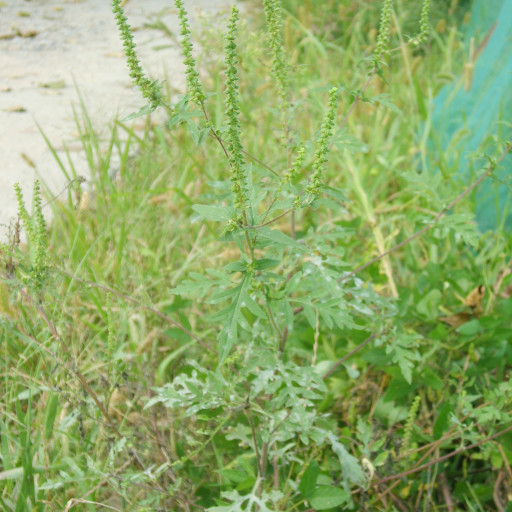
Plant Overview
Often nicknamed "Common Ragweed" or "Hay Fever Herb," Ambrosia artemisiifolia is perhaps the most notorious plant in the world of allergies. Despite its name—which translates to "food of the gods"—it is far from divine for those with sensitive sinuses. This hardy annual is a pioneer species, quickly colonizing disturbed soils and wasteland throughout North America and Europe.
🔍 How to Identify
- 🌿 The Foliage: The leaves are deeply lobed, fern-like, and hairy, appearing very similar to Mugwort or Marigolds. They are typically a soft green and arranged oppositely at the bottom but alternately near the top.
- 🌾 The Flowers: Unlike showy garden plants, Ragweed has small, inconspicuous greenish-yellow flowers clustered in spikes at the top of the stems. They are designed for wind-pollination, not for attracting insects.
- 📏 The Stature: It can grow anywhere from a few inches to over 6 feet tall, depending on soil quality, featuring a rough, hairy stem that often takes on a reddish-purple hue as it matures.
🏡 In Your Garden
- 🌱 The Opportunist: You will likely find this plant appearing in "bare spots" in your lawn, along gravel driveways, or in freshly tilled garden beds. It thrives where other plants have been cleared away.
- 🚜 Soil Health: While seen as a weed, it is actually quite good at "phytoremediation," meaning it can pull heavy metals like lead from contaminated soil. However, unless you are trying to clean your soil, it’s best to pull it before it flowers.
- ✂️ The Taproot: It possesses a shallow but stubborn taproot. If you’re weeding, try to get it early in the spring; once it reaches full height, it becomes much harder to extract without leaving root fragments behind.
⚠️ Safety & Toxicity
- 🤧 High Allergen Alert: This plant is the primary cause of late-summer hay fever. A single plant can release up to a billion grains of pollen, which can travel for hundreds of miles on the wind.
- 🚫 Skin Sensitivity: While not "poisonous" like Hemlock, the hairy stems can cause contact dermatitis (red, itchy rashes) in people with sensitive skin. It is generally recommended to wear gloves when handling or pulling it.
- 🐾 Pet Safety: It is not considered highly toxic to pets, but if a dog or cat runs through a patch, they can carry the sticky pollen into your home on their fur, triggering human allergies indoors.
✨ Fun Fact
Common Ragweed is a master of time travel—its seeds are incredibly resilient and can remain viable in the soil for over 40 years, waiting for the perfect moment of soil disturbance to finally sprout!

Detailed Care Instructions
| Humidity | Dry |
| Lighting | Full Sun |
| Difficulty | Medium |
| Hibernation | Cold Period |
To grow Ambrosia artemisiifolia (common ragweed) plant, follow these steps:
- Choose the right location: The plant prefers full sun and grows well in well-draining soil. Ensure that the chosen location has enough space for the plant to grow to its full height, which can reach up to 6 feet (1.8 meters).
- Prepare the soil: Ragweed can tolerate a wide range of soil types, but it prefers loamy soil. Work the soil by removing any weeds, rocks, or debris, and add compost or organic matter to improve the soil's fertility and drainage.
- Sow the seeds: Ambrosia artemisiifolia is typically grown from seeds. Sow the seeds in the prepared soil either in spring or late summer. Scatter the seeds gently over the soil and cover them lightly with a thin layer of soil or compost. Water the area gently after sowing.
- Watering: Keep the soil moist but not overly saturated. Avoid allowing the soil to dry out completely. Use a gentle stream of water to prevent washing away the seeds.
- Care: Once the seeds germinate and the plant starts to grow, thin out the seedlings to provide sufficient space for each plant to grow properly. Maintain a distance of 12 to 18 inches (30 to 45 centimeters) between each plant. Water the plants regularly, especially during dry periods.
- Mulching: Apply a layer of organic mulch around the plants to help retain moisture in the soil, suppress weed growth, and regulate soil temperatures.
- Pruning: Trim back any dead or diseased branches to encourage new growth and maintain the plant's shape.
- Pest control: Check the plants regularly for any pests or diseases. Spot treat or use organic pest control methods as necessary.
- Harvesting seeds (optional): If you wish to collect the seeds for future planting, allow the flowers to fully mature and dry on the plant. Once dried, shake or gently handpick the seeds and store them in a cool, dry place for future planting.
Note: Ambrosia artemisiifolia can be considered a noxious weed and an invasive species in many areas. Before growing this plant, ensure it is legal and appropriate in your location.

Place in a window with dappled sun or a spot in the middle of a room. Or directly in a window facing west or east.

To water this plant, check the soil moisture level by inserting your finger into the soil up to your second knuckle. If the soil feels dry at this depth, it's time to water the plant. Use a watering can or hose with a gentle stream to water the soil around the base of the plant until the top few inches of soil feel moist. Be careful not to overwater the plant, as this can lead to root rot. Allow the soil to dry out slightly between waterings, and adjust the frequency of watering based on the plant's needs and the weather conditions.
To fertilize this plant, use a balanced fertilizer with equal parts nitrogen, phosphorus, and potassium. Apply the fertilizer in the spring and mid-summer, using a granular or liquid form according to the soil conditions and plant needs. Avoid applying fertilizer when the plant is stressed or experiencing drought conditions. It is recommended to perform a soil test before fertilizing to determine the nutrient needs of the soil and plant.
The ideal soil for this plant should be well-draining, loamy, and rich in nutrients. A soil that retains too much moisture should be avoided, as it can lead to root rot. A pH level of around 6.0 to 7.5 is suitable for this plant. Organic matter, such as compost, can be added to the soil to improve its quality. It is also important to ensure that the soil is not compacted, as this can hinder the plant's growth and development.
To propagate this plant, you will need to identify mature and healthy stems that have already grown. You will need garden shears to cut off a stem of around 4-6 inches in length. It's important to make sure that the cut is clean and at an angle so that it can root more effectively.
After cutting the stem, you will need to remove any leaves that are close to the cut area. This will prevent the plant from losing energy while growing roots. Then, you can dip the cut end of the stem into a rooting hormone powder.
Next, you will need to plant the stem cutting into a pot with fresh soil mix, ensuring that there is good drainage in the pot. Finally, cover the pot with a plastic bag or dome to create a humid environment, which will help the stem take root.
Place the pot in a warm, bright spot with indirect light. Water the stem cutting regularly, but avoid over-watering as it may cause the plant to rot. In a few weeks, you will notice new growth on the stem cuttings, which indicates that they have successfully rooted and can be transplanted into their own individual pots.
Common pests of the annual ragweed include Spider mites, aphids. Make a habit of checking your annual ragweed frequently for pests so that any infestations can be caught and managed early.








