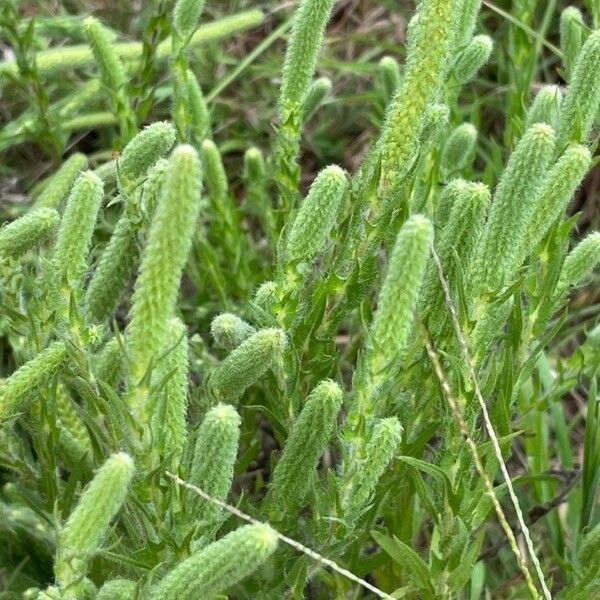
Plant Overview
Often called the Lanceleaf Ragweed, Ambrosia bidentata is a rugged North American native that thrives where other plants struggle. While it shares a name with the "food of the gods" from Greek mythology, most modern gardeners know it better as a persistent roadside survivor and a major contributor to late-summer sneezing fits. It is a pioneer species, often being the first to colonize dry, disturbed soils.
🔍 How to Identify
- 🍃 The "Two-Toothed" Leaf: Its name bidentata comes from the two sharp, tooth-like lobes found at the base of its narrow, lance-shaped leaves.
- 🌾 Inconspicuous Blooms: It produces tall, slender spikes of small, greenish-yellow flower heads that lack showy petals but are designed perfectly for wind pollination.
- 📏 Stiff, Hairy Stems: The plant typically stands 1 to 3 feet tall with a central stem covered in rough, bristly hairs, giving it a coarse texture to the touch.
🏡 In Your Garden
- ☀️ The Sun-Seeker: You will rarely find this plant in a manicured flower bed; it prefers the "tough life" in full sun and poor, gravelly, or clay-heavy soils where competition is low.
- 🦋 Hidden Ecological Value: While often pulled as a weed, it is a vital part of the native ecosystem, serving as a host plant for several species of specialized moths and providing high-protein seeds for songbirds in the winter.
⚠️ Safety & Toxicity
- 🤧 High Allergen: This plant is a primary culprit for "Hay Fever." A single plant can release millions of microscopic pollen grains into the air, causing significant respiratory distress for allergy sufferers.
- 🐕 Skin Irritation: While not strictly toxic to eat, the rough, bristly hairs on the leaves and stems can cause mild skin irritation or "contact dermatitis" in sensitive humans and curious pets.
✨ Fun Fact
The genus name Ambrosia was chosen by the famous botanist Carl Linnaeus. It is a bit of botanical irony; while Ambrosia was the mythical food of the Greek gods that granted immortality, this plant is mostly famous for making mortals sneeze!

Detailed Care Instructions
Ambrosia bidentata, also known as bidentata ambrsosia or biennial wormwood, is a type of perennial plant that is native to North America. Here are some tips on how to grow Ambrosia bidentata:
- Soil: Ambrosia bidentata prefers well-drained soil with a slightly acidic pH level. Make sure the soil is rich in organic matter and nutrients.
- Sunlight: Choose a location that receives full sunlight for at least 6-8 hours a day. Ambrosia bidentata thrives in direct sunlight.
- Watering: Water the plant regularly, keeping the soil moist but not waterlogged. Avoid over-watering as it can cause root rot.
- Fertilization: Fertilize Ambrosia bidentata with a balanced fertilizer once a month during the growing season to promote healthy growth.
- Pruning: Trim back overgrown or dead branches to encourage new growth and maintain the plant's shape.
- Mulching: Apply a layer of mulch around the base of the plant to help retain moisture and suppress weeds.
- Pests and diseases: Keep an eye out for any pests or diseases that may affect Ambrosia bidentata and treat them promptly to prevent damage to the plant.
- Propagation: Ambrosia bidentata can be propagated by taking stem cuttings or dividing established plants. Propagate in the spring or early summer for best results.
By following these tips, you can successfully grow and care for Ambrosia bidentata in your garden or landscape.

Place in a bright room that is sun drenched almost all day. Or directly in a south-facing window.

To water Ambrosia Bidentata, you should first check the moisture level of the soil by inserting your finger into the soil up to the second knuckle. If the soil feels dry, it is time to water the plant. When watering, make sure to moisten the soil evenly around the plant, but be careful not to overwater as this can lead to root rot. Water the plant at the base to avoid getting the leaves wet, which can lead to disease. It is best to water in the morning to allow the plant to dry out during the day and prevent issues such as mold or mildew. Adjust your watering schedule based on the season and the specific needs of your Ambrosia Bidentata plant.
To fertilize the Ambrosia Bidentata plant, use a balanced fertilizer with equal parts nitrogen, phosphorus, and potassium. Apply the fertilizer in the early spring when new growth begins, and then again in midsummer. Follow the instructions on the fertilizer packaging for the proper dilution ratio and application method. Water the plant thoroughly after fertilizing to help the nutrients penetrate the soil and reach the roots. Avoid over-fertilizing, as this can cause nutrient burn and harm the plant.
Ambrosia Bidentata plant thrives best in well-draining soil with a pH level of 6 to 7. The soil should be rich in organic matter and have good fertility to support the growth of the plant. A soil mixture consisting of equal parts peat moss, sand, and perlite is recommended for optimal growth. This type of soil allows for proper aeration and drainage, preventing the risk of root rot. It is important to avoid using heavy clay soils, as they can impede root growth and cause waterlogging. Additionally, regularly fertilizing the soil with a balanced fertilizer will help promote healthy growth and flowering of the Ambrosia Bidentata plant.
To propagate Ambrosia Bidentata, you can do so by collecting its seeds and planting them in well-draining soil. Choose a sunny location for the seeds to germinate and keep the soil consistently moist but not waterlogged. Alternatively, you can propagate the plant by dividing its roots and replanting them in separate containers or areas of the garden. Make sure to provide adequate care and maintenance for the newly propagated plants, such as regular watering and fertilizing as needed. With time and proper care, the propagated Ambrosia Bidentata plants will establish themselves and grow into healthy, mature plants.








