Plant Overview
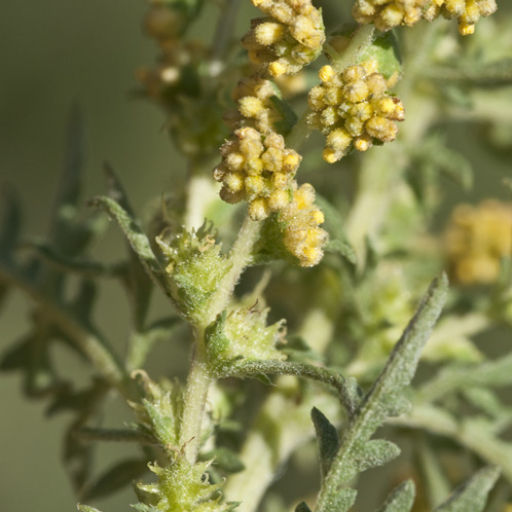
Often called the Weakleaf Bur Ragweed or Slimleaf Ragweed, this plant is a resilient wanderer native to the deserts and dry grasslands of the American Southwest and Mexico. While it might look like a delicate, lacy fern at first glance, it is actually a rugged survivor that thrives where other plants wither, often claiming space in disturbed soils and roadsides with its tenacious spirit.
🔍 How to Identify
- 🌿 The Foliage: The leaves are its most striking feature—grayish-green, soft, and deeply divided into narrow, almost feathery lobes. They have a dusty, velvet-like texture that helps the plant conserve moisture.
- 🌾 The Flowers: Don't look for bright petals; the flowers are tiny, greenish-yellow bells arranged in slender spikes at the top of the stems. They are designed for wind pollination rather than attracting bees.
- 🪝 The "Burs": After flowering, it produces small, woody fruits armed with short, hooked spines. These are the "burs" that give the plant its name, designed to catch a ride on passing fur or hiking boots.
🏡 In Your Garden
- 🏜️ The Ultimate Survivor: If you find this in your yard, it’s likely because the soil is dry, poor, or recently moved. It uses a deep, creeping root system (rhizomes) to find water where others can't, making it incredibly difficult to remove by just pulling the top off.
- 🛡️ Ecological Role: While often labeled a weed, it acts as "nature's bandage" for scarred land. It stabilizes dry soil and prevents erosion in arid climates, though it can quickly become invasive in a well-watered garden bed.
⚠️ Safety & Toxicity
- 🤧 Allergy Alert: This plant is a major producer of airborne pollen. If you suffer from seasonal hay fever, this is a prime suspect for itchy eyes and sneezing during the late summer and fall.
- 🐕 Physical Irritant: While not internally toxic to most pets, the hooked burs can become painfully lodged in a dog's fur or between paw pads. The foliage can also cause mild skin irritation (dermatitis) in sensitive individuals if handled frequently without gloves.
✨ Fun Fact
The genus name Ambrosia ironically comes from the Greek word for "food of the gods," which granted immortality. In reality, most gardeners find the plant's "immortality" a bit frustrating due to its ability to resprout from even a tiny fragment of root left in the ground!

Detailed Care Instructions
To grow Ambrosia confertiflora, also known as White Bursage, you can follow these steps:
- Climate: Check the climate requirements for this plant, as it is native to the southwestern United States and typically grows in desert or semi-desert regions. It thrives in hot, dry conditions.
- Soil: Ambrosia confertiflora prefers well-draining sandy or loamy soil. Make sure to provide a suitable soil mix with good drainage.
- Propagation: The plant can be propagated from seeds. Collect mature seeds from the plant or purchase them from a reputable source.
- Seed treatment: Before sowing, it is recommended to scarify the seeds. This can be done by gently rubbing the seeds between two pieces of sandpaper to create small scratches on the seed coat. Soaking seeds in water for 24 hours can also help with germination.
- Germination: Sow the scarified seeds in small pots or trays filled with a well-draining seed-starting mix. Keep the soil lightly moist but not waterlogged. Provide a warm temperature around 70-80°F (21-27°C) and a sunny location or use a grow light for optimal germination.
- Transplanting: Once the seedlings develop their first true leaves and become strong enough, transplant them into larger pots or directly into the ground. Choose a sunny location with well-draining soil.
- Watering: Water the plants regularly, but allow the soil to dry out slightly before watering again. Avoid overwatering, as this plant is adapted to dry conditions.
- Pruning: Prune the plant as needed to maintain its shape and remove any dead or damaged branches. Avoid pruning excessively, as the plant has a natural, bushy growth habit.
- Fertilization: Fertilize the plant sparingly, using a balanced fertilizer or a slow-release granular fertilizer formulated for desert plants. Follow the package instructions for application rates.
- Pest and disease control: Watch out for common pests such as aphids or spider mites. Treat any infestations with appropriate insecticides or organic pest control methods. Inspect the plant regularly for signs of diseases like powdery mildew or leaf spot, and take necessary measures if required.
Remember that each plant species has specific requirements, so it's important to research and closely observe Ambrosia confertiflora to ensure its optimal growth and health.

Place in a bright room that is sun drenched almost all day. Or directly in a south-facing window.

The watering schedule for this plant largely depends on the surrounding climate and the potting medium. It is recommended to water the plant thoroughly until the water drains out of the bottom of the pot, but make sure that the soil is not constantly sitting in water. During the growing season, it is best to keep the soil slightly moist by watering it every few days. However, in the winter, when the plant becomes dormant, it should be watered sparingly to prevent the soil from becoming waterlogged. Additionally, the plant should be kept in a location with bright, indirect light and protected from extreme temperatures.
- Choose a balanced, quick-release fertilizer with equal parts nitrogen, phosphorus, and potassium.
- Mix the fertilizer with water according to the package instructions.
- Apply the fertilizer directly to the soil around the base of the plant.
- Apply the fertilizer once a month during the growing season (spring and summer).
- Water the plant thoroughly after fertilizing to help the nutrients soak into the soil.
- Avoid over-fertilizing the plant, as this can cause damage to the roots and foliage.
- Monitor the plant for any signs of nutrient deficiencies or excesses, such as yellowing leaves or stunted growth. Adjust the fertilizer accordingly.
Ambrosia Confertiflora thrives in well-draining soil that is slightly acidic with a pH range between 5.5 to 6.5. The soil should be rich in organic matter such as compost or leaf mold to provide the plant with the necessary nutrients. A sandy or loamy soil that is not too heavy is ideal since it allows for good drainage, which prevents the roots from getting waterlogged. Additionally, ensure that the soil is not too dry or too wet, as this can harm the plant's roots. It is advisable to add perlite or coarse sand to the soil mix to improve drainage and prevent the soil from becoming compacted.
To propagate this plant, take a healthy stem cutting from the parent plant and remove any leaves from the bottom third of the stem. Dip the cut end of the stem in rooting hormone powder and plant it in a high-quality potting mix. Water the cutting regularly and keep it in a warm, humid location with indirect sunlight. Once the cutting has developed roots and new growth, it can be transplanted into a larger container or into the garden. Make sure to keep the new plant well watered and protected from extreme temperatures until it becomes established.








