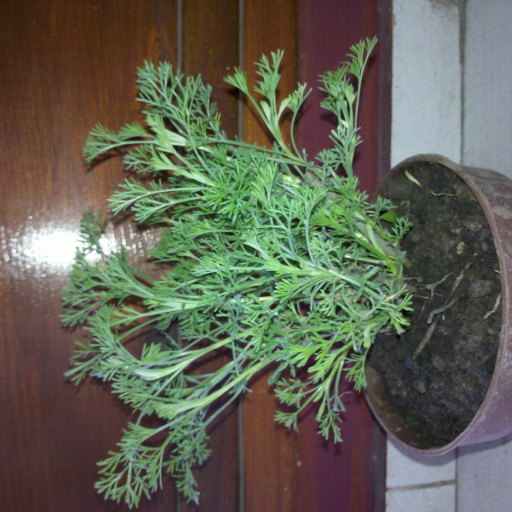
Plant Overview
Known as "Altamisa" or "Marco" in its native South American haunts, Ambrosia peruviana is a plant of dual identities. While it is often dismissed as a common ragweed by casual observers, it holds a place of deep respect in traditional Andean medicine. This aromatic, silver-green herb is a hardy survivor, frequently found colonizing disturbed soils and roadsides from Mexico down to the peaks of Peru.
🔍 How to Identify
- 🌿 Feathery Foliage: The leaves are soft, deeply divided (bipinnate), and resemble a dusty-green lace or a delicate fern.
- 📏 Growth Habit: It typically grows as an erect, bushy herb, often reaching heights of 3 to 6 feet, with stems that become slightly woody at the base as they age.
- 🌼 Inconspicuous Flowers: It produces small, greenish-yellow flower heads arranged in long, terminal spikes. They lack showy petals because they rely on the wind, not insects, for pollination.
- 👃 Aromatic Scent: When the leaves are crushed, they release a sharp, medicinal, and slightly bitter fragrance that is instantly recognizable.
🏡 In Your Garden
- 🌱 The Pioneer Spirit: This plant is a "pioneer species," meaning it loves "bad" soil. It excels at stabilizing loose or sandy earth where other plants might struggle to take root.
- ☀️ Sun Seeker: It demands full sun and is exceptionally drought-tolerant once established. It’s not a plant for a pampered flower bed; it prefers the rugged edges of a property where it can grow wild.
- ✂️ Spreading Nature: Be mindful that it can be aggressive. It spreads through both wind-dispersed seeds and underground runners (rhizomes), potentially outcompeting more delicate garden species.
⚠️ Safety & Toxicity
- 🤧 Allergy Alert: Like its North American ragweed cousins, this plant is a prolific producer of wind-borne pollen. It is a major trigger for hay fever and seasonal asthma.
- 🧤 Skin Sensitivity: Handling the plant with bare skins can cause "contact dermatitis" (an itchy red rash) in sensitive individuals due to the presence of sesquiterpene lactones.
- 🐾 Pet Safety: While not typically fatal, it is generally considered unpalatable to livestock and pets. Ingestion may cause digestive upset or allergic reactions in dogs and cats.
✨ Fun Fact
In various South American cultures, Ambrosia peruviana is a primary ingredient in "limpia" (spiritual cleansing) rituals. It is bundled with other herbs and used to symbolically sweep away negative energy or "mal aire" (bad air) from a person or home.

Detailed Care Instructions
To grow Ambrosia Peruviana, also known as Peruvian Apple Cactus or Peruvian Torch Cactus, follow these steps:
- Choose a suitable location: Ambrosia Peruviana thrives in full sun and prefers well-draining, sandy soil. Ensure the location has enough space to accommodate the mature size of the plant.
- Propagation: Ambrosia Peruviana can be propagated from seeds or cuttings. If using seeds, soak them in warm water for 24 hours before planting. For cuttings, allow the cut ends to dry for a few days to prevent rotting.
- Planting: Dig a hole deep enough to accommodate the roots or cuttings and place the plant into the hole. Backfill with well-draining soil and gently tamp down around the plant to remove any air pockets.
- Watering: Initially, water the newly planted Ambrosia Peruviana thoroughly and keep the soil slightly moist until the plant establishes. Once established, water sparingly, as the plant is drought-tolerant. Allow the soil to dry out between watering to prevent root rot.
- Fertilization: Feed the Ambrosia Peruviana with a balanced cactus or succulent fertilizer during the growing season (spring to fall) following the package instructions. Avoid fertilizing during winter or the dormant period.
- Pruning: Ambrosia Peruviana grows tall and can become top-heavy. Prune the plant to maintain its shape and prevent it from leaning or falling over. Harvest any dead or damaged branches to promote healthy growth.
- Protection from frost: If you live in a cold climate, provide frost protection during winter as Ambrosia Peruviana is not cold hardy. Move potted plants indoors or cover them with a blanket or frost cloth to protect them from frost.
- Pests and diseases: Ambrosia Peruviana is generally resistant to pests and diseases but keep an eye out for common cactus pests such as mealybugs or scale insects. Treat infestations promptly with insecticidal soap or neem oil.
With proper care, your Ambrosia Peruviana should grow into a stunning cactus plant, featuring tall columns, beautiful flowers, and, occasionally, fruit.
To water this plant, ensure that you use a watering can or hose with a gentle flow to avoid dislodging the soil around the roots. Allow the soil to dry slightly before watering, but do not let it dry out completely. Water the plant thoroughly until water drains out from the bottom of the pot or the soil is moistened to a depth of at least an inch. Avoid getting water on the leaves as it can cause fungal diseases. Water the plant more frequently during hot weather or if it is planted in a pot with a limited amount of soil. It is important not to overwater the plant as it can lead to root rot.
- First, choose a well-draining soil mixture that has a balanced mix of nutrients.
- Mix a slow-release fertilizer into the soil before planting, following the package instructions for amounts.
- Once planted, wait for the plant to establish itself before fertilizing again. This may take several weeks to a few months.
- Use a liquid fertilizer that is high in nitrogen to promote healthy foliage growth.
- Fertilize regularly, every 2-4 weeks during the growing season, but scale back to once a month or less during the winter months.
- Be careful not to over-fertilize, as this can cause damage to the plant.
- Water thoroughly after fertilizing to help the nutrients reach the roots.
- Monitor the plant's growth and adjust fertilizing as necessary based on its needs.
The best soil to use for the Ambrosia Peruviana plant is a mixture of well-draining soil and organic matter. The soil should be slightly acidic with a pH between 5.5 to 6.5. A sandy loam soil with good drainage is also ideal for this plant. It is important not to overwater the plant as it can lead to root rot. The soil should be kept moist but not waterlogged. Adding a layer of mulch around the plant can help retain soil moisture and prevent weed growth. The plant should also be fertilized with a balanced fertilizer during its growing season to promote healthy growth and flowering.
To propagate this plant, you will need to take a stem cutting from the mother plant. Choose a healthy stem that is about 4-6 inches long and has several leaves. Using a sharp, clean pair of scissors or pruning shears, make a clean cut just below a node (the point where a leaf joins the stem).
Remove any leaves from the lower half of the cutting, leaving a few leaves at the top. Dip the cut end of the stem in rooting hormone powder to encourage root growth.
Fill a small pot with moist potting soil. Make a hole in the center large enough to accommodate the stem cutting. Insert the stem cutting into the hole and gently press the soil around it.
Cover the pot with a clear plastic bag or plastic wrap to create a mini greenhouse. This will help to keep the cutting moist and humid while it develops roots.
Place the pot in a warm, bright location where it will receive indirect light. Make sure the soil stays moist but not waterlogged, and mist the leaves occasionally to keep them from drying out.
After a few weeks, gently tug on the stem cutting to check for roots. If you feel resistance, roots have developed and you can remove the plastic cover. If there is no resistance, return the plastic cover and wait a little longer.
Once the cutting has developed a healthy root system, you can transplant it into a larger pot with fresh potting soil. Gradually acclimate the plant to brighter light and lower humidity, and care for it as you would any mature Ambrosia Peruviana plant.








