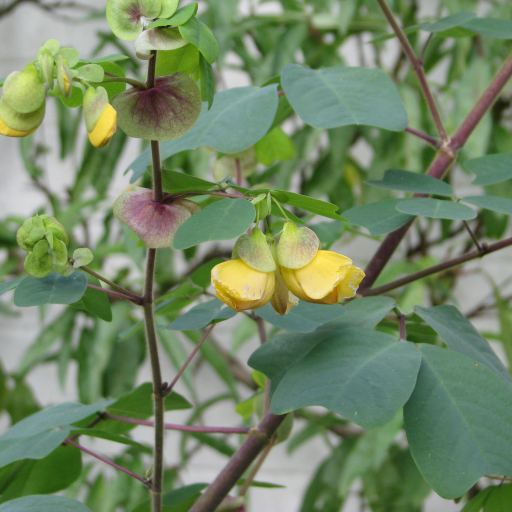
Plant Overview
Known as the "Yoke-leaf Amicia," this Mexican native is a true conversation starter for any plant enthusiast. While it belongs to the pea family, it doesn’t look like your average garden vegetable; it features large, translucent purple "wings" at the base of every leaf that seem to glow when the sun hits them. It is an architectural marvel that brings a touch of the exotic and structural elegance to any garden border.
🔍 How to Identify
- 💜 The Stipules: The most striking feature—large, heart-shaped, purple-veined leafy structures (stipules) that wrap around the stem like pairs of goggles or wings.
- 🌼 The Blooms: Classic pea-shaped flowers in a vibrant buttery yellow, often streaked with delicate red or purple veins, appearing in late summer.
- 🍃 The Foliage: Bright green leaves divided into two pairs of leaflets, which often have a distinct notch at the tip, giving them a unique "cloven" or "yoke" appearance.
🏡 In Your Garden
- ☀️ Sun Seeker: This plant thrives in a warm, sheltered spot. It loves basking in the sun, which helps intensify the deep purple hue of those translucent stipules and encourages late-season blooming.
- ❄️ Winter Rest: In cooler climates, it behaves like a herbaceous perennial, dying back to the ground in winter. Give it a thick "blanket" of mulch to protect the crown from deep freezes, and it will surge back with vigor in the spring.
- 🪴 Drainage is Key: It isn't a fan of "wet feet" during the dormant winter months. Ensure the soil is gritty and free-draining to prevent the roots from rotting while the plant is resting.
⚠️ Safety & Toxicity
- 🟢 General Safety: Amicia zygomeris is not known to be toxic to humans or common household pets. It is generally considered a "safe" ornamental for family gardens.
- 🤏 Sensitive Skin: While not poisonous, the stems can be slightly coarse. If you have very sensitive skin, wearing gloves while pruning is a good practice to avoid minor mechanical irritation.
✨ Fun Fact
- 💤 Sleep Movements: This plant is "nyctinastic," meaning it has a circadian rhythm. If you visit your garden at night, you’ll notice the leaflets have folded together to "sleep," a trick used to protect the foliage from nighttime moisture or predators.

Detailed Care Instructions
To grow Amicia zygomeris plant, also known as "tropical bleeding heart," you can follow these steps:
- Climate: Ensure that you live in a suitable climate for this plant. Amicia zygomeris thrives in warm, tropical regions or in greenhouses where the temperature doesn't fall below 55°F (13°C).
- Soil: Choose well-draining soil that is rich in organic matter. Amicia zygomeris prefers slightly acidic to neutral soil conditions with a pH range of 5.5-7.0.
- Sunlight: Provide your plant with partial shade or filtered sunlight. Keep it away from direct, intense sunlight, especially during the hottest parts of the day.
- Watering: Water regularly, keeping the soil consistently moist but not waterlogged. Allow the top few inches of soil to dry slightly before watering again. Avoid overwatering to prevent root rot.
- Fertilizer: Use a balanced, slow-release fertilizer or organic compost during the growing season to promote healthy growth. Follow the package instructions for proper application and dosage.
- Propagation: Amicia zygomeris can be propagated through seeds or cuttings. If using seeds, sow them in seed-starting trays or pots filled with moist soil. Keep the trays in a warm, humid environment, and the seeds should germinate within a couple of weeks. For cuttings, take 4-6 inch (10-15 cm) stem cuttings with a few leaves from a mature plant and place them in a pot with moist soil. Keep the cuttings in a warm, humid environment until they develop roots.
- Pruning: Trim back any dead or damaged foliage to maintain the plant's health and shape. Pruning in the spring can also encourage new growth and a more compact form.
- Pests and diseases: Monitor for common pests like aphids, mealybugs, or scale insects. If infestations occur, treat them with appropriate organic or chemical insecticides. Regularly inspect your plants for any signs of diseases like powdery mildew or leaf spot and take appropriate action if needed.
- Support: As Amicia zygomeris grows, it may require support due to its vining nature. Install trellis, stakes, or provide other support structures to help the plant climb and spread.
Remember, proper care, suitable growing conditions, and regular maintenance are vital for the successful growth of Amicia zygomeris.
To properly water this particular plant, you would need to identify its watering needs based on its size, growth stage, and soil moisture level. One way to do this is to check the soil by inserting your finger into the soil to see if it feels dry or moist. If the soil feels dry, it is time to water the plant.
When watering, it is important to ensure that the water is evenly distributed to all parts of the soil and that the water doesn't make direct contact with the plant's foliage. This reduces the likelihood of fungal disease. You can water the plant using a watering can or a hose with a fine nozzle.
It is important to note that overwatering is a common mistake people make when it comes to watering plants. Therefore, it is essential to not water the plant too frequently and ensure that the soil has adequate drainage to prevent waterlogging.
In addition to monitoring the soil moisture level, you can also keep an eye on the plant's leaves. If the leaves begin to droop, it could be a sign that the plant needs water. On the other hand, yellow leaves can indicate overwatering or other issues, such as nutrient deficiencies.
Overall, watering this plant requires attention to detail and patience. With proper watering techniques, you can help your plant thrive and stay healthy.
To fertilize this plant, use a balanced fertilizer with equal amounts of nitrogen, phosphorus, and potassium. Apply the fertilizer once in early spring and again in mid-summer. Use a water-soluble fertilizer according to the package instructions and mix it with water before applying it to the soil. Avoid over-fertilizing, as this can lead to nitrogen toxicity and damage the plant.
Amicia Zygomeris requires a well-draining soil that is high in organic matter and has a slightly acidic to neutral pH level. The soil should be capable of holding moisture and nutrients, but not be waterlogged. A mix of peat moss, perlite, and sand can be used to create a suitable environment for this plant. It is also important to ensure that the soil is rich in nutrients, such as nitrogen, phosphorus, and potassium, in order to promote healthy growth and development. Regular fertilization and watering can help maintain a healthy soil environment for this plant.
To propagate this plant, you can start by taking stem cuttings from a healthy mature plant. The cuttings should be about 4-6 inches long. Strip off the lower leaves from the stem and dip the cut end into rooting hormone. Plant the cuttings in well-drained soil in a small pot and water them thoroughly. Place the pot in a bright, warm location but not in direct sunlight. Make sure to keep the soil moist but not waterlogged, misting the cutting with water can also help to keep it hydrated. In a few weeks, the cutting should start to develop roots and new growth. Once the new plants have established a good root system, they can be transplanted into larger pots or into the garden.








