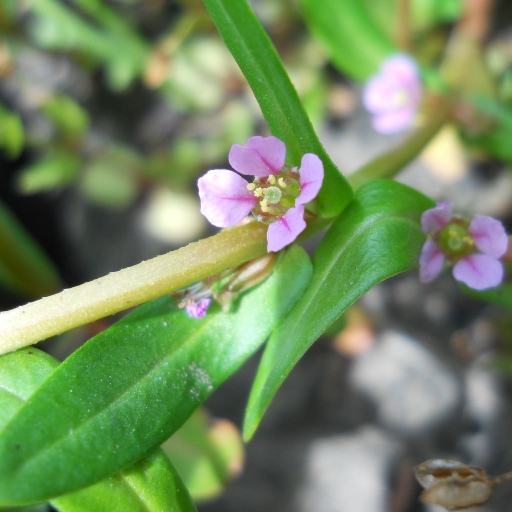
Plant Overview
Known as the Grand Redstem, Ammannia robusta is a striking wetland beauty native to North America. Often found painting ditch banks and muddy shorelines with its vibrant hues, this plant is a favorite for both pond enthusiasts and high-tech aquascapists. Its name "robusta" isn't just for show—it stands out for its thick, sturdy stems that transition from a soft green to a brilliant, deep red under the right light.
🔍 How to Identify
- 茎 The Stems: Look for distinctively square-shaped stems that are thick and fleshy. They typically start green at the base and turn a fiery crimson or burgundy toward the top.
- 🍃 Leaf Arrangement: The leaves grow in "opposite" pairs, meaning two leaves emerge from the same point on the stem, facing away from each other. They are narrow, elongated, and lack a stalk (sessile), appearing to clasp the stem directly.
- 🌸 Hidden Blooms: Small, delicate flowers with four lavender or pink petals appear tucked into the leaf axils (the junction between leaf and stem). They are subtle but charming when viewed up close.
🏡 In Your Garden & Aquarium
- 💧 Wetland Warrior: This is an obligate wetland plant, meaning it must have "wet feet." In a garden, it belongs in a bog filter or at the very edge of a pond. In an aquarium, it requires high light and CO2 to maintain its iconic red color.
- ☀️ Light as Paint: The red coloration is a natural defense against intense sun. If grown in the shade or low light, the plant will revert to a standard green and may become "leggy" as it stretches toward the light source.
- 🌱 Propagation: It is a prolific grower. You can easily create new plants by taking stem cuttings and pushing them into moist substrate; they will develop roots almost immediately.
⚠️ Safety & Toxicity
- ✅ Status: Non-toxic and safe.
- 🐾 Details: There are no known toxic effects for dogs, cats, or humans. It is generally considered "fish-safe" and is a popular choice for providing cover in fry tanks or shrimp habitats.
✨ Fun Fact
In the wild, Ammannia robusta is often considered a "weedy" pioneer species in rice fields. While farmers might find it a nuisance, its ability to quickly colonize muddy areas helps prevent soil erosion after heavy rains!

Detailed Care Instructions
To grow Ammannia Robusta, follow these steps:
- Choose a suitable location: Ammannia Robusta thrives in bright, indirect sunlight. Select a spot in your garden or aquarium where it can receive 4-6 hours of sunlight every day.
- Provide the right water conditions: This plant prefers slightly acidic to neutral water conditions with a pH range of 6.0-7.5. Additionally, the temperature should be kept between 72-82°F (22-28°C). Maintain good water circulation and keep the water clean to prevent algae growth.
- Planting in an aquarium: If growing in an aquarium, ensure the substrate is nutrient-rich and well-drained. You can use a mixture of aquarium soil and sand for this purpose. Plant the Ammannia Robusta by gently burying the base of the stems into the substrate. To prevent the plant from floating, weigh it down using plant weights or attach it to rock or driftwood.
- Planting in a garden pond or wetland area: Prepare a pond or wetland area with nutrient-rich soil. Dig a small hole and place the Ammannia Robusta plant in it, covering the roots with soil. Once planted, keep the roots submerged in water.
- Maintain proper lighting: As mentioned earlier, this plant needs bright, indirect light to grow. Provide artificial lighting if natural sunlight is insufficient. LED or fluorescent lights with a spectrum suitable for plant growth can be used.
- Provide adequate nutrients: Ammannia Robusta benefits from regular dosing of fertilizers rich in macro and micronutrients. You can use liquid fertilizers designed for aquarium plants or use organic fertilizers like root tabs for garden plants.
- Prune regularly: Maintain the desired shape and prevent overcrowding by pruning the plant regularly. Use sharp scissors or pruners to trim any excess growth. This will promote better growth and prevent the plant from becoming leggy.
- Monitor water quality: Test the water parameters regularly to ensure they are within the optimal range for Ammannia Robusta. Make adjustments as needed to maintain suitable conditions.
- Watch out for potential pests and diseases: Keep an eye out for signs of pests like aphids, snails, or algae growth. If necessary, treat the affected plants with appropriate pesticides or introduce natural predators to control the infestation.
By following these steps and providing the necessary care, your Ammannia Robusta plant should thrive and grow well.

Place in a bright room that is sun drenched almost all day. Or directly in a south-facing window.

Ammannia Robusta is a perennial plant that requires a significant amount of water to thrive. To water this plant, ensure you first evaluate the soil's moisture level by checking the top layer. If the soil is dry, it is time to water the plant. Ammannia Robusta requires a moderate amount of water, so ensure you only water it when the top layer of soil is dry to the touch.
When watering, use a watering can or hose to provide a slow and thorough stream of water. Avoid forcefully applying water that may erode the soil or damage the plant's roots. Slow watering helps the water to penetrate deeply into the roots, where the plant needs it the most.
Ensure you water the plant early in the morning or late in the evening to minimize water evaporation. Also, avoid getting the foliage wet when watering as this may lead to the development of fungal diseases and pests.
Finally, ensure you provide adequate drainage for Ammannia Robusta to prevent waterlogging, which may cause root rot. Keep in mind that too much water can be harmful to this plant, so ensure you strike a balance with watering to ensure the plant thrives healthily.
To fertilize this plant, provide a balanced liquid fertilizer once a week during the growing season. Ensure the fertilizing solution is diluted at half strength to avoid fertilizer burn. Additionally, consider supplementing with iron-rich nutrients such as chelated iron or iron sulfate, as this plant prefers nutrient-rich water. Avoid over-fertilizing as this can lead to algae growth and harm the plant.
The ideal soil for this plant is rich in nutrients and organic matter, with a slightly acidic pH. It should be well-draining to prevent waterlogging, which can cause root rot. A substrate with a mixture of sand, gravel, and clay or loam can provide adequate water retention and drainage. Additionally, the soil should be regularly fertilized with nutrients like nitrogen, phosphorus, and potassium to support healthy growth. As this plant is sensitive to changes in water quality, it is recommended to use dechlorinated water for watering.
To propagate this plant, take stem cuttings that are about 4-6 inches long and remove the lower leaves. Place the stems in a container of water or moist soil, making sure the cut end is submerged. Keep the container in a bright, warm location and change the water or mist the soil regularly to keep it moist. Roots will begin to grow from the cut end of the stem after a few weeks. Once the roots are about 1 inch long, the plant can be potted in soil and cared for as usual.








