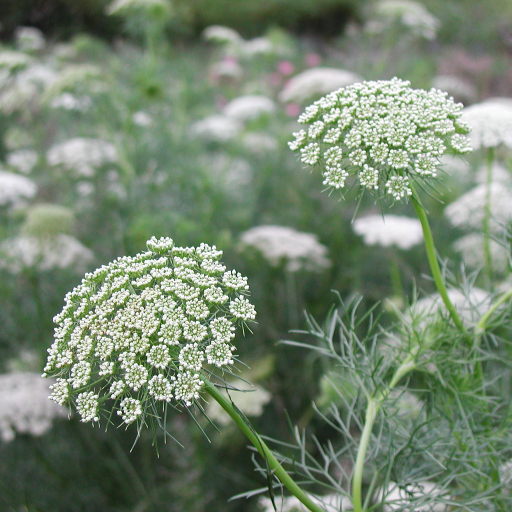
Plant Overview
Often called Khella or the Toothpick Weed, Ammi visnaga is a Mediterranean native that looks like a sophisticated, denser version of Queen Anne’s Lace. For centuries, it has bridged the gap between a decorative wildflower and a medicinal staple, often found swaying in sunny meadows or tucked into "moon gardens" for its luminous white glow.
🔍 How to Identify
- ☁️ Flower Shape: It produces large, dense, umbrella-like clusters (umbels) of tiny white flowers. Unlike its wild cousins, these umbels are tightly packed and can grow as wide as a dinner plate.
- 🌿 Foliage: The leaves are exceptionally fine and feathery, almost needle-like, giving the base of the plant a soft, ferny appearance.
- 📏 Stature: It is a sturdy upright plant, often reaching 3 to 4 feet in height, with thick, ribbed stems that stay strong even in summer breezes.
🏡 In Your Garden
- 🌱 The Taproot Rule: Like many members of the carrot family, Khella grows a long taproot. This means it hates being moved; it is best to sow seeds directly where you want them to bloom rather than transplanting them.
- 🐝 Pollinator Buffet: This plant is a powerhouse for "beneficial" insects. It is particularly attractive to hoverflies and tiny parasitic wasps that act as natural pest control for your other garden plants.
- ☀️ Sun & Drainage: It thrives in the "tough spots"—full, blazing sun and well-draining soil are essential. It is quite drought-tolerant once established, making it perfect for low-water landscapes.
⚠️ Safety & Toxicity
- ☀️ Photosensitivity: The most important safety note is that the sap contains furanocoumarins. If you get the sap on your skin and then expose it to sunlight, it can cause a blistering rash (phytophotodermatitis).
- 🐾 Pets & Kids: While not usually fatal if nibbled, it can cause digestive upset. It is best treated as an ornamental plant rather than an edible one. Always wear gloves when pruning on sunny days.
✨ Fun Fact
The name "Toothpick Weed" isn't a metaphor! In its native regions, the dried, stiff rays of the flower umbels were historically harvested and used as aromatic toothpicks. They even have a pleasant, slightly bitter clover-like taste when used this way.

Detailed Care Instructions
To grow an Ammi Visnaga plant, follow these steps:
- Choose a suitable location: Ammi Visnaga prefers full sun but can tolerate partial shade. Select a spot in the garden that receives at least 6 hours of direct sunlight a day.
- Prepare the soil: The plant prefers well-drained soil that is rich in organic matter. Amend the soil with compost or well-rotted manure before planting to improve fertility and drainage.
- Sow seeds: Ammi Visnaga is typically grown from seeds. Sow the seeds directly into the prepared soil in early spring after the last frost date. Lightly press the seeds into the soil and cover them with a thin layer of soil or compost.
- Watering: Keep the soil consistently moist but not waterlogged. Water deeply whenever the top inch of soil becomes dry. Avoid overwatering or allowing the soil to dry out completely.
- Thinning: Once the seedlings emerge, thin them out to provide enough space for each plant to grow. Leave about 6-12 inches of space between each plant to allow proper air circulation and prevent overcrowding.
- Mulching: Apply a layer of organic mulch around the plants to help retain moisture, suppress weeds, and regulate soil temperature.
- Fertilizing: Ammi Visnaga doesn't require heavy feeding. However, you can apply a balanced, slow-release fertilizer once or twice during the growing season to promote healthy growth.
- Support: As the plants grow taller, they may benefit from staking or some form of support to prevent them from falling over in windy conditions.
- Pruning: If the plants become too leggy or start to flop, you can pinch back the tops of the stems to encourage bushier growth. This will also help prevent the plants from becoming top-heavy and falling over.
- Harvesting: Once the plants bloom, you can harvest the flowers for use in floral arrangements or for drying. Cut the stems just above the main foliage when about three-quarters of the flowers are open.
By following these steps, you can successfully grow Ammi Visnaga plants in your garden. Enjoy their delicate white flowers and their attractive, feathery foliage!
- Ammi Visnaga plant is a perennial flowering plant native to Mediterranean regions. It belongs to the Apiaceae family and is commonly cultivated for its ornamental and medicinal qualities.
- When it comes to watering, it is important to understand the plant's water requirements. Ammi Visnaga prefers moderately moist soil, but it is essential to avoid overwatering as it can lead to root rot and other fungal diseases.
- The best way to water the plant is to observe the moisture levels in the soil. Before watering, use your finger or a moisture meter to check if the top inch of soil feels dry. If it does, it's an indication that the plant needs watering.
- Use room temperature water for watering Ammi Visnaga. Cold water can shock the plant and potentially harm its roots. Fill a watering can or jug with water and slowly pour it at the base of the plant, aiming to keep the foliage dry.
- It is important to water the plant thoroughly but avoid waterlogging. Ensure that the water reaches the root zone and penetrates the soil. Water until you observe water coming out of the drainage holes at the bottom of the pot or until the soil feels evenly moist.
- Based on the plant's growth, weather conditions, and overall environment, adjust the frequency of watering. During hot summer months, you might need to water more frequently to prevent the soil from drying out completely.
- Ammi Visnaga plants can benefit from a regular watering schedule but allow the top inch of soil to dry out slightly between consecutive waterings. This strategy mimics the natural watering patterns found in its native regions and prevents overwatering.
- In addition to regular watering, it is essential to provide proper drainage for the plant's pot or planting area. Good drainage helps prevent waterlogging and ensures healthy root growth.
Remember that these watering guidelines serve as general recommendations, and specific care instructions may vary based on the specific growing conditions for your Ammi Visnaga plant.
To properly fertilize Ammi Visnaga:
- Choose a balanced, water-soluble fertilizer, such as a 10-10-10 or 20-20-20 NPK fertilizer.
- Dilute the fertilizer according to the package instructions, usually around 1 tablespoon per gallon of water.
- Water the plant thoroughly before applying the fertilizer to ensure the soil is moist.
- Slowly pour the diluted fertilizer over the soil around the base of the Ammi Visnaga plant.
- Avoid getting the fertilizer solution on the foliage as it may cause damage.
- Reapply the fertilizer every 4-6 weeks during the growing season (spring and summer), reducing the frequency during fall and winter.
- Monitor the plant's response to the fertilizer and adjust the amount or frequency as needed. Over-fertilizing can damage the plant.
- Additionally, consider incorporating organic matter or compost into the soil to provide natural nutrients to the Ammi Visnaga plant.
- Regularly water the plant to ensure it stays adequately hydrated, but avoid overwatering or allowing the soil to become waterlogged.
The Ammi Visnaga, also known by various other names, requires a specific type of soil to thrive. It prefers well-draining soil that is fertile and rich in organic matter. The soil should have a pH level that ranges from slightly acidic to neutral.
It is best to use a loamy or sandy soil texture for this plant, as it allows for adequate drainage and prevents waterlogging. Sandy soil promotes good airflow and prevents the roots from becoming waterlogged, which can lead to root rot.
Although Ammi Visnaga can tolerate a range of soil conditions, it grows best in soil that is slightly moist but not overly wet. Therefore, it is important to avoid heavy clay or compacted soil, as these types tend to retain excessive moisture.
To enhance the fertility of the soil, you can amend it with compost or well-rotted manure before planting. This will improve soil structure, drainage, and nutrient content.
Proper soil preparation is key for establishing healthy Ammi Visnaga plants. It is important to ensure that the soil is well-prepared, loosened, and free from any debris or weeds before planting. Regularly monitoring the soil moisture and adjusting watering practices accordingly will help the plant thrive and avoid potential issues such as root rot or fungal infections.
Remember, maintaining suitable soil conditions is crucial for the overall health and vigor of the Ammi Visnaga plant, enabling it to produce abundant flowers and foliage.
Ammi Visnaga, a flowering plant native to North Africa and the Mediterranean region, can be propagated through various methods. Here's a detailed guide on how to propagate this plant:
- Seeds: Start by collecting mature seeds from the dried flower heads of an Ammi Visnaga plant. Each flower head typically contains multiple seeds. Make sure the seeds are completely dry before proceeding.
- Soil Preparation: Prepare a well-draining potting mix by combining equal parts of compost, perlite, and peat moss. Fill small pots or seed trays with this mixture, leaving about half an inch of space at the top.
- Sowing Seeds: Sprinkle the Ammi Visnaga seeds evenly on the prepared soil surface. Lightly press them down, ensuring they make good contact with the soil but are not buried too deep.
- Watering: Gently water the soil using a spray bottle or a watering can with a fine rose attachment. Avoid overwatering, as excessive moisture may lead to fungal problems. Maintain the soil consistently moist until germination occurs.
- Germination: Place the pots or seed trays in a warm, sunny location or use a heat mat to maintain a temperature around 65-75°F (18-24°C). Germination typically takes around 2-3 weeks. Be patient and ensure proper moisture levels during this phase.
- Seedling Care: As the seedlings emerge, provide them with adequate light to support their growth. Supplemental fluorescent or LED grow lights can be used if natural sunlight is insufficient. Keep the soil evenly moist but not waterlogged.
- Transplanting: Once the Ammi Visnaga seedlings have developed a strong root system, they can be transplanted into larger containers or directly into the garden. Transplant them carefully, ensuring the delicate roots are not damaged.
- Outdoor Planting: Choose a sunny or partially shaded spot in the garden with well-draining soil. Amend the soil with compost or organic matter to improve its fertility and drainage. Space the plants around 12-18 inches apart to provide enough room for their mature size.
- Watering and Maintenance: Water the newly transplanted Ammi Visnaga plants thoroughly and then keep the soil consistently moist until they establish themselves. Afterward, they generally tolerate drier conditions. Regularly remove weeds and provide occasional fertilization to support healthy growth.
- Harvesting Seeds: To propagate Ammi Visnaga beyond the initial planting, allow some flowers to dry on the plant until the seeds mature. Collect the dry seed heads, remove the seeds, and store them in a cool, dry place until ready for sowing.
Remember, different propagation methods may have varying success rates, so it's best to employ a combination of techniques to increase your chances of success.








