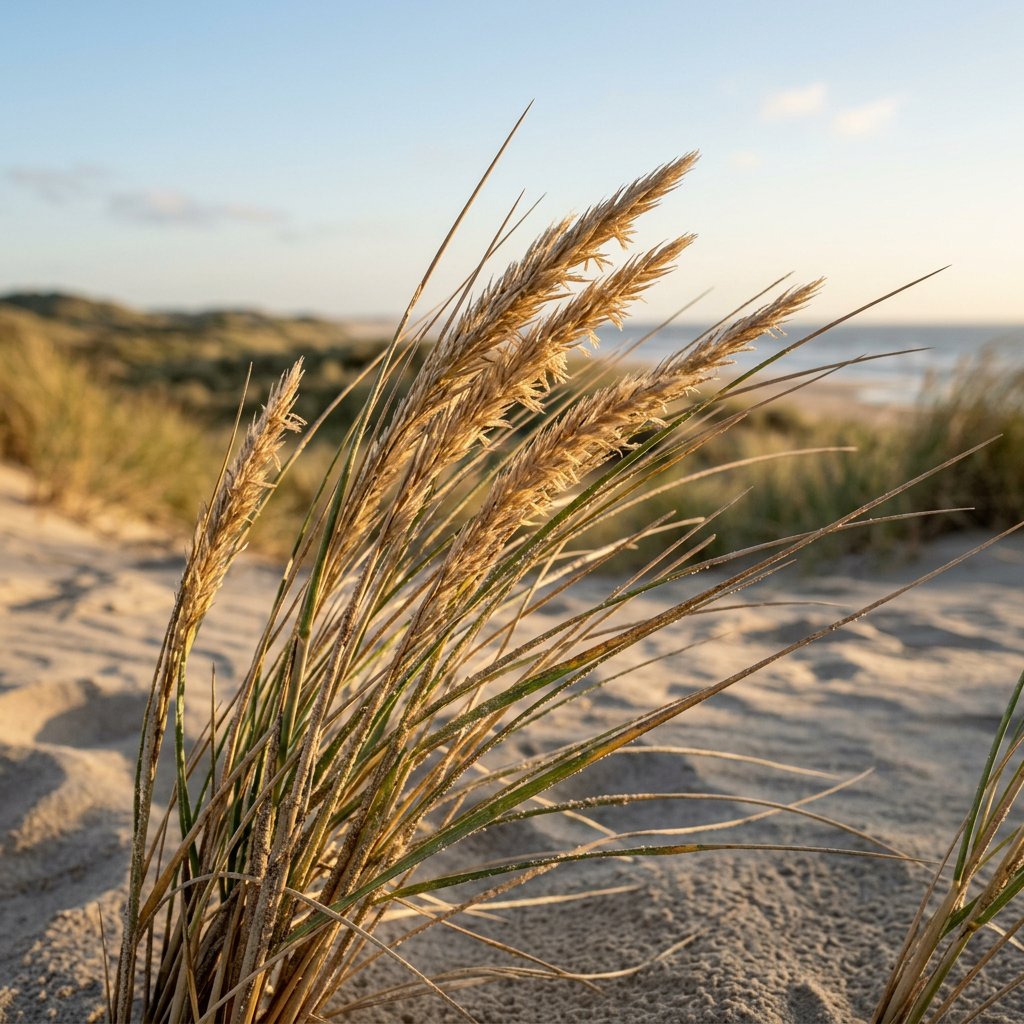
Plant Overview
Often called "Marram Grass" or the "Architect of the Coastline," Ammophila arenaria is the unsung hero of the beach. It is a resilient pioneer that doesn't just survive in harsh, salty winds—it thrives on being buried by shifting sand. Without this hardy grass, many of the world’s most iconic coastal dunes would simply blow away into the ocean.
🔍 How to Identify
- 🌾 The Blades: Long, narrow leaves that are often rolled into tight, needle-like cylinders. This shape helps the plant trap moisture and resist the drying effects of salt spray.
- 📏 Growth Habit: It grows in dense, stiff tufts that can reach up to 1.2 meters (4 feet) in height, often appearing in a characteristic grayish-green hue.
- 🌾 Spikelet Flowers: In the summer, it produces tall, cylindrical, wheat-like flower heads that are pale yellow or straw-colored.
🏖️ Habitat & Ecology
- 🏗️ Sand Stabilizer: This plant is an "ecosystem engineer." Its massive network of underground stems (rhizomes) creates a literal web beneath the sand, anchoring dunes in place and allowing other plants to eventually take root.
- 🌬️ Thirst for Burial: Unlike most plants that die when smothered, Marram Grass is stimulated by being buried. As sand piles up around it, the grass sends out new horizontal roots to climb higher, building the dune upward.
⚠️ Safety & Toxicity
- ✅ Status: Generally non-toxic to humans, dogs, and cats.
- ⚔️ Physical Risk: The primary danger is physical rather than chemical. The leaves are incredibly tough and have microscopic serrated edges. Walking through Marram Grass with bare legs often results in painful "grass cuts" or skin irritation.
✨ Fun Fact
The name Ammophila comes from the Greek words for "sand-lover." In the 18th century, this grass was considered so vital for coastal protection that laws were passed in Great Britain making it a serious crime to pull it up or destroy it!

Detailed Care Instructions
| Humidity | Dry |
| Lighting | Full Sun |
| Difficulty | Easy |
| Hibernation | Cold Period |
| Hardiness Zones | 4 - 8 |
To grow Ammophila arenaria, also known as marram grass or beach grass, you can follow these steps:
- Choose a suitable location: Ammophila arenaria is typically grown on sandy beaches or coastal dunes. Ensure that the area receives full sun and has well-draining soil.
- Collect seeds or rhizome divisions: Marram grass can be propagated using seeds or rhizome divisions. If collecting seeds, obtain them from a reliable source or collect them yourself by harvesting mature seed heads. If using rhizome divisions, carefully dig up a clump of established plants and separate them.
- Prepare the planting site: Clear the planting area of any weeds or other competing vegetation. Level the soil if necessary and remove any debris.
- Sow seeds or plant rhizome divisions: For seeds, lightly scarify them by gently rubbing them between two sheets of fine sandpaper to improve germination rates. Sow the seeds directly onto the prepared soil, ensuring they are spaced evenly. If using rhizome divisions, dig holes slightly larger than the clumps and place them in the holes, covering with soil.
- Water the planting area: Moisten the planting area gently with a watering can or a fine mist sprayer to avoid displacing the seeds or clumps. Keep the soil consistently moist during the germination period.
- Mulch and protect: Apply a layer of organic mulch, such as straw or wood chips, around the plants to help retain moisture and reduce weed growth. Protect the newly planted area from foot traffic or animals until the plants become established.
- Maintenance: Ammophila arenaria is drought-tolerant and requires little maintenance once established. However, ensure the plants receive sufficient water during dry spells. Regularly check for and remove any weeds that may compete with the plants.
- Monitor growth: Marram grass has an extensive root system that helps stabilize sandy soils and prevents erosion. Monitor the growth and spread of the grass to ensure it is providing the desired erosion control.
By following these steps, you can successfully grow Ammophila arenaria and contribute to beach and dune restoration efforts.

Place in a bright room that is sun drenched almost all day. Or directly in a south-facing window.

Ammophila Arenaria is a type of plant that grows in sandy soil and is commonly found on beaches and sand dunes. To water this plant, it is important to ensure that it is receiving enough moisture without overwatering it.
One way to do this is to water the plant deeply and infrequently, rather than giving it shallow watering on a regular basis. This allows the water to penetrate deep into the soil and encourages the roots to grow deeper as well.
It is important to not water the plant too much, as this can lead to root rot and other issues. The plant should be allowed to dry out slightly between waterings, but not to the point where it becomes wilted or shows signs of stress.
It is also important to water the plant in the morning or evening when the sun is not too strong, as watering in the middle of the day can cause the water to evaporate quickly and not be absorbed by the soil.
Finally, it is important to monitor the plant regularly to ensure that it is getting the right amount of water. This can be done by checking the soil moisture level and observing the plant for signs of stress or overwatering.
To fertilize this plant, apply a balanced fertilizer with equal parts nitrogen, phosphorus, and potassium in early spring before new growth begins. Apply an additional round of fertilizer in midsummer to promote continued growth. Avoid applying fertilizer too close to the base of the plant to prevent burning. Water thoroughly after fertilizing.
The optimal soil for growing this plant is a well-draining, sandy soil with a pH range of 6.0 to 7.5. It thrives in a soil that is rich in organic matter and has good fertility. The soil should also have good water retention properties, as the plant prefers consistently moist soil. It is best to plant this species in an area with full sun exposure and shelter from strong winds. Proper soil preparation and maintenance are essential for successful growth and long-term health of the plant.
A technique to propagate this species of plant involves the use of rhizomes. Rhizomes are underground stems that can produce new shoots and roots. To propagate this plant using rhizomes, one should dig up the plant and carefully remove a section of the rhizome. This section should be about 3-4 inches in length and should contain several buds or nodes. The rhizome section should be replanted in well-draining soil at the same depth as it was previously growing. Water the new planting and keep the soil moist but not waterlogged. In a few weeks, new shoots should emerge from the buds on the rhizome.
Common pests of the marram grass include Thrips. Make a habit of checking your marram grass frequently for pests so that any infestations can be caught and managed early.








