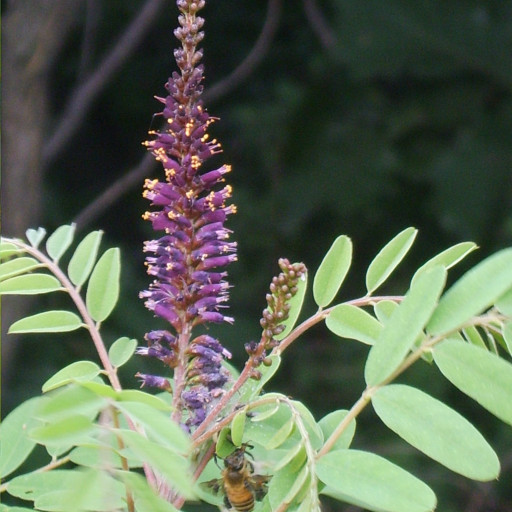
Plant Overview
Known by many as the Desert False Indigo or Bastard Indigo, this hardy shrub is a master of disguise. While its deep purple blooms look like they belong in a royal garden, it is actually a rugged pioneer species native to North America. Historically, early settlers used it as a substitute for true indigo to produce blue dye, though it never quite matched the intensity of the real thing—hence the name "Bastard Indigo."
🔍 How to Identify
- 🌿 Feathery Foliage: The leaves are "pinnately compound," meaning they look like small, delicate green feathers made up of many tiny oval leaflets.
- 💜 Stunning Spikes: It produces upright, candle-like clusters of tiny, dark purple flowers. Look closely to see the contrasting bright orange anthers peeking out.
- 🫛 Bumpy Pods: After flowering, it develops small, curved seed pods covered in tiny glandular bumps that persist on the branches well into the winter.
🏡 In Your Garden
- 💧 The Water Lover: This plant is a "riparian" specialist, meaning it thrives near stream banks and ponds. It is an excellent choice for stabilizing soil in areas prone to erosion or "wet feet."
- 🧪 Soil Improver: As a member of the pea family, it works with underground bacteria to "fix" nitrogen. This means it actually improves the quality of the soil it grows in, making it a great companion for nutrient-poor areas.
- ✂️ Growth Habit: It can grow quite tall and leggy if left to its own devices. To keep it looking like a neat garden shrub rather than a wild thicket, give it a hard prune in early spring.
⚠️ Safety & Toxicity
- 🟢 Low Risk: Amorpha fruticosa is generally considered non-toxic to humans and common household pets like cats and dogs.
- 🐜 Natural Defense: The plant contains small amounts of rotenone, a natural chemical that acts as an insecticide. While this makes it great at repelling pests, it’s best to ensure livestock don’t graze on it in large quantities.
✨ Fun Fact
Despite its delicate appearance, the Desert False Indigo is incredibly tough—it is one of the few flowering shrubs that can survive both heavy flooding and moderate drought, making it a favorite for "tough-spot" landscaping.

Detailed Care Instructions
| Humidity | Normal |
| Lighting | Part Sun |
| Toxicity | Poisonous |
| Difficulty | Easy |
| Hibernation | Cold Period |
| Temperature | 20°C - 27°C |
| Hardiness Zones | 7 - 8 |
To grow Amorpha fruticosa, also known as false indigo bush, follow these steps:
- Choose a suitable location: Amorpha fruticosa prefers full sun but can tolerate partial shade. Make sure the soil is well-draining and moist.
- Prepare the soil: Loosen the soil in the planting area and remove any weeds or rocks. Add organic matter such as compost to enrich the soil.
- Planting: Dig a hole slightly larger than the root ball of the plant. Place the plant in the hole, ensuring that the top of the root ball is level with or slightly above the soil surface. Backfill the hole with soil, gently firming it around the roots.
- Watering: After planting, water the plant thoroughly to settle the soil and encourage root growth. Keep the soil consistently moist but avoid overwatering, as it can lead to root rot.
- Mulching: Apply a layer of organic mulch, such as wood chips or straw, around the base of the plant. This helps retain moisture, suppresses weeds, and insulates the roots.
- Pruning: Prune Amorpha fruticosa in late winter or early spring to remove any dead or damaged branches. You can also trim it to shape, but avoid excessive pruning, as the plant blooms on old wood.
- Fertilizing: Amorpha fruticosa generally does not require regular fertilization. However, if the plant shows signs of nutrient deficiency or poor growth, you can apply a balanced slow-release fertilizer in spring.
- Maintenance: While Amorpha fruticosa is a relatively low-maintenance plant, it is necessary to monitor for pests or diseases. Inspect the foliage regularly and take appropriate action if any issues arise.
- Propagation: To propagate Amorpha fruticosa, you can collect and sow the seeds in a well-draining soil mix in early spring. You can also propagate it through semi-hardwood cuttings taken in late summer.
By following these guidelines, you can successfully grow Amorpha fruticosa, a beautiful and hardy shrub with delicate purple flowers.

Place in a bright room that is sun drenched almost all day. Or directly in a south-facing window.

To water this plant, observe the soil moisture content by inserting your finger about 2 inches into the soil. Water the plant when the top inch of soil feels dry to the touch. When watering, pour water at the base of the plant until it begins to run out of the drainage holes. Avoid overhead watering as this can lead to fungal diseases. During hot and dry weather, this plant may require more frequent watering to prevent wilting.
To fertilize this plant, apply a nitrogen-rich fertilizer during the growing season. Avoid fertilizing late in the season to help harden off new growth before winter. Use a balanced fertilizer, and follow the package instructions for dosage and application method. Test soil pH to ensure plants are getting the proper nutrients, and adjust as necessary. Regularly monitor the plant's growth and health to identify any fertilization needs or issues.
Amorpha Fruticosa plant requires a well-draining soil that is loamy in texture. The soil should be rich in organic matter and have a pH level that is slightly acid to neutral. The plant prefers a soil that is moist but not waterlogged, which means it should be watered regularly but not excessively. The plant can grow in a variety of soil types, including sand, clay, and loam, but it prefers soils that are fertile and well-drained. It is important to avoid using soils that are compacted or poorly drained, as this can lead to poor root growth and disease. It is recommended to add organic matter to the soil before planting, such as compost or aged manure, to improve soil quality and increase nutrient availability for the plant.
To propagate this plant, select a mature and healthy plant from which you want to take the cuttings. Choose a stem that is at least 4-6 inches long and has a few leaves on it. Cut the stem at a 45-degree angle, just below a node using a clean and sharp pair of pruning shears. Remove the bottom few leaves from the stem, leaving only a few at the top. Dip the cut end of the stem in rooting hormone and plant it in a pot filled with soil that is moist and well-draining. Place the pot in a location that receives indirect sunlight and mist the cuttings daily to maintain humidity. Keep the soil moist but not waterlogged and wait for the cutting to root, which may take several weeks. Once the roots appear, allow the plant to acclimate to its new environment by gradually increasing its exposure to direct sunlight.








