Plant Overview
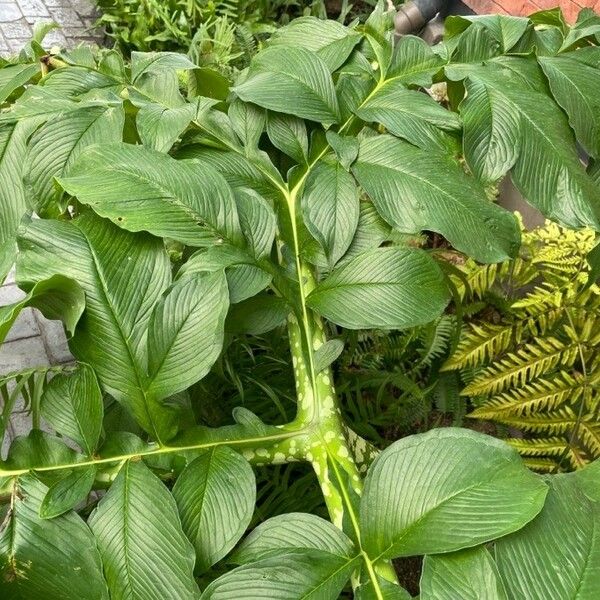
Often referred to as the Porang or the Snake Skin Lily, Amorphophallus muelleri is a fascinating tropical giant that looks like something straight out of a prehistoric jungle. While it belongs to the same family as the famous "Corpse Flower," this species is prized across Southeast Asia not just for its alien-like beauty, but as a sustainable "superfood" source. Its single, umbrella-like leaf and strikingly patterned stem make it a dramatic conversation piece for any serious plant collector.
🔍 How to Identify
- 🐍 Mottled Stem: The most striking feature is its thick, fleshy stalk (petiole), which is covered in irregular pale green and white spots, mimicking the scales of a snake.
- ☂️ Umbrella Canopy: It produces a single, massive leaf that branches out at the top into a wide, horizontal canopy of dark green, pointed leaflets.
- 🍠 Hidden Tuber: Beneath the soil lies a large, starchy corm (tuber) that can grow to several kilograms; this is the plant’s energy reservoir for its dramatic growth spurts.
- 🏮 The Bloom: When mature, it produces a deep maroon, funnel-shaped spathe with a thick central spike (spadix) that emits a pungent, "meaty" odor to attract pollinators like carrion flies.
🏡 In Your Garden
- 💤 The Vanishing Act: Don't panic if your Porang disappears! This plant is deciduous and goes into a deep dormancy during the dry or cold season. The entire leaf will yellow and collapse, leaving only the tuber underground until the next growing cycle.
- 💧 Tropical Cravings: It thrives in "dappled" sunlight—think of the filtered light under a rainforest canopy. It requires rich, loose soil and high humidity, but the tuber is prone to rot if the pot doesn't have excellent drainage.
- 🍴 Agricultural Star: While it looks ornamental, it is a major source of glucomannan, a dietary fiber used to make shirataki noodles and "konjac" jelly.
⚠️ Safety & Toxicity
- 🚫 Toxic if Raw: The entire plant contains raphides—sharp, needle-like crystals of calcium oxalate.
- 👄 Irritation Risk: If bitten or chewed by pets or curious children, it causes immediate burning, swelling of the throat, and intense oral pain.
- 🧤 Skin Sensitivity: Some gardeners find the sap irritating to the skin; it is always best to wear gloves when handling the tubers or broken stems.
✨ Fun Fact
The Amorphophallus muelleri is the secret behind "zero-calorie" pasta! The glucomannan extracted from its tuber can absorb up to 50 times its weight in water, creating the translucent, filling noodles that have become a global health food sensation.

Detailed Care Instructions
Amorphophallus Muelleri plants are typically low-maintenance and can be easily grown in a warm and humid environment. Here are some tips to help you grow your Amorphophallus Muelleri plant successfully:
- Planting: Plant your Amorphophallus Muelleri bulb in a well-draining potting mix that is rich in organic matter. Make sure the bulb is planted just below the surface of the soil.
- Light: Provide your plant with bright, indirect light. Avoid direct sunlight as it can burn the leaves.
- Temperature: Keep your plant in a warm environment with temperatures between 65-80 degrees Fahrenheit. Avoid exposing it to cold drafts or temperatures below 50 degrees Fahrenheit.
- Watering: Water your plant regularly, keeping the soil consistently moist but not waterlogged. Allow the soil to dry out slightly between waterings.
- Humidity: Amorphophallus Muelleri plants prefer high humidity levels. You can increase humidity by placing a tray of water near the plant or using a humidifier.
- Fertilization: Feed your plant with a balanced liquid fertilizer every 2-4 weeks during the growing season (spring and summer).
- Dormancy: In the winter months, your plant may go into dormancy and its foliage may die back. Reduce watering and allow the plant to rest until new growth emerges in the spring.
- Propagation: Amorphophallus Muelleri plants can be propagated by separating offsets from the main bulb or by growing from seed.
By following these tips and providing your Amorphophallus Muelleri plant with the proper care, you should be able to successfully grow and enjoy this unique and fascinating plant in your home or garden.
To water the plant, it is important to ensure that the soil is evenly moist but not waterlogged. Water the plant thoroughly once a week during the growing season, allowing excess water to drain out of the bottom of the pot. Reduce watering in the winter months when the plant is dormant.
It is important to water the plant at the base of the stem and avoid getting water on the leaves to prevent rot and disease. Use room temperature water to prevent shocking the plant.
Monitor the soil moisture regularly and adjust your watering schedule as needed based on the plant's specific needs and environmental conditions. Overwatering can lead to root rot, while underwatering can cause the plant to wilt and potentially die.
To fertilize the Amorphophallus Muelleri plant, use a balanced water-soluble fertilizer with an N-P-K ratio of 10-10-10. Dilute the fertilizer to half the recommended strength and apply it to the soil every 4-6 weeks during the plant's growing season. Be careful not to over-fertilize, as it can burn the plant's roots. Water the plant thoroughly after fertilizing to help the nutrients penetrate the soil.
The Amorphophallus Muelleri plant thrives in well-draining, organically rich soil. It prefers a slightly acidic to neutral pH level. A mixture of equal parts peat moss, perlite, and compost is a good choice for potting soil for this plant. Additionally, adding some sand to improve drainage can be beneficial. It is important to ensure that the soil is consistently moist but not waterlogged to support healthy growth of the plant.
One way to propagate Amorphophallus Muelleri plant is through division. To do this, carefully remove the plant from its pot and gently separate the rhizomes, making sure each division has at least one healthy tuber attached. Plant the divisions in separate pots filled with well-draining soil and water them thoroughly. Keep the newly divided plants in a warm, humid environment with bright, indirect light until they establish roots and begin to grow.
Another method of propagating Amorphophallus Muelleri plant is through seed. Collect the seeds once the fruit has matured and dried on the plant. Sow the seeds in a well-draining potting mix, covering them lightly with soil. Keep the soil consistently moist and place the pots in a warm, humid environment with indirect light. Germination may take several weeks to months, and once the seedlings have developed a few leaves, they can be transplanted into individual pots.
Both division and seed propagation methods can be successful in propagating Amorphophallus Muelleri plants, and each method has its own benefits and challenges. With the proper care and attention, these methods can yield new plants that will thrive and grow in your garden or home.








