Plant Overview
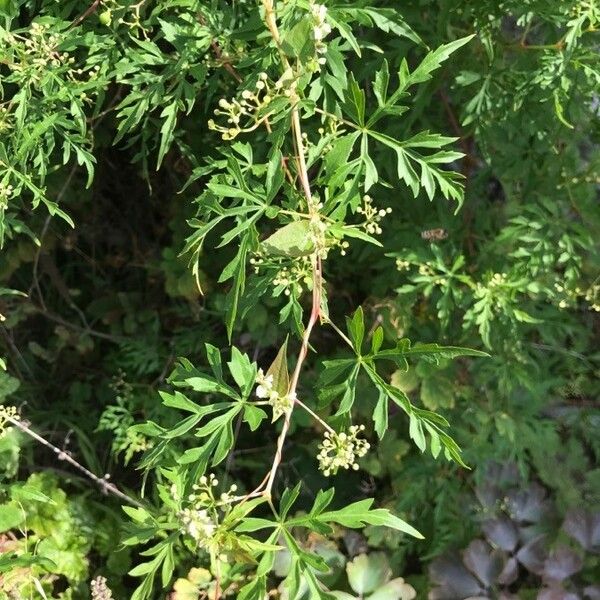
Often called the Monkshood Vine, Ampelopsis aconitifolia is a master of disguise in the garden. This elegant deciduous climber is prized for its "lace-leaf" appearance, which mimics the foliage of the toxic Monkshood flower rather than a typical grapevine. Native to Northern China, it offers a delicate, airy aesthetic that makes it a favorite for gardeners looking to add vertical texture without overwhelming their landscape.
🔍 How to Identify
- 🌿 Lacy Foliage: The leaves are the most distinct feature; they are deeply divided into five narrow, jagged lobes, giving the vine a highly decorative, fern-like silhouette.
- 🍇 Jewel-Toned Berries: In late summer, the vine produces small, pea-sized berries that undergo a stunning color transformation, shifting from creamy yellow and orange to a striking turquoise or bluish-purple.
- 🧶 Climbing Tendrils: Unlike ivy which uses sticky pads, this vine uses slender, twining tendrils to wrap around supports, allowing it to "float" gracefully over trellises or fences.
🏡 In Your Garden
- ☀️ Light and Color: While it thrives in both full sun and partial shade, placing it in a sunnier spot will result in a much more vibrant "parade" of berry colors and denser foliage.
- ✂️ Controlled Vigor: It is a fast grower but generally less aggressive than its cousin, the Porcelain Berry. It’s best used for softening hard edges like stone walls or providing a "see-through" screen on a lattice where you want light to pass through.
⚠️ Safety & Toxicity
- 🚫 Non-Edible: The berries are not for human consumption. While they look like miniature grapes, they are generally considered toxic if eaten in quantity.
- 🐾 Pet Safety: Like many members of the Vitaceae family, the berries and leaves can cause gastrointestinal distress in dogs and cats. It is best to plant this vine in areas where pets are not prone to snacking on the garden.
✨ Fun Fact
The name aconitifolia is a direct nod to the Aconitum (Monkshood) plant. It is a rare example of "leaf mimicry" in the botanical world, where a harmless vine evolves to look almost identical to a highly poisonous flower to discourage herbivores from eating it!

Detailed Care Instructions
To grow Ampelopsis aconitifolia, also known as the Chinese lace vine or porcelain vine, you can follow these steps:
- Plant Selection: Choose a healthy plant from a nursery or purchase seeds for germination.
- Sunlight Requirements: Ampelopsis aconitifolia prefers full sun to partial shade. Ensure the plant receives at least 4-6 hours of direct sunlight each day.
- Soil Preparation: Prepare well-draining soil with a pH level of 6.0 to 7.5. You can amend heavy clay soil with organic matter, such as compost or aged manure.
- Planting: Dig a hole 2-3 times wider than the root ball and deep enough for the plant to sit at the same level as it was in the nursery container. Place the plant in the hole and backfill with soil, gently firming it around the roots.
- Watering: Provide consistent moisture to the newly planted vine. Water deeply at least once a week, more during hot, dry spells. Be careful not to over-water, as this plant does not tolerate soggy soil.
- Mulching: Apply a layer of organic mulch around the base of the plant to help retain moisture, suppress weed growth, and moderate soil temperature.
- Support: Ampelopsis aconitifolia is a vine that needs support to climb. Provide a trellis, arbor, or fence for the plant to cling to and climb up.
- Pruning: Trim the plant annually during late winter or early spring to remove any dead or weak branches and maintain the desired shape. You can also prune after flowering to control its size.
- Fertilizing: Apply a balanced, slow-release fertilizer in the spring and summer to provide necessary nutrients. Follow the manufacturer's instructions for application rates.
- Pests and Diseases: Monitor the plant for common pests like aphids, spider mites, and Japanese beetles. Treat with appropriate insecticides or use organic pest control methods if necessary. Ampelopsis aconitifolia is generally resistant to diseases, but keep an eye out for any signs of fungal infections.
Remember to regularly monitor the plant's growth, water it properly, and support it as needed. With proper care, Ampelopsis aconitifolia can thrive and provide beautiful foliage in your garden.

Place in a window with dappled sun or a spot in the middle of a room. Or directly in a window facing west or east.

Ampelopsis Aconitifolia requires consistent watering to maintain its growth and health. It is crucial to avoid overwatering and ensure adequate drainage to prevent root rot.
The best way to water this plant is to allow the top inch of soil to dry out before watering again. This can be achieved by checking the soil regularly and sticking a finger or a moisture meter into the soil to determine the moisture level.
When watering, it is recommended to water deeply until the water reaches the root zone. That will stimulate the plant's roots to grow deeper and make it more tolerant to drought. However, it is important not to let the soil become soggy.
In the summertime when temperatures are high, Ampelopsis Aconitifolia may require more frequent watering, whereas in the winter, it may require less frequent watering.
It is best to water this plant in the morning to allow time for the foliage to dry out before nighttime. Wet foliage overnight can increase the risk of fungal diseases.
Overall, watering Ampelopsis Aconitifolia involves a balance of not overwatering and not underwatering, providing adequate drainage, and watering deeply.
To fertilize this plant, use a slow-release fertilizer with a balanced N-P-K ratio in the early spring and mid-summer. Water the plant thoroughly before applying the fertilizer. Follow the instructions on the package for the recommended amount of fertilizer per square foot of soil. Apply the fertilizer evenly around the base of the plant, avoiding contact with the leaves and stems. Water the plant again after fertilizing to help distribute the nutrients. Repeat the process annually for optimal growth and health.
A suitable soil type for a plant species with the scientific name Ampelopsis Aconitifolia would be a well-draining soil that is rich in organic matter. The pH of the soil should be slightly acidic to neutral, ranging from 6.0 to 7.0. It is important to avoid heavy clay soils, which can become waterlogged easily and lead to root rot. The species typically prefers moderately fertile soils that are neither too dry nor too moist, so adding compost or organic matter to the soil can help to improve its fertility and water holding capacity.
It is also essential to ensure that the soil is not too compacted, as this can reduce drainage and oxygen availability to the plant roots. To improve soil structure and drainage, one can mix in sand or perlite, which can help to create air pockets in the soil. Providing adequate drainage is crucial since waterlogged soils can lead to root rot and eventual death of the plant.
When planting Ampelopsis Aconitifolia, it's critical to ensure that the soil is well-prepared, as this will help to promote good root development and strong growth. Adding a balanced fertilizer can help provide essential nutrients that are required for plant growth and development. Overall, choosing the right soil and ensuring proper planting techniques can help to create ideal conditions for Ampelopsis Aconitifolia to thrive.
To propagate this plant, take cuttings from the stem that are approximately 6 inches in length.
Strip off any leaves that are close to the bottom of the cutting. Dip the cut end of the stem in rooting hormone and then plant it into a soilless potting mix.
Cover the pot with a clear plastic bag to keep the cutting humid while it establishes roots. Keep the cutting warm and in an area with bright filtered light, but not direct sunlight.
After about six weeks, check for root growth by gently pulling on the stem. If there is resistance, it has established roots and can be transplanted to a larger container or outdoors.








