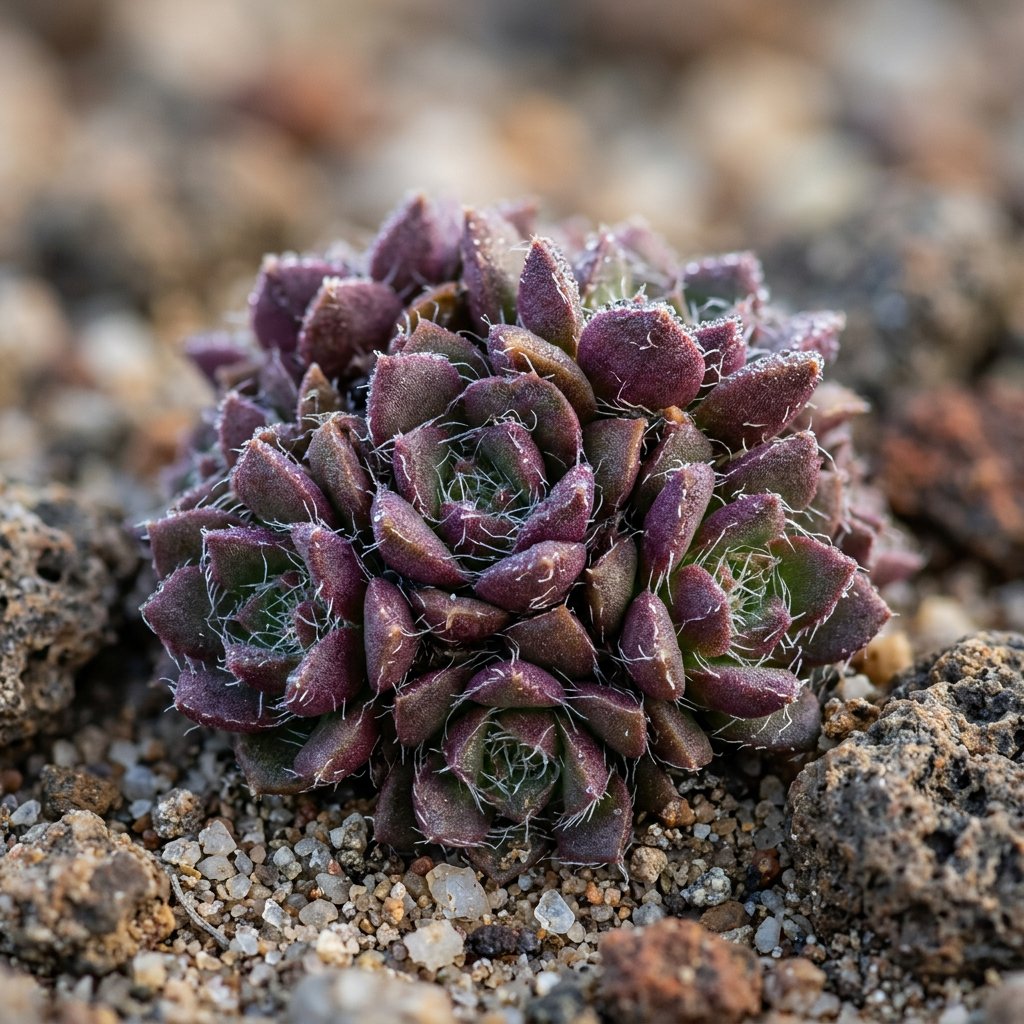
Plant Overview
Known affectionately as the "Sand Rose" or the "Sunrise Succulent," Anacampseros rufescens is a small but mighty treasure from South Africa. It is a favorite among succulent collectors for its dramatic "mood" colors—shifting from a deep olive green to vibrant shades of violet and magenta when exposed to the sun. This slow-growing beauty forms low-matted clumps that look like miniature, jewel-toned rosettes scattered across the soil.
🔍 How to Identify
- 🍃 The Leaves: Fleshy, wedge-shaped leaves that grow in a tight spiral. They are dark green on the top and usually a striking deep purple or reddish-pink on the underside.
- 🧶 The "Whiskers": One of its most distinct features is the presence of fine, white hair-like filaments or bristles that grow from the leaf axils, giving it a slightly "fuzzy" or cobwebbed appearance.
- 🌸 The Bloom: In late spring to summer, it sends up a thin stalk topped with star-shaped flowers that range from pink to rose-purple.
🏡 In Your Garden
- ☀️ The Stress Factor: To get those famous "Sunrise" colors, this plant needs bright, indirect light. The purple hues are actually a protective pigment (anthocyanins) the plant produces to shield itself from intense light.
- 💧 The "Thirst" Sign: Unlike many plants that wilt, the Sand Rose's leaves will slightly wrinkle when it is thirsty. It is highly susceptible to root rot, so it’s essential to use a gritty, sandy cactus mix and only water when the soil is bone-dry.
- 🌱 Slow and Steady: It has a very shallow root system and grows slowly, making it an excellent candidate for "living walls" or small decorative containers where it won't outgrow its neighbors quickly.
⚠️ Safety & Toxicity
- ✅ Status: Generally considered non-toxic.
- 🐾 Details: There are no records of Anacampseros rufescens being poisonous to cats, dogs, or humans. However, because it is a succulent, ingestion can still cause mild digestive upset in curious pets, so it’s best kept on a high shelf.
✨ Fun Fact
The flowers of the Sand Rose are "shy." They typically only open in the late afternoon on very sunny days and close back up by nightfall. If it's a cloudy day, the flowers may skip blooming entirely!

Detailed Care Instructions
| Color | Green To Deep Purple Foliage With Pink And Purple Blooms |
| Soil Ph | 6.1 To 7.8 |
| Humidity | Dry |
| Lighting | Part Sun |
| Toxicity | Toxic |
| Soil Type | Well-Draining, Sandy, Gritty |
| Bloom Time | Late Spring To Mid-Summer |
| Difficulty | Easy |
| Plant Type | Succulent |
| Mature Size | Up To 24 Inches Tall And 24 Inches Wide |
| Native Area | South Africa |
| Temperature | 15°C - 30°C |
| Sun Exposure | Bright, Indirect Light To Partially Shaded |
| Hardiness Zones | 9-11 |
To grow Anacampseros Rufescens (also known as sunset jade or sand rose), you can follow these steps:
- Select a suitable pot: Choose a shallow and wide container with drainage holes at the bottom. Ensure that the pot is large enough to accommodate the growth of the plant.
- Soil: Fill the pot with well-draining soil. You can use a mixture of cactus or succulent soil combined with perlite or coarse sand to improve drainage.
- Planting: Gently place the Anacampseros Rufescens plant in the prepared pot, making sure not to damage the roots. Position the plant so that its main stem is at or slightly above the soil level.
- Light: Place the pot in a location where the plant can receive bright, indirect sunlight for several hours a day. Avoid harsh, direct sunlight as it can scorch the leaves.
- Watering: Water the plant thoroughly but allow the soil to dry out between watering sessions. Overwatering can lead to root rot. A good rule of thumb is to water when the top inch of soil is dry.
- Temperature: Anacampseros Rufescens prefers a temperature range of 60-85°F (15-29°C). Protect the plant from frost during colder months as it cannot withstand freezing temperatures.
- Humidity: Sunset jade plants prefer low humidity. Average household humidity levels are generally suitable for their growth.
- Fertilizer: Feed the plant with a balanced, diluted succulent fertilizer during the growing season (spring and summer) to provide essential nutrients. Follow the manufacturer's instructions for proper mixing and application.
- Propagation: Anacampseros Rufescens can be propagated through stem or leaf cuttings. Allow the cuttings to dry out for a few days, then place them in well-draining soil and follow the appropriate care instructions.
- Pruning: If necessary, remove any dead or damaged leaves by gently plucking them from the base of the plant. This will help maintain its appearance and prevent the spread of disease.
Remember to monitor the plant regularly and adjust its care as needed. With proper care and attention, your Anacampseros Rufescens plant should thrive and grow successfully.

Place in a bright room that is sun drenched almost all day. Or directly in a south-facing window.

To water this plant, it is recommended to use a watering can or a spray bottle filled with water. It is important not to overwater it, as this can lead to root rot and other problems. The soil should be allowed to dry out slightly between waterings, and care should be taken to avoid getting water on the leaves or stem, as this can cause damage. Additionally, the plant should be kept in a sunny location, but not in direct sunlight, as this can also lead to damage. With proper care and attention, this plant can thrive and grow into a beautiful addition to any indoor garden.
To fertilize this plant, use a balanced fertilizer diluted to half strength during the growing season. Apply the fertilizer to the soil around the plant, making sure to not get any on the leaves. Do not fertilize during the dormant season.
An ideal soil for Anacampseros Rufescens should be well-draining and porous. The soil mix should consist of a blend of sand, perlite, and peat moss in equal parts to create a loose, aerated soil that allows water to flow through easily. This type of soil will prevent moisture buildup that can lead to rot or fungal diseases. Additionally, the pH of the soil should be neutral to slightly alkaline. The plant prefers to be grown in bright but indirect sunlight, in a warm, dry environment. Overwatering should be avoided, as the plant prefers to be kept on the drier side.
To propagate this plant, you can use stem cuttings or leaf cuttings. Choose a healthy stem or leaf and make a clean cut with a sharp, sterile knife or scissors. Let the cuttings dry for a few hours to prevent rotting.
Next, prepare a well-draining potting mix with sand or perlite mixed with potting soil. Plant the cuttings about 1-2 inches deep in the soil and water lightly. Keep the soil moist but not soaked, and place the pot in a warm, bright location but out of direct sunlight.
After a few weeks, new roots should start to form, and new growth will appear. Once the new growth is established, you can transplant the plant into a larger pot with suitable soil.
Common pests of the sunrise succulent include Mealybugs, aphids, thrips. Make a habit of checking your sunrise succulent frequently for pests so that any infestations can be caught and managed early.








