Plant Overview
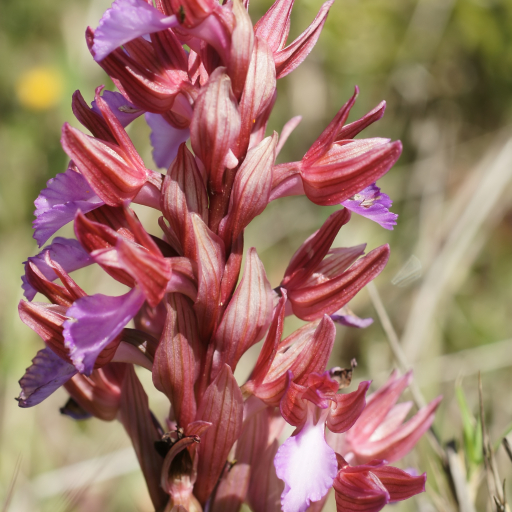
Often called the Pink Butterfly Orchid, this stunning Mediterranean native transforms dry meadows into a fluttering display of magenta every spring. Its name comes from the Latin word papilio, meaning butterfly, which perfectly describes the way its delicate, veined blooms appear to hover mid-air. While it is a wild beauty, it is highly prized by orchid enthusiasts for its intricate patterns and historical associations with ancient Greek myths of rebirth.
🔍 How to Identify
- 🌸 The "Butterfly" Lip: The most striking feature is the large, fan-shaped lower petal (the labellum). It is usually pale pink or white and decorated with dramatic, radiating purple stripes that guide pollinators.
- 👒 The Purple Helmet: The upper petals and sepals bunch together to form a dark, purplish-pink "helmet" or hood that sits directly above the broad butterfly-like lip.
- 🍃 Basal Rosette: Before the flower spike emerges, the plant sits as a low rosette of narrow, lance-shaped leaves. Unlike some of its cousins, the leaves of this species are typically a solid, vibrant green without spots.
🏡 In Your Garden
- 🍄 The Fungal Connection: This orchid is a "specialist" and is notoriously difficult to grow in traditional pots. It relies on a symbiotic relationship with specific soil fungi (mycorrhizae) to germinate and feed; without this invisible partner, the plant cannot survive.
- ☀️ Mediterranean Roots: If you are lucky enough to have these growing naturally on your property, leave them be! They thrive in well-drained, alkaline (limestone-rich) soil and crave the intense sun of open grasslands or olive groves. They hate "wet feet" and will rot if the soil stays damp during their summer dormancy.
⚠️ Safety & Toxicity
- ✅ Status: This plant is generally considered non-toxic to humans and household pets like cats and dogs.
- 🛑 Wild Ethics: The biggest "danger" regarding this plant is its conservation status. It is a protected species in many countries. Digging up a wild orchid is often illegal and usually results in the plant's death because the root system cannot adapt to new soil without its specific fungal colony.
✨ Fun Fact
The Pink Butterfly Orchid is a master of "food deception." It puts on a spectacular visual show to attract bees, mimicking the appearance of other nectar-producing flowers, but it actually produces very little nectar of its own. It convinces the bees to do the work of pollination for free!

Detailed Care Instructions
| Humidity | Normal |
| Lighting | Part Sun |
| Difficulty | Medium |
To grow Anacamptis Papilionacea, also known as the Butterfly Orchid, you can follow these steps:
- Environmental Requirements: This orchid species is typically found in Mediterranean climates, thriving in areas with mild, wet winters and hot, dry summers. Mimicking these conditions is essential for successful growth.
- Planting Time: The best time to sow seeds or plant tubers is typically during late summer or early autumn when the temperatures are mild and rainfall is more frequent.
- Soil Preparation: Prepare well-draining soil with a neutral to slightly alkaline pH (around 7). The soil should be loose and sandy to promote proper aeration and drainage, avoiding waterlogging.
- Sowing Seeds: Start by scarifying the seeds, gently rubbing them against sandpaper to break down the hard outer layer. Then, sow the seeds in shallow containers filled with the prepared soil. Cover the seeds with a thin layer of sand or fine soil and keep them moist until germination occurs.
- Transplanting Tubers: If using tubers instead of seeds, plant them around 2-3 cm deep in the prepared soil. Space each tuber at least 10-15 cm apart to give them room to grow.
- Watering: Keep the soil evenly moist during the growing season, but avoid overwatering as it can lead to root rot. Allow the soil to dry out slightly between watering.
- Sunlight: Anacamptis Papilionacea requires full sun to thrive. Ensure they receive at least 4-6 hours of direct sunlight each day. If planting in pots, place them in a location with ample sunlight or use grow lights if necessary.
- Fertilization: Fertilize the plants sparingly with a balanced orchid fertilizer during the active growth phase. Follow the manufacturer's instructions for the appropriate dosage and frequency.
- Pruning: Remove any faded flowers by cutting the stem near the base once they have finished blooming. This will encourage the plant to put more energy into storing nutrients for future growth.
- Dormancy: Anacamptis Papilionacea goes dormant during the winter months. Reduce watering and allow the soil to dry out more between waterings. Protect the plants from frost and extreme cold temperatures.
With proper care and attention to their environmental needs, Anacamptis Papilionacea should grow and bloom successfully.

Place in a bright room that is sun drenched almost all day. Or directly in a south-facing window.

To water this plant, it is important to first assess the soil moisture level. This can be done by inserting a finger into the soil to a depth of about 2 inches. If the soil feels dry, it's time to water.
To water the plant, gently pour water onto the soil until it runs out of the drainage holes in the bottom of the pot. It is important not to overwater the plant, as this can lead to root rot. Allow the soil to dry out slightly between waterings, but do not let it become completely dry.
In general, this plant prefers to be kept evenly moist but not waterlogged. It is also important to avoid getting water on the leaves, as this can cause them to rot. Watering early in the morning or late in the day is recommended, as this gives the plant time to absorb the water before the heat of the day sets in.
To fertilize this particular plant, you should use a balanced fertilizer with equal parts of nitrogen, phosphorus, and potassium. Fertilize approximately once a month during the growing season, starting in early spring and ending in late summer. When applying, make sure to dilute the fertilizer in water first and apply it only to the soil, not the leaves. Avoid fertilizing during the plant's dormant period in winter.
The ideal soil type for the Anacamptis Papilionacea plant is a soil that is well-draining and rich in minerals and nutrients. It should have a pH level that is slightly acidic to neutral and should be able to retain moisture without becoming waterlogged. A sandy soil that has been amended with compost or other organic matter is ideal. It is important to avoid using heavy, clay soils that can retain too much moisture and lead to root rot. Additionally, it is important to plant the Anacamptis Papilionacea in a location that receives bright, indirect sunlight and to regularly water and fertilize the plant to promote healthy growth.
To propagate this plant, the parent plant must be healthy and mature enough for division. Careful observation of the plant's growth cycle is important, as division should only take place during its dormant stage. The parent plant's foliage must be cut back, and new growth and offsets can be carefully separated from the parent plant. The new offsets can be planted in a pot or in the ground with well-draining soil and gently watered. A balanced fertilizer should be applied to encourage healthy growth, and the new plant should be kept in a shaded area until it has established itself. Proper care and attention to the new plant will ensure that it thrives and grows into a mature plant in due course.








