Plant Overview
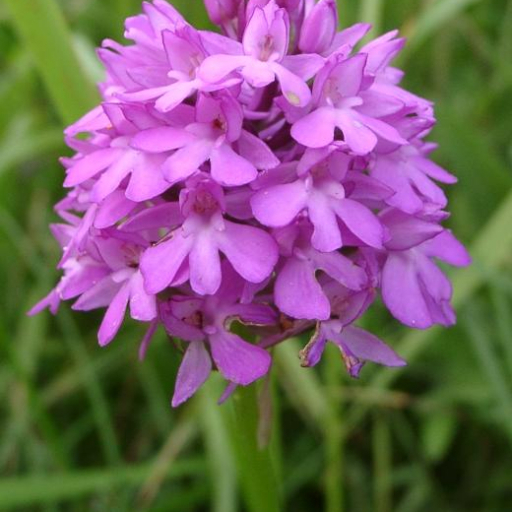
Known as the Pyramidal Orchid, this stunning wildflower looks like a vibrant pink jewel rising from the meadow. Often celebrated as the "Gems of the Grasslands," its symmetrical, cone-shaped flower spikes are a hallmark of mid-summer in Europe and the Mediterranean. In folklore, finding a cluster of these orchids was often seen as a sign that the land was blessed with hidden underground springs.
🔍 How to Identify
- 📐 The Shape: It earns its name from its young flower heads, which form a perfect, dense pyramid. As the season progresses, the spike stretches into a more cylindrical shape.
- 🌸 The Bloom: Each individual flower is tiny but intricate, ranging in color from a soft rose-pink to a deep, saturated magenta.
- 🛤️ The Landing Strip: Look closely at the "lip" of the flower; it features two small vertical ridges that act as a guide-rail, directing butterflies perfectly toward the nectar.
🏡 In Your Garden & Nature
- 🦋 The Butterfly Magnet: This plant is a specialist. It produces a faint, sweet scent to attract butterflies and moths. Because its nectar is hidden at the end of a long, thin tube, only insects with long tongues can reach the treat.
- 🌱 Soil Secrets: These orchids are "calcicoles," meaning they are obsessed with lime. They thrive in chalky or limestone grasslands and are often used by ecologists as an indicator of healthy, alkaline soil.
- 🍄 The Fungal Bond: Like many orchids, they have a "secret deal" underground. They rely on specific soil fungi to help their tiny seeds germinate, making them very sensitive to chemical fertilizers which can kill their fungal partners.
⚠️ Safety & Toxicity
- 🟢 Status: Generally non-toxic.
- 🚫 Hands Off: While not poisonous to pets or humans, you should never pick them or try to dig them up. In many countries, the Pyramidal Orchid is a protected species. Furthermore, they almost never survive being moved because they cannot live without the specific wild fungi found in their original soil.
✨ Fun Fact
Charles Darwin was absolutely obsessed with this specific orchid! He spent hours studying how its "guide plates" forced butterflies to get pollen stuck to their tongues in a very specific way to ensure the plant could reproduce.

Detailed Care Instructions
To grow Anacamptis Pyramidalis plants, also known as Pyramidal Orchids, follow these steps:
- Choose the right location: Pyramidal Orchids prefer full sun and well-draining soil. Find a sunny spot in your garden where the soil is not too compacted or waterlogged.
- Prepare the soil: Before planting, ensure the soil is loose and allows water to drain easily. If the soil is heavy or clayey, mix in some sand or organic matter to improve drainage.
- Obtain healthy plants: You can buy Anacamptis Pyramidalis plants from nurseries or online stores. Make sure to choose healthy, disease-free plants with intact roots.
- Planting: Dig a hole that is slightly larger than the plant's root ball. Place the plant in the hole, ensuring that the top of the root ball is level with or slightly above the soil surface. Gently backfill the hole with soil, firming it down around the roots.
- Watering: Water the newly planted Anacamptis Pyramidalis thoroughly to settle the soil. Afterward, water sparingly, allowing the soil to dry out slightly between waterings to mimic the natural conditions of these native orchids.
- Mulching and weed control: Apply a layer of organic mulch around the base of the plants to suppress weeds and conserve soil moisture. Take care not to cover the center of the plant where the growth emerges.
- Fertilization: Anacamptis Pyramidalis orchids do not require heavy fertilization. If desired, you can apply a balanced orchid fertilizer diluted to half strength a few times during the growing season.
- Pruning: These orchids do not typically require pruning. However, you may remove spent flower stalks after blooming to maintain a tidy appearance.
- Protection: Protect the Anacamptis Pyramidalis plants from extreme weather conditions, particularly during winter. Mulching around the base of the plant can help retain some warmth and protect the roots.
- Enjoy: As the Anacamptis Pyramidalis plant grows, it will produce beautiful pyramidal-shaped flower spikes adorned with numerous small orchid flowers. Enjoy their delicate beauty and the wildlife they attract, such as bees and butterflies.
Remember that wild orchids are protected in several countries, so ensure you are not harvesting or disturbing them from their natural habitats.

Place in a bright room that is sun drenched almost all day. Or directly in a south-facing window.

Anacamptis Pyramidalis is a plant that requires occasional watering. The watering schedule can vary depending on the season and the growing conditions. In general, it is recommended to water the plant when the top 1-2 inches of soil feels dry to the touch. When watering, it is important to avoid getting water on the leaves and stem, as this can lead to fungal diseases or rot.
The best way to water Anacamptis Pyramidalis is to use a watering can or a hose with a gentle nozzle to deliver water directly to the soil around the base of the plant. It is important not to overwater the plant, as this can lead to root rot and other issues. It is also important to avoid letting the plant sit in standing water, as this can lead to waterlogged soil and suffocation of the roots.
One important tip for watering Anacamptis Pyramidalis is to pay attention to the weather. If there has been a lot of rain, it may not be necessary to water the plant for several days or even a week. On the other hand, if it has been hot and dry, the plant may require more frequent watering.
Overall, the key to watering Anacamptis Pyramidalis is to provide it with enough water to keep the soil moist without overwatering and to avoid getting water on the leaves and stem. With proper watering, this plant can thrive and produce beautiful flowers year after year.
To fertilize this plant, use a balanced fertilizer with a higher ratio of nitrogen in spring as it begins to grow. Once the plant has flowered, switch to a fertilizer with a higher ratio of phosphorous to promote healthy seed production. It is important not to over-fertilize this plant, as it can lead to weak growth and damage. Follow the instructions on the fertilizer package and use a diluted solution. Water the plant thoroughly before and after fertilizing.
The Anacamptis Pyramidalis plant prefers well-draining soil that is rich in organic matter. It does well in neutral to alkaline soils and prefers soils that are slightly moisture-retentive but not waterlogged. The soil should be deep enough to accommodate the plant's long, tuberous roots. It may also benefit from a light application of a balanced fertilizer in the spring. When planting, care should be taken to not damage the roots, as this can hinder the plant's growth.
To propagate this plant, you will need to carefully collect its seeds when they are mature. The seeds should be sown in a potting mixture that is free-draining and sterilized to avoid any disease or pest issues.
After sowing the seeds, cover them with a light layer of soil and water them gently. It is important to keep the potting mixture moist but not waterlogged.
The seeds should be kept in a warm, sunny spot, such as a greenhouse, until they germinate. This can take a few weeks to a few months depending on the conditions.
Once the seedlings have grown to a reasonable size, they can be transplanted into individual pots or directly into the ground if conditions are suitable.
It is important to note that propagation by seed can result in variability in the offspring. If you are looking to preserve a specific genetic line, division of an existing plant may be a more suitable propagation method.
Overall, propagation of this plant can be a rewarding experience and can help to contribute to conservation efforts for this beautiful species.








