Plant Overview
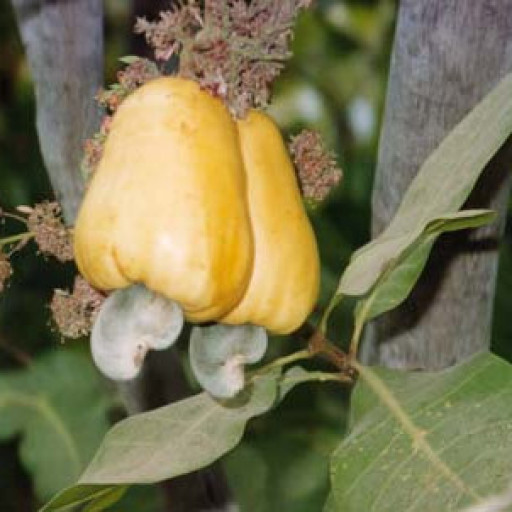
Known as the "Cashew Tree," this tropical evergreen is a botanical marvel famous for its bizarre, two-part fruit. Native to northeastern Brazil, it was spread across the globe by Portuguese explorers and now thrives in tropical climates like India and Vietnam. It belongs to the Anacardiaceae family, making it a surprising cousin to both the Mango and Poison Ivy.
🔍 How to Identify
- 🍃 Leathery Foliage: The leaves are large, oval, and smooth with a thick, waxy texture and prominent pale veins.
- 🍎 The "False" Fruit: It produces a bright red or yellow pear-shaped "Cashew Apple." This is technically a swollen stalk (hypocarp) that is juicy, fragrant, and edible.
- 🥜 The "True" Fruit: Hanging from the bottom of the apple is a greyish, kidney-shaped shell. This contains the actual cashew nut we eat.
🏡 In Your Garden
- ☀️ Sun Worshipper: This tree demands full, direct sunlight to produce its unique fruit. It is strictly a tropical resident; it has zero tolerance for frost and will stop growing if temperatures dip below 50°F (10°C).
- 🌱 Drought Resilience: Once established, the Cashew Tree is incredibly hardy. It has a deep taproot that allows it to thrive in sandy or poor soils where other fruit trees might struggle, making it excellent for coastal or arid tropical gardens.
⚠️ Safety & Toxicity
- 🚫 Caustic Shells: WARNING. The shell of the raw nut contains urushiol, the same blistering oil found in Poison Ivy. You should never attempt to crack or eat a raw cashew straight from the tree, as the oil causes severe chemical burns to the skin and throat.
- 🐾 Pet & Child Safety: The "Cashew Apple" is safe to eat, but the raw nut shells and the tree's milky sap can cause painful dermatitis. Keep curious pets away from fallen raw nuts.
✨ Fun Fact
The Cashew "Apple" is actually five to ten times higher in Vitamin C than an orange! While the nut is the global superstar, in Brazil and India, the juicy apple is prized for making refreshing jams, spirits, and sweet tropical juices.

Detailed Care Instructions
| Humidity | Dry |
| Lighting | Full Sun |
| Toxicity | Poisonous |
| Difficulty | Easy |
| Hibernation | Cold Period |
| Temperature | 22°C - 40°C |
| Hardiness Zones | 9 - 12 |
To grow an Anacardium Occidentale plant, also known as cashew tree, you can follow these steps:
- Climate and soil requirements: Cashew trees thrive in tropical and subtropical climates, with temperatures between 77-95°F (25-35°C). They prefer well-drained, sandy or loamy soil with a pH range of 6-7.5.
- Obtain seeds or seedlings: You can purchase cashew seeds from a reputable nursery or seed supplier. Alternatively, you can collect seeds from a ripe cashew fruit, which looks like a kidney-shaped nut attached to a swollen appendage.
- Seed preparation: Before planting, you need to remove the outer shell of the cashew seed, being careful not to damage the inner seed. Soak the seeds in water for 24 hours to facilitate germination.
- Planting: In a pot or seed tray, fill it with well-draining soil mix. Place the cashew seed vertically in the soil with the pointed end facing downwards, and cover it with about 1 inch (2.5 cm) of soil.
- Watering: Keep the soil moist, but not waterlogged, throughout the germination period. Provide regular, light irrigation to prevent the soil from drying out completely.
- Germination and growth: Cashew seeds typically germinate within 2-4 weeks. Once the seedlings emerge, gradually acclimate them to direct sunlight. Ensure the seedlings receive at least 6 hours of sunlight per day.
- Transplanting: When the seedlings have developed sturdy roots and reached a height of 6-8 inches (15-20 cm), they are ready for transplanting into a larger pot or the ground. Ensure good drainage in the new container or planting area.
- Care and maintenance: Cashew trees require regular watering, especially during the dry season. Fertilize the tree every 4-6 weeks with a balanced, slow-release fertilizer. Prune the tree to maintain shape and promote better airflow.
- Pests and diseases: Look out for common pests like aphids, scale insects, and mealybugs. Apply natural or organic insecticides or soaps to control infestations. Also, be aware of fungal diseases such as rust and powdery mildew, and treat them promptly with appropriate fungicides.
- Harvesting: The cashew tree produces fruit in the form of "cashew apples" that have a fleshy, juicy texture. After the cashew apple matures, the cashew nut grows beneath it. Harvest the cashew nuts when the apple turns pinkish-red and easily detaches from the tree.
Remember, cashew trees take time to mature and may not produce fruit for the first 2-3 years. Patience and consistent care are crucial for the successful growth of an Anacardium Occidentale plant.

Place in a bright room that is sun drenched almost all day. Or directly in a south-facing window.

Anacardium Occidentale plants require regular watering. However, it is important to ensure that the soil is not waterlogged as this can cause root rot. The frequency of watering will depend on the climate and the soil type. During hot and dry weather, the plant may require watering more frequently, but during cooler weather or in soil with good moisture retention, less frequent watering may be needed. It is recommended to water the plant deeply, allowing the water to reach the roots, rather than shallowly, which can promote shallow root growth. Additionally, it is important to water the plant early in the morning or late in the day to avoid evaporation and to prevent the leaves from burning in the sun.
To promote healthy growth and development of this plant, fertilize it with a balanced fertilizer that contains equal amounts of nitrogen, phosphorous, and potassium. Apply the fertilizer once every two months during the growing season, which typically starts in late spring and lasts through early fall. When fertilizing, make sure to evenly distribute the fertilizer around the base of the plant and avoid getting any on the leaves. Water the plant well after fertilizing to help the nutrients reach the roots.
It is important to use well-draining soil for the Anacardium Occidentale plant to prevent waterlogging, which can lead to root rot. The soil should be nutrient-rich, so adding organic matter, such as compost or well-rotted manure, can improve its quality. A pH range of 6.0-7.5 is ideal for this plant. Additionally, it is recommended to use a soil mixture that includes sand, perlite or vermiculite for better soil aeration and drainage.
Anacardium Occidentale is a tropical plant that can be propagated through various methods such as seeds, air-layering, and stem cuttings. Here are the steps on how to propagate Anacardium Occidentale plant without using its common names:
Propagating Anacardium Occidentale through Seeds:
- Collect ripe fruits from the Anacardium Occidentale plant.
- Extract the seeds from the fruits and wash them thoroughly to remove any traces of fruit pulp.
- Soak the seeds in water for 24 to 48 hours to soften their hard seed coat.
- Fill a well-draining potting mix in a container and plant the seeds 1 inch deep and 2 to 3 inches apart.
- Water the soil gently and keep it moist, but not waterlogged.
- Place the container in a warm and bright location with indirect sunlight.
- The seeds will germinate within 2 to 4 weeks, and once the seedlings have developed their second set of leaves, they can be transplanted into individual pots.
Propagating Anacardium Occidentale through Air-layering: - Select a healthy mature branch of the Anacardium Occidentale plant and make a small cut on the branch, about 6 inches below the node.
- Apply some rooting hormone onto the cut area and wrap it with a moist sphagnum moss.
- Secure the moss with plastic wrap and tie it with a string to keep it in place.
- Keep the moss moist by spraying it with water regularly.
- After 4 to 6 weeks, roots will form, and it’s time to cut the branch below the root ball.
- Plant the rooted branch in a well-draining potting soil and place it in a bright location with indirect sunlight.
- Water the plant regularly and keep it moist.
Propagating Anacardium Occidentale through Stem Cuttings: - Select a healthy and mature branch of the Anacardium Occidentale plant and make a clean cut below a node.
- Remove the leaves from the bottom half of the stem cutting.
- Dip the cut end of the stem into rooting hormone.
- Fill a well-draining potting mixture into a pot or container and make a hole in the center.
- Insert the stem cutting about one inch into the hole and gently press the soil around it.
- Water the soil gently and keep it moist.
- Cover the pot with a clear plastic bag to create a humid environment and place it in a location with bright, indirect sunlight.
- Check the cutting regularly, and after a few weeks, when the roots have formed, remove the plastic bag.
- Transplant the seedling into individual pots once it has developed roots and a few new leaves.
Common pests of the cashew include Mealybugs, spider mites, thrips. Make a habit of checking your cashew frequently for pests so that any infestations can be caught and managed early.








