Plant Overview
Known in its native Amazonian home as Caju-açú (the "Great Cashew"), Anacardium spruceanum is the wild, towering cousin of the common cashew tree. Rising high into the rainforest canopy, this tree is a vital source of food for tropical wildlife and a staple in indigenous Amazonian cultures. Unlike the commercial cashew, this species is a true giant, often reaching heights that make its fruit seem like tiny gems hidden among the clouds.
🔍 How to Identify
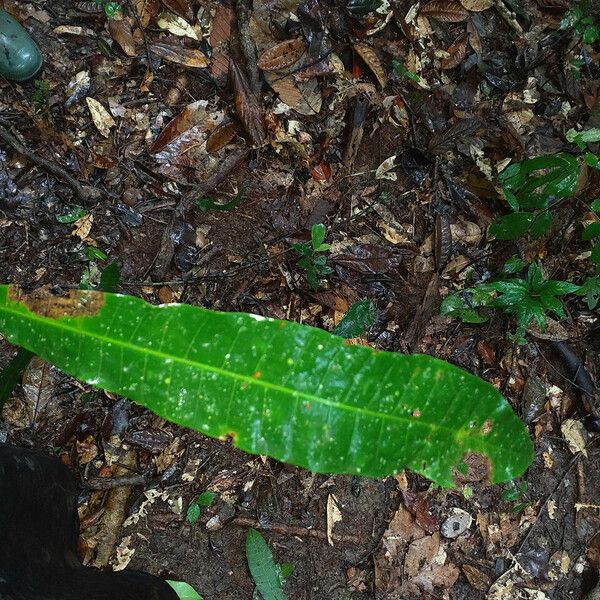
- 🍃 The Foliage: Large, leathery, and oval-shaped leaves that feel thick to the touch. They are arranged spirally around the branches, creating a dense, deep-green canopy.
- 🍎 The "Apple": The tree produces a fleshy, succulent pseudo-fruit (hypocarp) that turns a vibrant yellow or reddish hue when ripe. It is notably more fibrous and tart than the common cashew.
- 🥜 The True Fruit: Hanging from the bottom of the fleshy "apple" is a greyish, kidney-shaped nut. This is the actual fruit, containing the seed we know as the cashew nut.
🏡 In Your Garden
- 🌳 Space Requirements: This is not a plant for a small backyard or a windowsill. In its natural habitat, it can reach over 30 meters (100 feet) tall. It requires vast open space and a tropical climate to thrive.
- 🌧️ Rainforest Needs: It demands high humidity and deep, well-draining acidic soil. It is extremely sensitive to frost and will not survive in temperate regions without a massive, temperature-controlled conservatory.
- ☀️ Sun Seeker: As a canopy-reaching species, it craves full sun once established. Young saplings can handle partial shade, but they will quickly "stretch" toward the light as they mature.
⚠️ Safety & Toxicity
- 🚫 Caustic Shells: Like all members of the Anacardiaceae family (which includes poison ivy), the raw shell of the nut contains urushiol and phenolic resins. Touching the liquid inside a raw shell can cause severe chemical burns and skin blistering.
- 🐾 Pet Warning: While the fleshy "apple" part is generally safe if it falls, the raw nut shell is dangerous for pets to chew on. Always ensure the nuts are professionally roasted or processed before any form of consumption.
✨ Fun Fact
The name "spruceanum" honors Richard Spruce, a legendary 19th-century English botanist who spent 15 years exploring the Amazon. He was one of the first Europeans to document the vast diversity of the Anacardium genus in the wild!

Detailed Care Instructions

Place in a bright room that is sun drenched almost all day. Or directly in a south-facing window.

When the top few inches of soil dry out, water your plants. If the top few inches of soil are still moist, do not water your plant. Wait a few days, then poke your finger into the soil to see if anything has changed. Overwatering poses a disease risk, such as the development of fungal diseases in the roots. These plants have adaptations in there leaves that allow them to survive in low water supply.








