Plant Overview
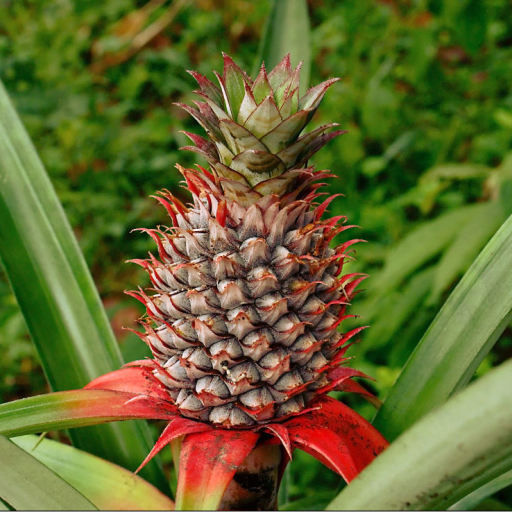
Often called the Red Pineapple, Ananas bracteatus is the flamboyant, tropical cousin of the common grocery store pineapple. Native to South America, this plant is less about the snack and more about the spectacle, boasting neon-pink fruit and dramatic, sword-like foliage. It is frequently grown as a "living fence" in its native Brazil because its beauty comes with a prickly, protective personality.
🔍 How to Identify
- 🍍 The Fruit: Unlike the yellow varieties we eat, this fruit is smaller and stays a vibrant, sunset red or deep pink for several months.
- ⚔️ The Foliage: Long, arching, sword-shaped leaves that can reach up to 3 feet in length. Many ornamental varieties feature "variegation," showing off cream or white stripes along the green blades.
- 🌸 The Bloom: Before the fruit matures, tiny purple or lavender flowers emerge from between the bright red bracts (modified leaves) that give the plant its name.
🏡 In Your Garden
- ☀️ Color and Light: To keep those pinks and reds "neon," this plant craves bright, indirect light or full sun. In low light, the colors will fade to a dull green, and the plant may refuse to fruit.
- 🏜️ Tough as Nails: Because it is a bromeliad, it is remarkably drought-tolerant. It stores water in its "cup" (the center of the leaves), making it a great choice for forgetful waterers, provided the soil drains quickly.
- 🛡️ Placement is Key: This is not a plant for high-traffic hallways. Because of the sharp "teeth" lining the leaf edges, it should be placed where people and pets won't accidentally brush against it.
⚠️ Safety & Toxicity
- 🌵 Physical Risk: The primary danger is the sharp spines along the leaf margins. These can cause painful scratches or skin irritation if handled without gloves.
- 🐾 Pet Safety: While not considered highly toxic, the sap or unripe fruit can cause mild stomach upset or mouth irritation in cats and dogs if chewed.
- 🍽️ Edibility Note: The fruit is technically edible when fully ripe, but it is much more fibrous, seedy, and acidic than the standard pineapple. It is generally grown for its looks rather than its taste.
✨ Fun Fact
In many parts of South America, Ananas bracteatus is planted in rows to create "botanical barbed wire." The spines are so sharp and the growth so dense that it creates a nearly impenetrable hedge against intruders!

Detailed Care Instructions
| Humidity | Normal |
| Lighting | Part Sun |
| Difficulty | Medium |
| Hibernation | Cold Period |
| Temperature | 18°C - 25°C |
| Hardiness Zones | 10A - 11B |
To grow the Ananas bracteatus plant, also known as the red pineapple or blushing bromeliad, you can follow these steps:
- Purchase a healthy Ananas bracteatus plant from a reputable nursery or garden center. Look for plants with vibrant foliage and without any signs of disease or pests.
- Select a suitable location for your plant. Ananas bracteatus prefers bright indirect sunlight, so a spot near a window with filtered light or a shaded area in your garden would be ideal.
- Prepare a well-draining potting mix or choose a well-draining area in your garden. Ananas bracteatus thrives in well-draining soil that is slightly acidic.
- Water your plant regularly to keep the soil moist but not waterlogged. Bromeliads like the Ananas bracteatus are sensitive to overwatering, so make sure to allow the top inch of soil to dry out before watering again. Avoid wetting the center of the plant (also known as the crown) as it can lead to rot or fungal infections.
- Provide adequate humidity. Ananas bracteatus plants prefer high humidity levels. You can increase humidity by placing a tray of water near the plant or using a humidifier.
- Fertilize your Ananas bracteatus plant regularly. Use a balanced liquid fertilizer diluted to half-strength, and apply it during the growing season. Follow the instructions on the fertilizer packaging for specific dilution ratios and frequency.
- Propagate your Ananas bracteatus plant if desired. This can be done by removing offsets, also known as "pups," that grow around the base of the mother plant. Gently separate the pup from the parent plant, ensuring it has some roots attached, and plant it in a separate pot or location.
- Keep an eye out for pests and diseases. Common pests that can affect Ananas bracteatus include mealybugs and scale insects. Regularly inspect the plant for any signs of infestation, such as sticky residue, white cotton-like clusters, or small bumps on the leaves. Treat any pest infestations promptly using organic or chemical insecticides, following the instructions carefully.
- Maintain a suitable temperature. Ananas bracteatus prefers temperatures between 60-85°F (16-29°C). Avoid exposing the plant to extreme cold or hot temperatures, as it can lead to poor growth or damage.
With proper care and attention, your Ananas bracteatus plant should grow and thrive, showcasing its unique red and green foliage.

Place in a window with dappled sun or a spot in the middle of a room. Or directly in a window facing west or east.

Ananas Bracteatus plant is a species of plant that belongs to the Bromeliaceae family. This plant is commonly cultivated for its ornamental value. Watering the Ananas Bracteatus plant can be done in the following ways:
1. Water the plant regularly: The Ananas Bracteatus plant requires regular watering to thrive. The amount of water needed depends on the size of the plant and the surrounding environment. Generally, the plant should be watered once a week.
2. Use a well-draining soil mix: The plant needs well-draining soil to prevent waterlogging. A soil mix consisting of sand, peat moss, and perlite can be used to ensure good drainage.
3. Water the plant from above: The best way to water the plant is by pouring water directly over the leaves. This will ensure that the water reaches all parts of the plant.
4. Use distilled water or rainwater: The Ananas Bracteatus plant is sensitive to minerals and chemicals found in tap water. It is best to use distilled water or rainwater to prevent damage to the plant.
5. Avoid overwatering: Overwatering can lead to root rot and other problems. It is important not to water the plant too frequently or leave standing water in the pot.
By following these tips, you can ensure that your Ananas Bracteatus plant gets the right amount of water to thrive.
To fertilize Ananas Bracteatus, use a balanced, water-soluble fertilizer with equal parts nitrogen, phosphorus, and potassium. Apply the fertilizer every two weeks during the growing season, reducing to once a month during the winter months. Dilute the fertilizer to half strength and apply to the soil around the base of the plant, saturating the soil without getting fertilizer on the leaves or in the center of the plant. Water the plant thoroughly after applying fertilizer.
The best soil for Ananas Bracteatus plants is a well-draining, nutrient-rich soil that is slightly acidic with a pH range between 5.5 and 6.5. It is recommended to use a soil mix that contains perlite, peat moss, and vermiculite to improve its drainage and moisture retention. The plant prefers a soil that is moderately loose, loose enough to allow air and moisture to reach the roots, but still compact enough to support them. Avoid using heavy or clay-like soil, which can retain too much water and suffocate the roots. It is also important to ensure that the soil has a good level of organic matter, which provides essential nutrients for the plant's growth.
To propagate this plant, follow these steps:
- Prepare a clean and sharp pair of shears or scissors.
- Choose a mature and healthy plant with at least four to five leaves.
- Cut off a mature stem that is about six inches long.
- Remove the lower leaves of the stem to leave only about two to three leaves at the top.
- Dip the cut-end of the stem in rooting hormone powder to encourage root growth.
- Plant the stem in a well-draining soil mix and water thoroughly.
- Cover the planted stem with a clear plastic bag or a plastic wrap to create a humid environment that will encourage rooting.
- Place the plant in a warm, bright, and indirect light location.
- Check the soil frequently to ensure that it remains moist, but not waterlogged.
- After four to six weeks, gently tug the plant to see if it has rooted. If it has developed a good root system, you can remove the plastic cover and start caring for it as a mature plant.
Common pests of the red pineapple include Scale insect, mealybugs, spider mites. Make a habit of checking your red pineapple frequently for pests so that any infestations can be caught and managed early.








