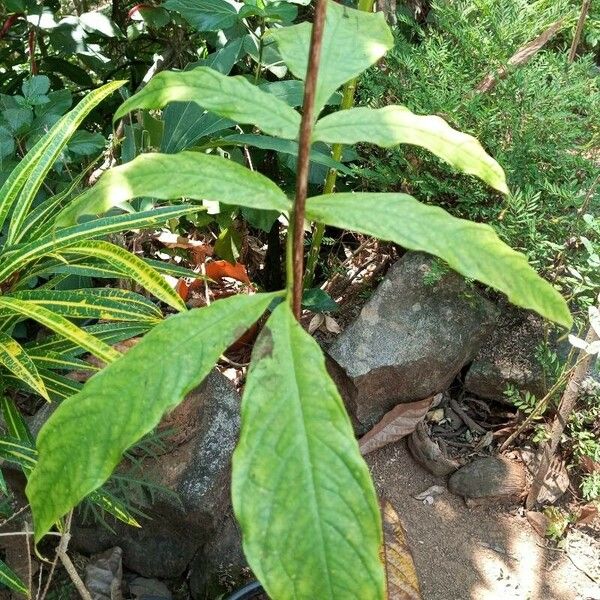
Plant Overview
Often called the Twisted Cobra Aroid, Anaphyllum wightii is a rare and striking treasure hidden in the misty, evergreen forests of the Western Ghats in India. With its dramatic, spiraled blooms that look like a serpent frozen in a dance, it belongs to the ancient Araceae family. This plant is a true "collector's ghost," highly sought after by aroid enthusiasts but rarely seen outside its native tropical marshlands.
🔍 How to Identify
- 🐍 The Spathe: Its most distinctive feature is a long, narrow, dark purple or brownish bract that twists dramatically into a spiral, resembling a thin, curled leaf or a cobra's hood.
- 🌿 The Foliage: The leaves are large and "pedately" divided, meaning they branch out like the fingers of a hand or a bird’s foot, sitting atop long, sturdy stalks.
- 🕯️ The Spadix: Tucked inside the twisted spathe is a hidden flowering spike (the spadix), typical of the "Lords and Ladies" family, which houses the tiny, inconspicuous flowers.
🏡 In Your Garden
- 💧 Marshland Logic: In its natural habitat, this plant grows near streams and marshy forest floors. If grown in a pot, it requires "boggy" conditions—never let the soil dry out, or the plant will quickly go into dormancy.
- ☁️ Humidity is King: It is highly sensitive to dry air. Without the heavy, humid atmosphere of a tropical rainforest, the leaf tips will brown and the dramatic "cobra" spathe may fail to unfurl properly.
- 🌑 Deep Shade Preference: Unlike many houseplants that enjoy bright indirect light, Anaphyllum wightii is a creature of the deep forest floor and thrives in low-light conditions where it is protected from the scorching sun.
⚠️ Safety & Toxicity
- 🚫 Toxic to Ingest: Like almost all members of the Aroid family, this plant contains calcium oxalate crystals. If chewed or swallowed, it causes immediate swelling of the mouth and throat.
- 🐾 Keep Away from Pets: Keep this plant out of reach of cats and dogs, as ingestion can lead to severe drooling, vomiting, and difficulty swallowing.
- 🧤 Skin Sensitivity: Some individuals may experience mild skin irritation from the sap; it’s always wise to wear gloves when pruning or repotting.
✨ Fun Fact
Anaphyllum wightii is a narrow endemic, meaning it is found nowhere else on Earth except for a small stretch of the Southern Western Ghats in India. It is considered a "relic" species, representing a unique evolutionary line within the aroid family that has survived for millions of years in its specific misty pocket of the world.

Detailed Care Instructions








