Plant Overview
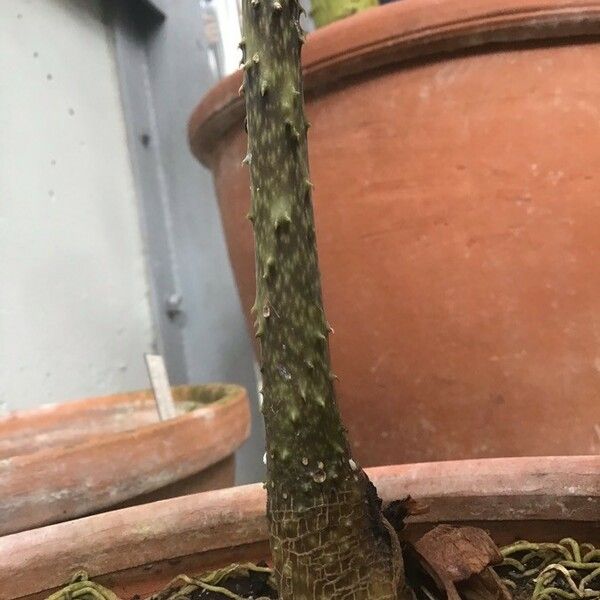
Known as the "Forest Anchomanes" or sometimes the "Spiny Arum," this plant looks like a botanical relic from a prehistoric era. Emerging from a massive underground tuber, it produces a single, giant, umbrella-like leaf perched atop a stem that is famously—and fiercely—prickly. Native to the tropical forests of Africa, it is a true conversation piece for collectors who love "weird" and architectural plants.
🔍 How to Identify
- 🌵 The Spiny Stem: The most distinct feature is the long, upright petiole (stem) which is densely covered in small, sharp prickles, giving it a rough, defensive texture.
- ☂️ The Umbrella Leaf: A single, massive leaf sits at the summit, deeply divided into many leaflets that spread out horizontally like a jagged green canopy.
- 🐍 The Inflorescence: Before the leaf even appears, the plant may send up a hooded flower (spathe) that ranges from creamy white to deep purple, housing a thick central spike (spadix).
🏡 In Your Garden
- 💤 The Big Sleep: This plant follows a strict dormancy cycle. If the leaf turns yellow and dies back, do not throw it away! The tuber is simply resting underground and will emerge larger and stronger after a period of dry sleep.
- ☁️ Forest Floor Vibes: In a home or garden setting, it craves the "understory" experience—think high humidity, well-draining soil rich in organic matter, and dappled, indirect light rather than harsh, direct sun.
⚠️ Safety & Toxicity
- 🚫 Status: Toxic/Irritant: Like most members of the Aroid family, Anchomanes difformis contains calcium oxalate crystals. These act like tiny needles if touched or ingested.
- ✋ Handle with Care: The spines on the stem can easily puncture the skin, and the sap can cause significant irritation. It is best to wear gloves when repotting and keep the plant far out of reach of curious pets and children.
✨ Fun Fact
- 🥣 Famine Food: While the raw tuber is quite toxic, it is used as a "famine food" in parts of West Africa. To make it edible, the tubers must be sliced, washed, and boiled multiple times to neutralize the needle-like crystals!

Detailed Care Instructions
| Lighting | Part Sun |
| Hardiness Zones | Min 11 |
To grow Anchomanes difformis, also known as the elephant ear plant, follow these steps:
- Propagation: Start by obtaining a healthy tuber or corm from a reliable source. You can either purchase one from a garden center or obtain one from mature plants by division.
- Pot selection: Choose a pot that is at least 12 inches in diameter with drainage holes at the bottom. The pot should be filled with a well-draining potting mix, such as a mix of peat moss, perlite, and compost.
- Planting: Plant the tuber or corm 2-3 inches deep in the potting mix, making sure the concave side faces downwards.
- Moisture: Keep the potting mix consistently moist but not waterlogged. Avoid letting it dry out completely. Provide regular watering, especially during the growing season, but reduce watering during the dormant period.
- Light: Anchomanes difformis thrives in bright, indirect light. Place the plant in a location that receives filtered sunlight, such as near a north-facing window or under a shade tree.
- Temperature and humidity: This plant prefers warm temperatures between 70-85°F (21-29°C) and high humidity levels. If your environment is dry, consider using a humidifier or placing a tray with water near the plant to increase humidity.
- Fertilizer: Fertilize the plant every 2-3 weeks during the growing season with a balanced, water-soluble fertilizer. Dilute the fertilizer according to the package instructions and apply it to the soil.
- Support: As the Anchomanes difformis grows, it might require support due to its large size. Use stakes or a moss pole to support the stems and leaves, preventing them from drooping.
- Pruning: Remove any yellow or dead leaves by cutting them off at the base. This will help maintain the plant's health and appearance.
- Dormancy: During the winter, the plant might go into a period of dormancy. Reduce watering and allow the plant to rest. Keep it in a cool location, preferably around 60-65°F (15-18°C).
With proper care and attention, your Anchomanes difformis plant should grow and thrive.

Place in a dark room with little light, like a dark bedroom or a spot far away from a window or directly in a north-facing window.

To water the plant, observe the moisture level of the soil first. A good way to check is to stick your finger an inch or two into the soil. If it feels dry, it's time to water the plant. Use room temperature water and water the soil directly, avoiding getting water on the leaves or stem. Ensure that the soil is thoroughly moistened but not waterlogged. Check the moisture level regularly and adjust the watering frequency accordingly depending on the season and environment.
To fertilize this plant, use a balanced fertilizer with an N-P-K ratio of 10-10-10. Apply the fertilizer once a month during the growing season, which is typically spring and summer. Dilute the fertilizer according to the manufacturer's instructions, usually 1 tablespoon per gallon of water. Water the plant before and after applying the fertilizer to ensure it is fully absorbed. Avoid getting the fertilizer on the leaves as it may cause burning.
Anchomanes difformis thrives best in soil that is well-drained and rich in organic matter. The soil should be slightly acidic to neutral, with a pH range of 6.0 to 7.5. It should also be moist but not waterlogged, as the plant does not tolerate stagnant water. A good soil mix for Anchomanes difformis should include a blend of peat moss, perlite, and sand. This will provide the necessary drainage, aeration, and moisture retention needed for healthy growth. Additionally, the soil mix should be supplemented with a slow-release fertilizer to ensure adequate nutrition for the plant. It is also important to avoid using soil that is contaminated with pesticides, herbicides, or other harmful chemicals, as these can be toxic to Anchomanes difformis.
Anchomanes difformis plant can be propagated through stem cuttings or dividing the rhizomes. To propagate through stem cuttings, select a healthy stem with several leaves and cut it at a 45-degree angle with a sharp, clean knife. Remove the bottom set of leaves and dip the cut end in rooting hormone powder. Plant the stem cutting in a pot of well-draining potting soil and keep it in a warm, humid location with indirect light. Water the cutting regularly, but do not overwater it.
To propagate through dividing the rhizomes, carefully uproot the plant and gently separate the rhizomes into smaller sections with a sharp knife. Each section should have at least one healthy shoot and several roots. Plant each section in a pot of well-draining potting soil and water it thoroughly. Keep the newly divided plants in a warm, humid location with indirect light and water them regularly. They should begin to grow new shoots and roots within a few weeks.








