Plant Overview
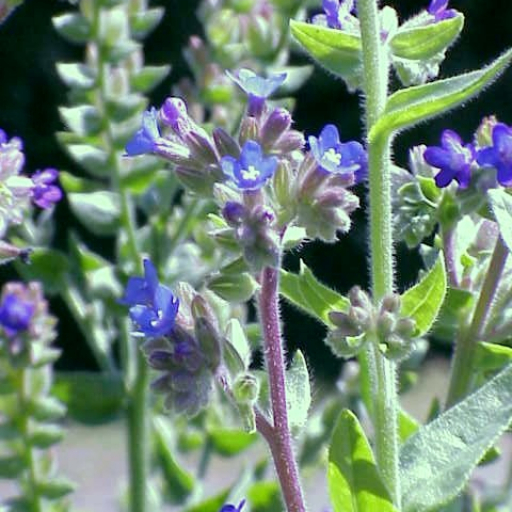
Known widely as Common Alkanet or "Bugloss," this vibrant wildflower is a member of the Borage family and a superstar in European folklore. Its name originates from the Greek word anchousa, meaning "paint," a nod to its historical use as a natural dye. While it may look like a common weed at first glance, its transformation from pink buds to deep, electric-blue blossoms makes it a favorite for cottage-style gardens and wild meadows.
🔍 How to Identify
- 🌿 Bristly Texture: The entire plant is covered in stiff, white hairs that give the leaves a rough, sandpaper-like feel.
- 🌸 Changing Colors: The small, funnel-shaped flowers often start as a soft pink or purple before maturing into a vivid, deep blue with a distinct white center.
- 🌀 Coiled Clusters: The flowers bloom in "cymes," which are curled clusters that slowly unfurl as the season progresses, resembling a scorpion’s tail.
🏡 In Your Garden
- ⚓ The Taproot Secret: This plant develops a very deep, sturdy taproot. This makes it incredibly drought-tolerant, but it also means it hates being moved. Choose its permanent home carefully, as transplanting an adult Alkanet is rarely successful.
- 🐝 Pollinator Buffet: It is one of the most productive nectar plants for long-tongued bees and butterflies. If you want to see your garden buzzing with life, this is the plant to grow.
- 🌱 Soil Specialist: It thrives in sandy, well-drained, or even poor soils where other flowers might wilt. It is a biennial or short-lived perennial that will happily self-seed if you don't deadhead the spent blooms.
⚠️ Safety & Toxicity
- 🚫 Toxicity Warning: Common Alkanet contains pyrrolizidine alkaloids, which are toxic to humans and livestock if ingested in significant quantities. These compounds can cause cumulative liver damage.
- 🧤 Skin Irritation: The stiff, bristly hairs on the stems and leaves can cause "mechanical irritation" or itchy rashes on sensitive skin. It is best to wear gloves when pruning or handling the plant.
- 🐾 Pet Safety: Keep a close eye on curious dogs or cats; while not usually fatal in small nibbles, it is not considered pet-safe.
✨ Fun Fact
In the era of "Old World" cosmetics, the root of the Alkanet was crushed and mixed with fats to create a natural red rouge for the cheeks and lips. Even today, it is sometimes used as a natural coloring agent for high-end violin varnishes!

Detailed Care Instructions
To grow Anchusa Officinalis, follow these steps:
- Select a suitable location: Choose a spot in your garden that receives full sun to partial shade. Anchusa prefers well-draining soil but can tolerate various soil types.
- Prepare the soil: Remove any weeds, rocks, or debris from the planting area. Loosen the soil with a garden fork or tiller, ensuring it is crumbly and not compacted.
- Sow the seeds: Plant the seeds directly into the soil in early spring or early fall. Create small furrows about 1/4 inch deep, and space them about 6-12 inches apart. Place the seeds in the furrows, and cover them with soil. Gently pat down the soil to ensure good seed-to-soil contact.
- Watering: Water the seeds immediately after planting, and keep the soil consistently moist until germination occurs. Once established, water the plant when the soil feels dry to the touch.
- Thin the seedlings: When the seedlings are a few inches tall, thin them out to provide adequate space for each plant to grow. Space the seedlings 12-18 inches apart.
- Mulching: Apply a layer of organic mulch around the plants to help conserve moisture and suppress weed growth.
- Fertilization: Anchusa Officinalis typically doesn't require heavy fertilization. However, you can apply a balanced slow-release fertilizer in early spring to promote healthy growth.
- Pruning: Deadhead spent flowers regularly to encourage continuous blooming. Cut back the plants to the ground in late fall or early spring to promote new growth and maintain a tidy appearance.
- Protection: Protect the plants from extreme heat or cold by providing shade or covering during harsh weather conditions.
- Pests and diseases: Anchusa Officinalis is generally resistant to pests and diseases. However, keep an eye out for common garden pests like aphids or slugs. Use organic pest control methods if necessary.
By following these steps, you can successfully grow Anchusa Officinalis and enjoy its beautiful blue flowers throughout the growing season.

Place in a bright room that is sun drenched almost all day. Or directly in a south-facing window.

1. Research the proper watering needs of the plant: Before watering the plant, make sure to research the appropriate watering schedule, as each plant has unique watering needs. Depending on the environment and climate, the plant may require more or less water.
2. Use the appropriate watering method: Once you've determined the watering needs of the plant, make sure to use the appropriate watering method. Most plants prefer to be watered from the bottom up, allowing the roots to soak in the water, rather than watering from the top down. This also helps prevent water from getting on the leaves, which can lead to fungal growth.
3. Water the plant consistently: The key to successful watering is consistency. The plant should be watered on a regular schedule, usually once or twice a week, depending on its needs. Avoid over-watering or under-watering, as both can be detrimental to the health of the plant.
4. Monitor the soil moisture: To ensure that the plant is getting the right amount of water, make sure to monitor the soil moisture. Stick your finger into the soil to check for moisture levels. If the soil feels dry, it's time to water the plant.
5. Use high-quality water: Make sure to use high-quality, clean water when watering the plant. Tap water may contain chemicals or minerals that can harm the plant. You can use filtered water or rainwater to avoid this issue.
6. Avoid watering in extreme temperatures: Finally, avoid watering the plant in extreme temperatures, such as during the hot afternoons or during a freeze. Watering during these times can shock the plant and cause damage.
To fertilize this plant, use a balanced fertilizer with equal amounts of nitrogen, phosphorus, and potassium. Apply the fertilizer once a month during the growing season, starting in the spring. Follow the manufacturer's instructions for the appropriate dosage and method of application. Avoid fertilizing in the winter months or during periods of drought.
Anchusa Officinalis prefers a well-draining soil with a neutral pH level. A mixture of loam, sand, and perlite is ideal for this plant, as it allows for adequate drainage while retaining some moisture. It is important to avoid using heavy clay soils, as well as soils that are too rich in organic matter, as this can lead to root rot. Additionally, regular fertilization with a balanced fertilizer can help promote healthy growth and vibrant blooms.
Anchusa Officinalis is a flowering plant that can be propagated through both seeds and cuttings. To propagate the plant using seeds, you should collect the seeds from mature plants once they have dried out and turned brown. Sow the seeds in a well-draining soil mixture in small pots, and keep the pots in a warm, bright spot. Water the soil regularly but make sure it doesn't become waterlogged. The seeds should germinate within a few weeks.
To propagate Anchusa Officinalis using cuttings, you should take a stem cutting from a mature plant, making sure the cutting is healthy and has several leaves. Remove the lower leaves, and dip the cut end of the stem in rooting hormone powder. Plant the stem cutting in a well-draining soil mixture, and keep it in a warm, bright spot. Water it regularly and mist it daily to keep the humidity levels up. The cutting should root within a few weeks.
Once the seeds or cuttings have taken root and started to grow, you can transplant the young plants into larger pots or directly into the ground. When planting Anchusa Officinalis, make sure to give it plenty of sun, and water it regularly but don't let the soil become waterlogged. With the right care and attention, your propagated Anchusa Officinalis will grow into a beautiful flowering plant.








