Plant Overview
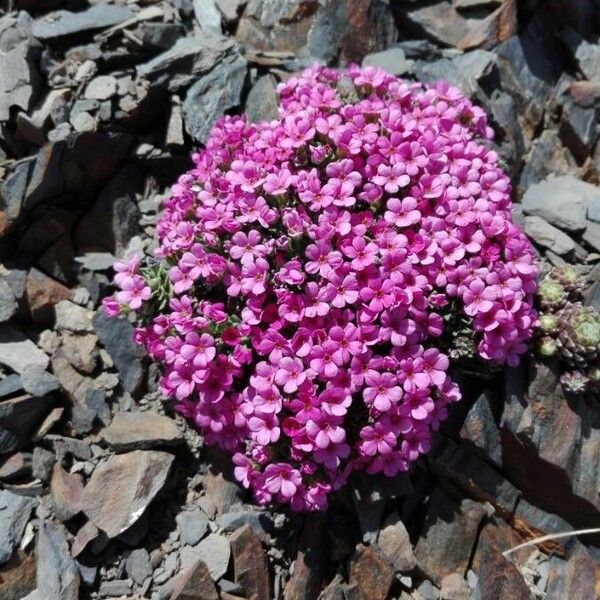
Known as the Ciliate Rock Jasmine, this tiny alpine specialist is a true mountaineer of the Pyrenees. It forms dense, emerald cushions that cling to limestone cliffs and rocky scree where few other plants dare to grow. To find one in the wild is like discovering a living pink jewel tucked into a harsh, grey crevice.
🔍 How to Identify
- 🌿 The Rosettes: It grows in tight, spherical cushions made of hundreds of tiny, overlapping green leaves.
- 👁️ The "Eyelashes": The species name ciliata refers to the fine, stiff hairs (cilia) lining the leaf margins, giving them a fringed, eyelash-like appearance.
- 🌸 The Bloom: Vibrant pink to deep magenta flowers with five rounded petals and a contrasting yellow "eye" emerge in early summer.
🏡 In Your Garden
- 🏔️ Alpine Aspirations: This is a plant for the dedicated collector. It thrives in "alpine house" conditions or specialized rock gardens that mimic high-altitude peaks. It requires a limestone-rich, gritty substrate to feel at home.
- 💧 The Drainage Dilemma: While it is incredibly cold-hardy, it is very sensitive to "winter wet." In a garden setting, it often needs a glass cover or a vertical crevice to prevent water from sitting in its center, which can lead to rot.
⚠️ Safety & Toxicity
- ✅ Non-Toxic: Androsace ciliata is not known to be poisonous to humans, cats, or dogs.
- 🧤 Fragile Beauty: While it won't harm you, it is extremely delicate. The plant is sensitive to physical disturbance and the oils from human skin, so it is best enjoyed with the eyes rather than the hands.
✨ Fun Fact
- These plants are high-altitude endurance athletes. To survive the freezing mountain nights, they concentrate sugars in their cells to act as a natural antifreeze, allowing them to survive temperatures that would shatter the cells of most common garden plants.

Detailed Care Instructions
Androsace ciliata, commonly known as the cushion plant, is a member of the Primulaceae family and is known for its attractive rosettes and vibrant flowers. Here are some guidelines for successfully growing Androsace ciliata:
1. Light Requirements
- Full Sun: Androsace ciliata thrives in full sun conditions. Ideally, it should receive at least 6 hours of direct sunlight daily.
2. Soil Type
- Well-Draining Soil: This plant prefers sandy or rocky soils with excellent drainage. A mix of sand, gravel, and organic material works well.
- pH Level: Slightly alkaline to neutral soil (pH 6.0 to 7.5) is preferred.
3. Watering
- Moderate Watering: Allow the soil to dry out between waterings. Overwatering can lead to root rot. In general, water sparingly during the growing season (spring to early autumn) and reduce watering in winter.
4. Temperature and Hardiness
- Cool Temp Tolerance: Androsace ciliata is hardy in cooler climates and can tolerate frost. It prefers cooler temperatures and may struggle in high heat and humidity.
5. Fertilization
- Minimal Fertilization: Use a diluted, balanced fertilizer once during the growing season if needed, but excess nitrogen should be avoided to prevent excessive leaf growth at the expense of flowering.
6. Propagation
- Seeds or Division: You can propagate Androsace ciliata by seeds or by dividing clumps in spring or autumn. If using seeds, sow them in late winter to early spring in a well-draining potting mix.
7. Pest and Disease Control
- Pest Resistance: Generally resistant to pests; however, watch for common garden pests like aphids or slugs. Treat as necessary with insecticidal soap or organic methods.
- Disease Prevention: Ensure good air circulation around the plant to prevent fungal diseases.
8. Location
- Rock Garden or Alpines: Androsace ciliata is ideal for rock gardens, troughs, or alpine gardens where it can be displayed in a well-drained environment.
9. Winter Care
- Mulching: Apply a light mulch to protect roots from extreme cold, but make sure it does not hold moisture against the plant.
10. Harvesting and Maintenance
- Deadheading: Remove spent flowers to encourage further blooming throughout the growing season.
By following these guidelines, you should be able to successfully grow Androsace ciliata and enjoy its unique beauty in your garden!

Place in a bright room that is sun drenched almost all day. Or directly in a south-facing window.

To properly water Androsace ciliata, it's important to consider its native habitat, as this plant typically thrives in rocky or alpine environments where drainage is excellent and the soil remains relatively dry between watering sessions. Here are some detailed guidelines for watering this species:
1. Soil Moisture: Ensure that the soil is well-draining, composed of a mix of sandy, gritty, or rocky textures. Before watering, check the moisture level by inserting your finger about an inch into the soil. If it feels dry at that depth, it’s time to water.
2. Watering Frequency: During the growing season, which generally spans spring through early summer, watering should be done more frequently, while in fall and winter, reduce the frequency significantly, as the plant enters dormancy.
3. Method of Watering: Use a watering can or a gentle hose spray to avoid disturbing the soil and root systems. Water at the base of the plant, directly onto the soil to minimize leaf wetness, which can promote fungal diseases.
4. Amount of Water: Apply water thoroughly so that it seeps down to the root zone, but ensure the excess drains away quickly. The goal is to moisten the soil without allowing the roots to sit in water, which can cause rot.
5. Environmental Conditions: Adjust your watering routine based on the environmental conditions such as temperature, humidity, and sunlight exposure. On hotter, drier days, the plant may require more water compared to cooler, overcast conditions.
6. Containers: If grown in pots, ensure they have ample drainage holes. Consider using a potting mix formulated for succulents or alpines, which retains some moisture but dries out relatively quickly.
7. Observation: Always observe the plant’s response to your watering routine. Signs of overwatering include yellowing leaves or a mushy base, while underwatering may present as wilting or crispy leaf edges.
By following these guidelines, you can maintain optimal moisture levels for Androsace ciliata, supporting its growth and health.
To successfully fertilize Androsace ciliata, follow these guidelines:
- Timing: Fertilize during the active growth period, typically in spring and early summer, when the plant is establishing new growth.
- Type of Fertilizer: Use a balanced, slow-release fertilizer with an N-P-K ratio of approximately 10-10-10 or a similar formulation. Alternatively, a fertilizer designed for alpine plants can be beneficial due to their specific nutrient needs.
- Application Rate: Follow the manufacturer's instructions regarding the application rate. Generally, a small amount (about 1/4 to 1/2 of the recommended dose for standard flowering plants) is sufficient for this species.
- Method: Apply the fertilizer evenly around the base of the plant, avoiding direct contact with the stems or foliage. Ensure to scratch it lightly into the surface soil to promote absorption.
- Watering: After fertilizing, water the plant lightly to help dissolve the nutrients and promote uptake. Ensure that excess water can drain away to avoid root rot.
- Frequency: Fertilize once in the spring and again mid-summer if needed based on the plant's growth and health. Avoid over-fertilization, as this can harm the plant.
- Soil Considerations: Ensure that the plant is in well-draining soil, as Androsace ciliata prefers to avoid sitting in water, which can impact nutrient uptake.
By following these guidelines, you can help promote healthy growth and flowering in your Androsace ciliata plant.
Androsace ciliata thrives in well-draining soil that mimics its natural alpine habitat. To create the ideal soil mix, consider the following characteristics:
- Drainage: A loose, well-aerated mix is essential to prevent waterlogging, which can lead to root rot. Incorporate materials such as coarse sand, perlite, or pumice to enhance drainage.
- Texture: Aim for a gritty texture. A typical soil mix might consist of equal parts of potting soil (or a lightweight compost), coarse sand, and small gravel or grit.
- pH Level: This plant prefers slightly acidic to neutral pH levels, around 6.0 to 7.0. Testing the soil pH and adjusting as necessary with amendments like sulfur (to lower pH) or lime (to raise pH) may be beneficial.
- Nutrient Content: While it does not require highly fertile soil, a balanced mix that includes some organic content can support healthy growth. Using composted material or a slow-release fertilizer in moderation can provide necessary nutrients without overwhelming the plant.
- Organic Matter: Be cautious with the amount of organic matter; too much can retain moisture and lead to root issues. A small percentage of well-rotted leaf mold or compost can suffice.
By combining these components, you can create an ideal growing medium that promotes healthy growth and blooms for this alpine perennial. Regular monitoring of moisture levels and ensuring a good drainage setup, such as pots with drainage holes or raised beds, will enhance the growing conditions.
To propagate Androsace ciliata, you can use several methods including seed propagation and division. Here's a detailed guide on each method:
1. Seed Propagation
Materials Needed:
- Seeds of Androsace ciliata
- Seed trays or pots
- Seed compost or a well-draining potting mix
- Plastic bag or humidity dome (optional)
- Labels and marker
Steps:
- Timing: Start seeds indoors in late winter or early spring before the last frost, or sow them outdoors in late spring to early summer.
- Soil Preparation: Fill seed trays or pots with a well-draining potting mix or seed compost. Ensure the containers have drainage holes.
- Sowing Seeds: Scatter the seeds over the surface of the soil, lightly press them in, and cover with a thin layer of soil (about 1/8 inch), as they require light to germinate.
- Watering: Mist the soil lightly to avoid displacing the seeds. Ensure the soil remains moist but not waterlogged.
- Temperature & Light: Place the trays in a warm location or under grow lights. Ideal temperatures for germination are typically around 18-20°C (65-68°F).
- Germination: Seeds may take a few weeks to germinate. Keep the soil moist during this time.
- Thinning: Once seedlings develop a few true leaves, thin them out to prevent overcrowding. Transplant weaker seedlings to give stronger ones more space to grow.
- Hardening Off: Before transplanting outside, harden off the seedlings by gradually exposing them to outdoor conditions over a week or two.
- Transplanting: Once the seedlings are large enough and the threat of frost has passed, transplant them to their final location in the garden or into larger pots. Choose a site with well-draining soil and full sun to partial shade.
2. Division
Materials Needed:
- Mature plants of Androsace ciliata
- Garden fork or spade
- Pots (if transplanting divisions)
- Well-draining potting mix
Steps:
- Timing: The best time to divide is in early spring or early fall when the plant is actively growing.
- Preparing the Parent Plant: Water the parent plant a day before division to make it easier to dig up.
- Lifting the Plant: Use a garden fork or spade to carefully lift the mature plant from the soil, taking care to avoid damaging the roots.
- Dividing: Once lifted, gently shake off excess soil and use your hands or a sharp knife to divide the root ball into smaller sections, ensuring each division has roots and some foliage.
- Potting or Replanting: If you're potting the divisions, place them in pots filled with well-draining potting mix. If replanting directly into the garden, amend the hole with compost or additional well-draining soil.
- Watering: Water the newly divided plants thoroughly to help settle the soil around the roots.
- Care: Provide regular water to keep the soil consistently moist as the plants establish themselves, but avoid waterlogging.
Additional Tips:
- Ensure good drainage is critical for the health of the plant during both propagation methods.
- Monitor for signs of pests and diseases as the plants grow.
- Fertilization is not typically necessary immediately after propagation but can be introduced once the plants are established.
This propagation guide will help you successfully cultivate Androsace ciliata through seeds or division, allowing you to expand your collection effectively.








