Plant Overview
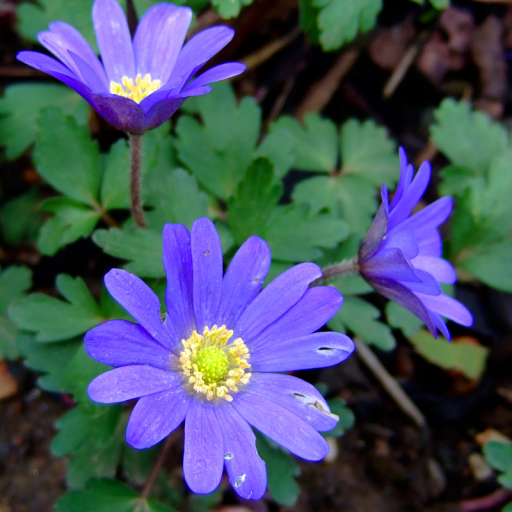
Often called the Grecian Windflower, this charming spring bloomer looks like a carpet of fallen stars scattered across the garden floor. According to Greek myth, these flowers were born from the tears of Aphrodite, though their name actually stems from the word anemos (wind), as the ancient Greeks believed only the wind could make them bloom. They are a favorite for woodland gardens, offering a vibrant blue, pink, or white wake-up call after a long winter.
🔍 How to Identify
- 🌸 Daisy-like Blooms: Features many narrow, petal-like sepals (usually 10-15) surrounding a bright, sunny yellow center.
- 🌿 Fern-like Foliage: The leaves are deeply lobed, dark green, and have a delicate, lacy texture that provides a beautiful contrast to the flowers.
- 📐 Low Profile: These are true ground-huggers, typically growing only 4 to 6 inches tall, making them perfect for the front of a border.
🏡 In Your Garden
- 🥔 The Tuber Trick: These plants grow from hard, shriveled tubers that look like little black pebbles. A pro-tip for success is to soak these tubers in lukewarm water for several hours before planting to "wake them up" from dormancy.
- 🌳 The Canopy Cycle: They thrive under the shade of deciduous trees. They get the full sun they need in early spring before the trees leaf out, and then enjoy the cool, protected shade once the summer heat arrives.
- 😴 Summer Disappearance: Anemone blanda is ephemeral, meaning it goes completely dormant and disappears above ground by mid-summer. Mark your planting spot so you don't accidentally dig them up while gardening later in the season!
⚠️ Safety & Toxicity
- 🚫 Toxic if Ingested: Like most members of the Buttercup family, all parts of this plant contain protoanemonin, which is toxic to humans, cats, and dogs.
- 🖐️ Skin Irritant: The sap can cause mild skin irritation or "Anemone dermatitis" in some people. It is wise to wear gloves if you are handling the plant extensively or have sensitive skin.
✨ Fun Fact
- 🕰️ Nature’s Umbrella: Anemone blanda flowers are highly sensitive to light and weather. They will close their petals tightly at night and during cloudy or rainy days to protect their pollen from getting wet.

Detailed Care Instructions
| Humidity | Normal |
| Lighting | Full Sun |
| Difficulty | Easy |
| Hibernation | Cold Period |
| Hardiness Zones | 5 - 8 |
To grow Anemone Blanda plants, here are some steps you can follow:
- Climate and Location: Make sure you have the appropriate growing conditions for Anemone Blanda. They typically prefer cool climates and should be planted in well-drained soil with a pH level of 6.0-7.5. Choose a location that receives partial shade or dappled sunlight.
- Planting Time: Anemone Blanda bulbs are typically planted in the fall, around September to October, before the first frost. This will allow them to establish roots before winter.
- Soil Preparation: Prepare the soil by removing any weeds and loosening it with a garden fork or tiller. You can amend the soil with organic matter such as compost or well-rotted manure to improve its fertility and drainage.
- Planting: Dig a hole that is about 2-3 inches deep, and place the bulbs with the pointed end facing upwards. Space the bulbs around 3-4 inches apart. Cover the bulbs with soil and firm it gently.
- Watering: After planting, water the bulbs thoroughly to settle the soil. Water regularly but avoid overwatering, as excess moisture can cause the bulbs to rot. During periods of drought, provide supplemental watering.
- Mulching: Apply a layer of organic mulch, such as straw or wood chips, around the planted area. Mulching will help retain moisture in the soil, regulate temperature, and suppress weed growth.
- Maintenance: Remove any weeds that may appear around the plants. Anemone Blanda is a relatively low-maintenance plant, but you can fertilize it with a balanced fertilizer in early spring to promote healthy growth.
- Blooming and Dormancy: Anemone Blanda typically blooms in early spring, producing colorful and daisy-like flowers. After flowering, the foliage may die back, indicating the start of dormancy. Allow the foliage to wither naturally, as it helps replenish the bulbs for the next growing season.
- Division: Anemone Blanda bulbs can be divided every 3-4 years to prevent overcrowding and improve flowering. Wait until the foliage has died back completely, then carefully dig up the bulbs, separate them, and replant them at the appropriate spacing.
By following these steps, you can successfully grow and enjoy the beautiful blooms of Anemone Blanda plants in your garden.

Place in a window with dappled sun or a spot in the middle of a room. Or directly in a window facing west or east.

To water this plant, it is important to first check the soil moisture level by feeling the top layer of soil with your fingers. If it feels dry to the touch, it is time to water the plant. When watering, it is best to use room temperature water and give the plant a thorough watering until you see excess water draining out the bottom of the pot. After watering, make sure to discard any excess water in the saucer to prevent the plant from sitting in standing water. It is important to not let the plant dry out completely between watering, but also avoid keeping the soil overly wet as this can lead to root rot.
To fertilize the Anemone Blanda plant, use a slow-release fertilizer with a balanced N-P-K ratio in early spring. Apply the fertilizer to the soil around the base of the plant and water thoroughly. For best results, avoid over-fertilizing and follow the recommended application rate on the fertilizer packaging. Reapply the fertilizer every 6-8 weeks during the growing season to promote healthy growth and flowering.
Anemone Blanda should be planted in well-draining soil that is rich in organic matter. The soil pH should be slightly acidic to neutral, ideally between 6.0 and 7.5. The soil should be loose and friable, allowing the roots to grow freely and easily. It is important to avoid compacted or heavy soils, as these can lead to waterlogging and root rot. A light layer of mulch can help to retain moisture in the soil and regulate temperature. When planting Anemone Blanda, it is important to ensure that the soil is thoroughly moistened, but not waterlogged. Once established, these plants require moderate watering, and should be allowed to dry out slightly between waterings. Fertilization is not usually necessary for Anemone Blanda, as long as the soil is nutrient-rich and well-cultivated.
To propagate this plant, take rhizome cuttings in the fall when the plant is dormant. Cut a section of the rhizome that includes a small piece of the plant, making sure it has at least one growth bud. Plant the cutting in a well-draining soil mix and keep it moist but not waterlogged. Place the pot in a cool, dark location for several weeks. Once new growth appears, move the pot to a brighter location and continue to water and care for it. The new plant can be transplanted into a permanent location once it has matured.
Common pests of the greek anemone include Mealybugs, aphids, springtails. Make a habit of checking your greek anemone frequently for pests so that any infestations can be caught and managed early.








