Plant Overview
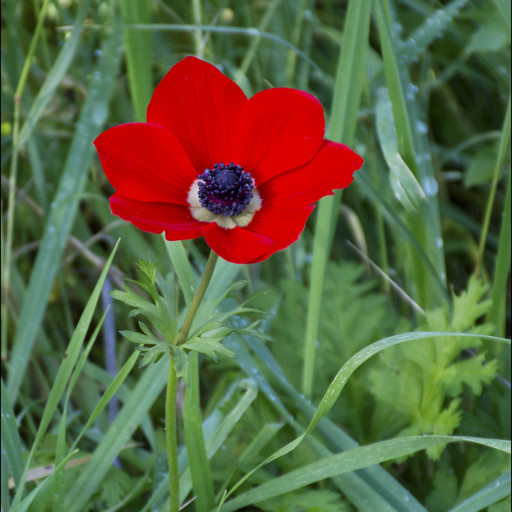
Often called the Poppy Anemone or the Windflower, this Mediterranean gem is famous for its jewel-toned petals and dramatic "black eye." Legend says these flowers sprouted from the tears of Aphrodite as she mourned the death of Adonis, giving them a storied place in botanical history. Today, they are a favorite for gardeners seeking a sophisticated, wildflower aesthetic that bridges the gap between winter and spring.
🔍 How to Identify
- 🌸 Petal Palette: Features large, satiny flowers in intense shades of ruby red, royal purple, white, or cobalt blue.
- 👁️ The "Black Eye": A signature cluster of dark, velvety stamens forms a prominent center that looks like a pupil, giving the flower its striking, poppy-like appearance.
- 🌿 Parsley Leaves: The foliage is finely divided and deeply lobed, resembling a dense mound of curly parsley or fern fronds at the base of the stems.
🏡 In Your Garden
- 💧 The Raisin Secret: The roots are hard, shriveled corms that look like dried raisins. For the best start, they should be soaked in lukewarm water for several hours to "wake them up" before planting.
- 💤 Summer Slumber: This plant is a "spring ephemeral," meaning it naturally dies back and goes dormant when the summer heat hits. Don't dig it up—it is simply resting underground until the cooler weather returns.
⚠️ Safety & Toxicity
- 🐾 Pet Warning: Contains protoanemonin, which is toxic to cats, dogs, and horses. If ingested, it can cause salivation, vomiting, and lethargy.
- 🧤 Skin Sensitivity: The sap can be an irritant. It is best to wear gloves when cutting these flowers for a vase to avoid potential skin rashes or "Anemone dermatitis."
✨ Fun Fact
Many historians and scholars believe that the famous "Lilies of the Field" mentioned in the Bible were actually wild Anemone coronaria, which still blanket the hillsides of the Holy Land in brilliant red every spring.

Detailed Care Instructions
| Lighting | Full Sun |
To grow Anemone Coronaria plants, also known as windflowers, you can follow these steps:
- Planting: Choose a sunny location with well-draining soil. Anemone Coronaria prefers neutral to slightly acidic soil. Soak the tubers in water for a few hours before planting.
- Timing: Plant the tubers in early spring for late spring or early summer blooms. Alternatively, you can plant them in the fall for blooms in late winter or early spring.
- Digging holes: Dig holes about 2-3 inches deep and spaced about 4-6 inches apart. The holes should be wide enough to accommodate the tubers.
- Planting the tubers: Place each tuber in a hole, pointed end up. Cover the tubers with soil, firming it gently around them. Do not plant them too deeply as they may rot.
- Watering: After planting, water thoroughly to settle the soil. Keep the soil slightly moist during the growing season, but avoid overwatering, as it may cause root rot.
- Mulching: You can mulch around the plants to help retain moisture and suppress weed growth. However, make sure not to cover the tubers with mulch.
- Fertilization: Anemone Coronaria plants don't typically require much fertilizer. However, you can apply a balanced slow-release fertilizer in the spring before plant emergence to provide essential nutrients.
- Staking: As the plants grow, some varieties may benefit from staking to support their tall stems and prevent them from bending or falling over.
- Care: Remove any dead or damaged foliage as it appears. After the plants have finished flowering, allow the foliage to die back naturally. This helps the tubers store energy for the next season.
- Digging up and dividing: Generally, Anemone Coronaria tubers can be left in the ground year-round. However, if you experience extreme cold winters, you may consider digging them up and storing them indoors until spring.
With proper care and favorable growing conditions, Anemone Coronaria plants can thrive and produce beautiful blooms.

Place in a bright room that is sun drenched almost all day. Or directly in a south-facing window.

The best way to water this plant is to soak the soil around the base of the plant thoroughly until the water seeps out of the drainage holes. In order to prevent overwatering, it is important to let the soil dry out completely before watering again. It is also helpful to water in the morning to prevent excess moisture from sitting on the leaves overnight, which can lead to mildew or other fungal diseases. It is important to avoid watering the plant from above as this can cause water to collect in the center of the rosette, leading to rot. Instead, direct water towards the base of the plant.
To fertilize this plant, first ensure that the soil is moist. Then, apply a balanced fertilizer with equal parts of nitrogen, phosphorus, and potassium. Apply the fertilizer at a rate of 1 tablespoon per square foot of planting area, and mix it into the soil around the base of the plant. Repeat this process once every two weeks during the growing season. Avoid getting fertilizer on the foliage or flowers, as this can cause burning.
For optimal growth and health, it is recommended to plant Anemone Coronaria in well-draining soil with a pH level of 6.0 to 7.5. The soil should be rich in organic matter and nutrients, such as nitrogen, phosphorus, and potassium. Adding compost or well-rotted manure to the soil before planting can help improve its quality and fertility. It is also important to ensure that the soil is not too compacted, as this can inhibit root growth and lead to poor drainage. Overall, the key is to provide the plant with a nutrient-rich, loose, and well-draining soil that supports healthy growth and development.
To propagate this plant, first start by selecting healthy, mature plants for the process. Dig up the parent plant and carefully remove the bulb clusters. These clusters should be dried and stored in a cool, dark place until they are ready to be replanted.
In the early fall season, dig holes in a well-drained soil mixture and place the bulb clusters into the holes, making sure to cover them with soil up to their tips.
Once planted, water the bulbs and continue to water them regularly until the winter season. During the winter, it is best to reduce watering to only when the soil is dry.
By the spring season, the bulbs should begin to sprout and grow into new plants. These plants can be carefully dug up and replanted in new locations, or they can be left to grow and bloom in their current location.
Common pests of the poppy anemone include Aphids, whiteflies. Make a habit of checking your poppy anemone frequently for pests so that any infestations can be caught and managed early.








