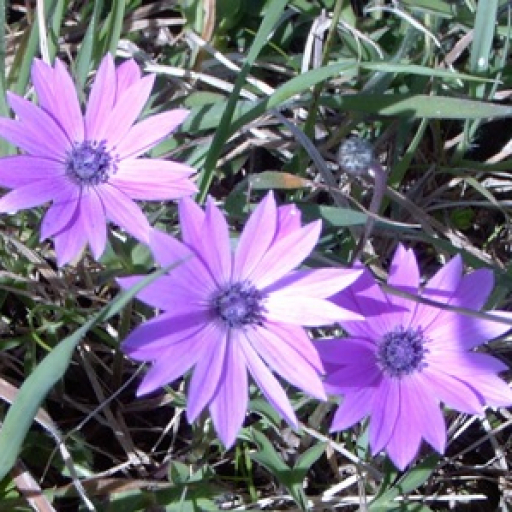
Plant Overview
Often called the Broad-leaved Anemone or the Star Anemone, this Mediterranean gem is a classic harbinger of spring. In Greek mythology, these flowers were said to have sprung from the tears of Aphrodite as she mourned the death of Adonis, adding a touch of ancient romance to any garden. They are beloved for their ability to transform rocky, dry landscapes into vibrant carpets of violet and magenta.
🔍 How to Identify
- 🌸 The Petals: Unlike many garden varieties, these flowers feature 12 to 20 narrow, pointed "petals" (technically sepals) that create a sharp, starburst silhouette.
- 🍃 The Foliage: The leaves are deeply lobed and hand-shaped, growing primarily in a basal rosette close to the ground, which helps the plant conserve moisture.
- 🎨 The Center: At the heart of each bloom sits a dense cluster of many stamens, usually appearing in a contrasting yellow or dark blue-black, which attracts early-season pollinators.
🏡 In Your Garden
- 🌱 Dormancy Nuance: This plant is a "geophyte," meaning it survives the hot summer underground as a knobby tuber. It is vital to remember where you planted them so you don't accidentally dig them up during their summer nap.
- ☀️ Drainage is King: Native to the rocky slopes of Southern Europe, they cannot tolerate "wet feet." They thrive in well-draining, gritty soil and prefer a spot that mimics a sunny meadow—bright light with a bit of afternoon protection.
⚠️ Safety & Toxicity
- 🚫 Toxicity Status: Toxic to humans, cats, dogs, and horses.
- 🐾 The Details: As a member of the buttercup family, the plant contains protoanemonin. Ingesting any part of the plant can cause mouth sores, vomiting, and distress. Even the sap can cause mild skin irritation or "Anemone dermatitis," so wearing gloves while gardening is recommended.
✨ Fun Fact
- 💨 The name Anemone is derived from the Greek word anemos, meaning "wind." Ancient naturalists believed that the delicate, star-shaped flowers would only unfurl their petals when the wind blew, earning them the timeless nickname "Windflower."

Detailed Care Instructions
Anemone hortensis, also known as Spanish marigold or stinking anemone, is a perennial plant that can be grown easily in the garden with the right conditions. Here are some tips for growing Anemone hortensis:
- Location: Plant Anemone hortensis in a location that receives full to partial sunlight. The plant prefers well-draining soil that is rich in organic matter.
- Planting: Plant Anemone hortensis in the spring or fall. Dig a hole that is slightly larger than the root ball of the plant and place the plant in the hole at the same depth it was in the pot. Water the plant well after planting.
- Watering: Keep the soil consistently moist, but not waterlogged. Water the plant deeply when the top inch of soil feels dry to the touch.
- Fertilizing: Fertilize Anemone hortensis once a year in the spring with a balanced fertilizer.
- Pruning: Deadhead spent flowers to encourage more blooms and remove any dead or damaged foliage to keep the plant looking tidy.
- Mulching: Apply a layer of mulch around the base of the plant to help retain moisture and suppress weeds.
- Propagation: Anemone hortensis can be propagated by division in the spring. Simply dig up the plant and carefully separate the root ball into smaller sections, each with at least one shoot. Replant the divisions in a suitable location.
By following these tips, you can successfully grow Anemone hortensis in your garden and enjoy its beautiful flowers year after year.

Place in a bright room that is sun drenched almost all day. Or directly in a south-facing window.

To properly water the Anemone Hortensis plant, it is important to provide consistent moisture to the soil. This plant prefers moist, well-draining soil, so it is recommended to water it regularly, especially during dry periods. Water should be applied at the base of the plant to avoid wetting the foliage, as this can lead to issues such as rot or disease.
A good way to determine when to water is to check the soil moisture level by sticking your finger into the soil about an inch deep. If the soil feels dry, it is time to water. Be sure not to overwater, as this can also be detrimental to the plant's health. It is best to water the Anemone Hortensis plant in the morning, allowing the foliage to dry out before nightfall.
During the plant's active growing season, typically in the spring and summer, it may require more frequent watering. In the winter months, when the plant is dormant, reduce the frequency of watering to prevent waterlogging. Overall, consistency is key when it comes to watering the Anemone Hortensis plant to ensure its optimal growth and health.
To fertilize the Anemone Hortensis plant, apply a balanced, water-soluble fertilizer once every 4-6 weeks during the growing season. Dilute the fertilizer according to the manufacturer's instructions and water the plant thoroughly after application to ensure proper absorption. Avoid over-fertilizing, as this can cause nutrient imbalances and harm the plant.
Anemone Hortensis plants thrive in well-draining, fertile soil that is rich in organic matter. A loamy soil mixture with a pH level of around 6.5 to 7.5 is ideal for these plants. It is important to ensure that the soil is not too heavy or compacted, as this can hinder root development and lead to waterlogging.
When planting Anemone Hortensis, it is recommended to amend the soil with compost or other organic matter to improve its nutrient content and drainage. It is also important to avoid using soil that is overly sandy or clayey, as this can be too dry or waterlogged for the plant's needs.
Overall, a well-balanced, fertile soil that is well-draining and contains a good amount of organic matter is the best choice for growing healthy and vibrant Anemone Hortensis plants.
Anemone Hortensis plants can be propagated through division and seed sowing.
To propagate through division, dig up the plant in early spring or fall and gently separate the root ball into sections. Each section should have some roots and growth points. Replant the divisions in well-draining soil and keep them well-watered until they establish themselves.
To propagate through seed sowing, collect the seeds from the plant in late summer or fall. Prepare a tray or pot filled with seed starting mix and sprinkle the seeds on top. Press the seeds lightly into the soil and cover with a thin layer of soil. Keep the soil moist and place the tray in a warm, bright location. The seeds should germinate in a few weeks.
Whether propagating through division or seed sowing, it is important to provide proper growing conditions for the new plants, including regular watering, fertilizing, and protection from extreme temperatures. With proper care, the propagated Anemone Hortensis plants should establish themselves and thrive in their new environment.








