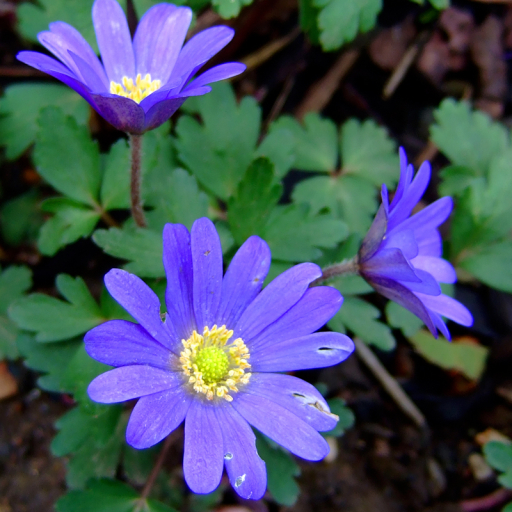
Plant Overview
Often called the Grecian Windflower, this charming perennial is one of the first signals that spring has arrived. Its daisy-like blooms create a vibrant "living carpet" in shades of sky blue, soft pink, or snowy white, appearing even before many trees have fully leafed out. According to Greek legend, these flowers were born from the tears of Aphrodite as she mourned Adonis, earning them a permanent place in garden folklore.
🔍 How to Identify
- 🌼 The Blooms: Features delicate, multi-petaled flowers (technically sepals) surrounding a bright yellow center, resembling a miniature wild daisy.
- 🌿 The Foliage: Deeply lobed, fern-like leaves that are dark green and form a dense, low-growing mat close to the earth.
- 🌑 Sleep Movements: The petals are highly sensitive to light; they "sleep" by closing tightly at night or during cloudy weather to protect their precious pollen.
🏡 In Your Garden
- 💧 The "Raisin" Secret: The plant grows from small, knobby tubers that look like shriveled raisins. To ensure success, soak these tubers in lukewarm water for several hours before planting to "wake them up."
- 🌳 The Dormancy Cycle: This is an "ephemeral" plant, meaning it completes its life cycle quickly. By mid-summer, the entire plant will disappear underground to rest, so don't worry—it isn't dead, just napping until next spring!
- 🍂 Naturalizing: They are excellent for "naturalizing" under deciduous trees, as they soak up the early spring sun before the tree canopy creates too much shade.
⚠️ Safety & Toxicity
- 🚫 Status: Low to Moderate Toxicity.
- 🐾 Details: Like most members of the Buttercup family, it contains protoanemonin. If ingested, it can cause mouth irritation and stomach upset in cats, dogs, and humans. The sap can also cause mild skin redness or itching, so it is best to wear gloves when handling the tubers.
✨ Fun Fact
The name Anemone is derived from the Greek word "anemos," meaning wind. Ancient naturalists believed that the flowers would only open when the spring winds began to blow!

Detailed Care Instructions
Anemonoides blanda, also known as Grecian windflower or winter windflower, is a hardy perennial that blooms in late winter to early spring. Here are some tips on how to grow Anemonoides blanda plants:
- Planting: Plant Anemonoides blanda bulbs in well-draining soil in the fall, at a depth of about 2-3 inches and a spacing of 4-6 inches apart. Choose a location that receives partial to full sun.
- Watering: Keep the soil moist, but not waterlogged, especially during the growing season. Water regularly, especially during dry periods, but allow the soil to dry out between waterings.
- Fertilizing: Anemonoides blanda plants do not require heavy fertilization. You can incorporate a slow-release fertilizer into the soil at planting time, and top-dress with compost or a balanced fertilizer in the spring.
- Mulching: Mulch around the plants with organic material, such as compost or shredded leaves, to help retain moisture and suppress weeds.
- Support: Anemonoides blanda plants may benefit from support as they grow. You can use stakes or hoops to help keep the plants upright.
- Pruning: After flowering, you can deadhead the spent blooms to encourage more flowering and keep the plants looking neat.
- Division: Anemonoides blanda plants can be divided every few years to maintain their vigor. Dig up the clumps in the fall after the foliage has died back, and separate the bulbs for replanting.
By following these tips, you can successfully grow Anemonoides blanda plants and enjoy their delicate blooms in your garden.

Place in a window with dappled sun or a spot in the middle of a room. Or directly in a window facing west or east.

Anemonoides Blanda plants prefer consistently moist soil, so it is important to water them regularly. When watering, make sure to focus on the base of the plant rather than sprinkling water over the leaves. This will help prevent fungal diseases and ensure that the roots receive adequate moisture. Avoid overwatering as this can lead to root rot. Check the soil moisture levels regularly by sticking your finger into the soil - if it feels dry to the touch, it's time to water. Water the plant in the morning to allow excess moisture to evaporate during the day, reducing the risk of diseases. Overall, maintaining a consistent watering schedule and ensuring the soil is evenly moist will help keep your Anemonoides Blanda plant healthy and thriving.
Anemonoides Blanda plants should be fertilized in early spring before they start actively growing. Use a balanced, water-soluble fertilizer and apply according to the instructions on the package. Be sure to water the plant thoroughly after fertilizing to ensure the nutrients are absorbed properly. Avoid over-fertilizing as this can harm the plant. Repeat every 4-6 weeks during the growing season to promote healthy growth and flowering.
Anemonoides Blanda plants prefer to grow in well-draining soil that is rich in organic matter. A good mix for these plants typically includes a combination of sandy soil, loam, and peat moss. The soil should have a slightly acidic to neutral pH level, ideally around 6.0 to 7.0.
It is important that the soil does not become waterlogged, as this can cause root rot and damage to the plant. To improve drainage, you can add perlite or coarse sand to the soil mix. Additionally, mixing in some compost or well-rotted manure can help provide nutrients for healthy growth.
Before planting Anemonoides Blanda, it is also recommended to loosen the soil and remove any rocks or debris to ensure proper root development. Adding a layer of mulch around the plants can help retain moisture and regulate soil temperature. Finally, regular fertilization during the growing season can further promote strong and vibrant plants.
Anemonoides Blanda plants can be propagated through division or by collecting and planting seeds.
To propagate through division, carefully dig up the plant in early spring before new growth begins. Gently separate the plant into smaller sections, making sure each section has roots attached. Replant the divisions in well-draining soil and water them thoroughly.
To propagate from seeds, collect the seed pods from mature plants in autumn. Allow the pods to dry out and then gently crush them to release the seeds. Sow the seeds in a seed tray filled with well-draining soil, cover lightly with a thin layer of soil, and water well. Place the tray in a warm, bright location and keep the soil consistently moist until the seeds germinate.
Whichever method you choose, make sure to provide the newly propagated plants with adequate sunlight, water, and nutrients to support their growth.
Common pests of the greek anemone include Mealybugs, aphids, springtails. Make a habit of checking your greek anemone frequently for pests so that any infestations can be caught and managed early.








