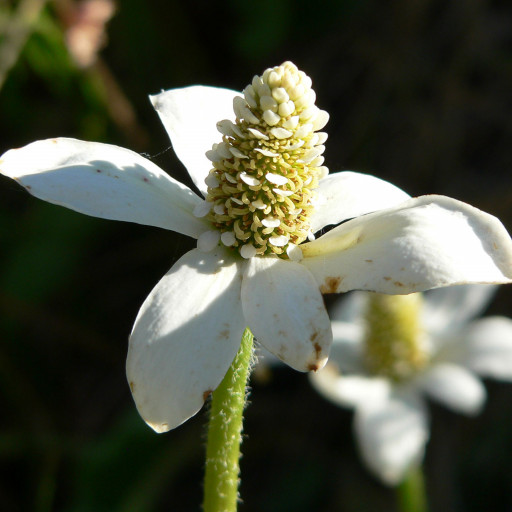
Plant Overview
Known as Yerba Mansa (Spanish for "tame herb") or Lizard Tail, this striking perennial is a legendary figure in Southwestern ethnobotany. Native to the alkaline marshes and wetlands of the American Southwest and Mexico, it creates a lush, prehistoric-looking carpet across the mud. It is celebrated for its spicy, aromatic scent and its long history as a "cure-all" in traditional folk medicine.
🔍 How to Identify
- 🌿 The "Flower" Illusion: What looks like a single large white flower is actually a dense, cone-like spike of tiny flowers surrounded by 4 to 9 large, waxy white petal-like bracts.
- 🍃 Leathery Foliage: Large, thick, elliptical leaves emerge from the base. They are a deep waxy green but often develop dramatic red or purple splotches as the season progresses or temperatures drop.
- 🪵 Spreading Stolons: It travels through the landscape via strawberry-like runners (stolons) that take root wherever they touch moist soil, eventually forming a dense, aromatic mat.
🏡 In Your Garden
- 💧 The "Wet Feet" Rule: Unlike many desert plants, Yerba Mansa craves moisture. It thrives in boggy areas, pond edges, or heavy clay soils that stay consistently wet. If your garden has a "drainage problem," this plant will see it as a luxury.
- 🧂 Salt & Soil Resilience: This is a specialist of harsh environments; it easily handles high salinity and alkaline soils where most other garden plants would fail. It’s an excellent choice for stabilizing soil in coastal or desert-wash landscapes.
⚠️ Safety & Toxicity
- ✅ Safe Status: Yerba Mansa is generally considered non-toxic to humans and common household pets. It has been used for centuries in traditional herbalism for its antimicrobial properties.
- 🧴 Aromatic Oils: While not poisonous, the plant is rich in tannins and essential oils. Very sensitive individuals should wash their hands after handling crushed foliage to avoid any potential mild skin or eye irritation.
✨ Fun Fact
The dried flower cones were historically used as beads by some Indigenous groups, earning the plant the nickname "Apache Beads." When crushed, the entire plant emits a unique, spicy fragrance that smells like a mix of ginger, eucalyptus, and pepper!

Detailed Care Instructions
To grow Anemopsis californica, also known as Yerba Mansa, you can follow these steps:
- Choose a suitable location: Yerba Mansa prefers a wetland or marshy habitat but can also grow in well-draining soil. Find a spot in your garden where the plant can receive full to partial sunlight.
- Prepare the soil: Anemopsis californica prefers slightly acidic to alkaline soil with good organic content. Amend the soil with compost or well-rotted manure to improve drainage and fertility.
- Start from seeds or plant divisions: You can either grow the plant from seeds or purchase divisions from a nursery. If starting from seeds, sow them in pots or trays filled with a moist seed-starting mix. Maintain a consistent temperature of about 70-80°F (21-27°C) until germination, which may take a few weeks.
- Transplant seedlings or divisions: Once the seedlings reach a height of a few inches or when you have obtained divisions, you can transplant them into the prepared soil. Ensure they are spaced at least 18-24 inches apart to allow adequate room for growth.
- Watering and soil moisture: Yerba Mansa requires consistent moisture to thrive. Keep the soil evenly moist, especially during the growing season. However, make sure the roots do not sit in water as this may cause rot.
- Mulch and weed control: Apply a layer of organic mulch, such as wood chips or straw, around the plants to help retain soil moisture and suppress weed growth. Regularly check and remove any weeds that may compete with the plant.
- Pruning and maintenance: Yerba Mansa generally requires minimal pruning. Remove any dead or damaged leaves as needed. In winter, you can cut the plant back to about an inch above the soil surface to rejuvenate it for the next growing season.
- Fertilization: Anemopsis californica does not typically require heavy fertilization. However, you can apply a balanced slow-release organic fertilizer in spring and follow the package instructions for dosage.
- Protection from extreme conditions: Yerba Mansa can tolerate cold temperatures down to around 10°F (-12°C). However, providing a layer of mulch around the plant base during winter months can offer additional protection.
With proper care and maintenance, your Anemopsis californica plant should grow well and provide you with its unique beauty in your garden.

Place in a bright room that is sun drenched almost all day. Or directly in a south-facing window.

Anemopsis Californica plant prefers to be watered regularly and deeply, allowing the soil to dry out slightly before watering again. It is important to avoid getting the leaves wet when watering, as this can cause damage or encourage disease. The plant will also benefit from occasional misting to increase humidity levels. During periods of growth or flowering, it may require more frequent watering. It is important to use well-draining soil to avoid waterlogging and root rot.
To fertilize the Anemopsis Californica plant, use a balanced fertilizer with equal amounts of nitrogen, phosphorus, and potassium. Apply the fertilizer in late winter or early spring before new growth emerges. Once the plant has begun to grow, fertilize monthly during the growing season. Be careful not to over-fertilize, as this can lead to salt buildup in the soil. Water the plant thoroughly after fertilizing to help distribute the nutrients.
The ideal soil for this plant should be well-draining with a neutral to alkaline pH. It should be high in organic matter and moisture-retentive, but not waterlogged. The soil should be loose and friable, allowing for good aeration around the roots. The addition of sand, perlite, or vermiculite may be necessary to ensure proper drainage. The plant prefers wet or boggy conditions, but will also grow well in drier soils as long as adequate water is provided. Fertilizing sparingly with a balanced fertilizer can also support healthy growth.
Anemopsis Californica can be propagated through division of the mature plant. Carefully dig up the plant and separate the clumps into smaller sections, making sure each new division has both roots and leaves. Ideally, each new section should have at least three to five leaves. Plant the divisions in well-draining soil with some organic matter and keep them well-watered until they are established. Another way to propagate Anemopsis Californica is through seed sowing. Collect mature seeds from the plant and sow them in a container or directly in the ground. The seeds need to be kept moist but not waterlogged, and germination can take from one to several months.
Common pests of the apache-beads include Spider mites, aphids, snails. Make a habit of checking your apache-beads frequently for pests so that any infestations can be caught and managed early.








