Plant Overview
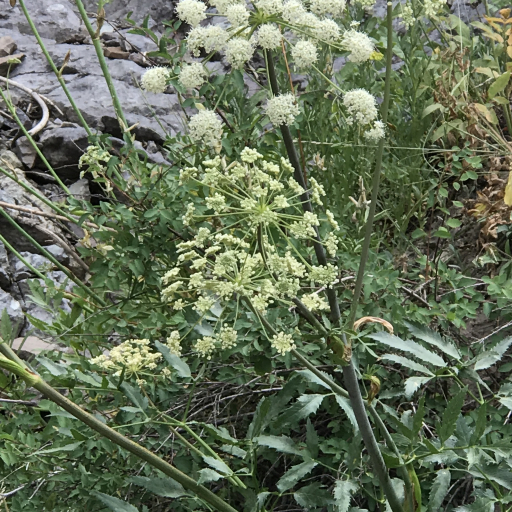
Brewer’s Angelica is a majestic, high-altitude beauty often found dancing along the edges of cold mountain streams in the Sierra Nevada and Cascade ranges. Sometimes called the "Snowball of the Sierras," this perennial herb stands tall with an architectural elegance that adds a wild, structural feel to any landscape. While it looks like a delicate cluster of lace, it is a sturdy survivor of the rugged Western American mountains.
🔍 How to Identify
- 🌿 Stout Stems: The plant features thick, hollow stems that can reach up to 4 or 5 feet in height, often showing a subtle purple or reddish tint near the base.
- 🌼 Umbel Flowers: It produces large, rounded clusters (umbels) of tiny, creamy-white flowers that look like exploding fireworks or soft snowballs.
- 🍃 Toothed Foliage: The leaves are large and divided into several leaflets with distinct "saw-tooth" edges, giving the plant a lush, fern-like appearance before it blooms.
🏡 In Your Garden
- 💧 Thirst for Moisture: Unlike many California natives, Brewer’s Angelica is not a desert plant; it thrives in moist, boggy soil or near water features where its roots can stay cool and hydrated.
- 🦋 Pollinator Magnet: The broad, flat flower heads act as landing pads for a variety of beneficial insects, especially swallowtail butterflies and predatory wasps that help keep garden pests in check.
- 🏔️ Mountain Vibes: Because it is a subalpine species, it prefers areas with cool nights and may struggle in regions with oppressive, humid summer heat.
⚠️ Safety & Toxicity
- 🚫 Look-alike Warning: Extreme caution is required when identifying this plant in the wild. It bears a striking resemblance to Water Hemlock, one of North America’s most violently toxic plants. Never forage or handle unless 100% certain of the ID.
- ☀️ Skin Sensitivity: Like many members of the carrot family, the sap contains compounds that can cause "phytophotodermatitis." If the sap gets on your skin and is then exposed to sunlight, it can cause painful blisters or rashes.
- 🐾 Pet Safety: Keep curious pets away, as ingestion can cause digestive upset or more severe reactions depending on the amount consumed.
✨ Fun Fact
The genus name Angelica comes from a medieval legend claiming that an archangel (often identified as Michael) revealed the plant in a dream as a cure for the plague. While Brewer’s Angelica is a specific Western American cousin, the entire family has been steeped in celestial folklore for centuries!

Detailed Care Instructions
To grow Angelica Breweri plants, follow these steps:
- Choose a suitable location: Angelica Breweri plants prefer partial shade to full shade. Select a spot in your garden that receives 4-6 hours of indirect sunlight per day.
- Prepare the soil: The soil should be rich, fertile, and well-draining. Add organic matter, such as compost or well-rotted manure, to improve the soil quality.
- Sow the seeds: Sow the Angelica Breweri seeds directly into the prepared soil in early spring or late fall. Sow them at a depth of 1/8 inch and keep the seeds about 12-18 inches apart.
- Watering: Keep the soil consistently moist but not waterlogged. Water the plants regularly to ensure the soil stays evenly moist.
- Mulch the plants: Apply a layer of organic mulch around the plants to help retain moisture and suppress weed growth.
- Maintenance: Remove any weeds that compete with the Angelica Breweri plants for water and nutrients. Keep an eye out for any pests or diseases, and take appropriate measures to control them.
- Harvesting: After a couple of years, Angelica Breweri plants will develop large, aromatic leaves. You can harvest the leaves and use them for culinary or medicinal purposes.
- Propagation: Angelica Breweri can also be propagated by division. Divide the plant carefully in early spring or late fall, ensuring each division has a good amount of roots and foliage.
By following these steps, you can successfully grow Angelica Breweri plants in your garden.

Place in a bright room that is sun drenched almost all day. Or directly in a south-facing window.

To water this plant, gently pour water directly onto the soil at the base of the plant, ensuring that the water reaches a depth of approximately 2-3 inches. Watering should be done only when the top layer of soil feels dry to the touch, as overwatering can lead to root rot. It is important to avoid getting water on the leaves and stems of the plant, as this can lead to fungal growth and disease. Additionally, the plant should be kept in a well-draining pot, as standing water can be harmful to the roots. During the winter months, watering should be reduced to prevent the soil from becoming too saturated with water.
To fertilize the Angelica Breweri plant, use a balanced fertilizer, such as 10-10-10, during its growing season. Apply the fertilizer every two weeks and water the plant immediately after application. Avoid over-fertilizing, as this can cause the plant to become too bushy and lose its shape.
The ideal soil for Angelica Breweri plant should be well-drained with a slightly acidic pH level. It should also be rich in organic matter and nutrients to promote healthy growth. The soil should be moist but not waterlogged, as this plant does not tolerate waterlogged conditions. It is recommended to mix in some sand or perlite in the soil to improve drainage. Avoid using heavy clay soils as they can trap water and lead to root rot.
To propagate this plant, first, select a healthy parent plant with strong roots. Cut off a stem with a sharp, sterile knife, making sure to leave at least two nodes on the cutting. Remove any lower leaves from the stem, keeping only the top few leaves intact. Dip the cut end of the stem in rooting hormone powder to promote root growth.
Fill a small pot with moist potting soil and make a small hole in the center. Insert the cut end of the stem into the hole and firm the soil around the stem to hold it upright. Cover the pot with a clear plastic bag to create a humid environment and place it in a warm, bright spot but out of direct sunlight.
Check the pot daily and mist the leaves and soil as needed to maintain humidity. After a few weeks, gently tug on the stem to see if it has rooted. If it resists, roots have likely formed. Remove the plastic bag and place the new plant in bright, indirect light. Water regularly and transplant to a larger pot as needed.








