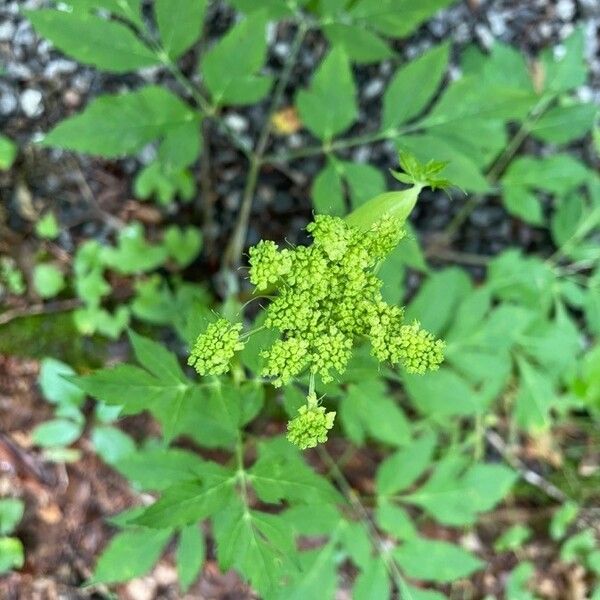
Plant Overview
Known as Mountain Angelica or Filmy Angelica, this Appalachian native stands like a woodland sentinel with its airy, white floral umbrellas. Often found along high-altitude ridges and cool forest edges, it carries a certain wild elegance that captures the spirit of the American East. While it looks delicate, it is a hardy perennial that thrives where the air is crisp and the soil is rich.
🔍 How to Identify
- 🌿 Stature & Stem: It is a tall, structural plant reaching up to 6 feet; the stems are sturdy, hollow, and often exhibit a striking deep purple or reddish tint near the base.
- 🍃 Filmy Foliage: Its leaves are divided into three main parts (the "tri" in triquinata) and have a delicate, almost translucent or "filmy" quality when backlit by the sun.
- ☁️ Cloud-like Blooms: Large, flat-topped clusters (umbels) of tiny white flowers appear in late summer, resembling floating lace hovering above the darker forest floor.
🏡 In Your Garden
- ⛰️ Mountain Roots: This species is a specialist of the heights; it naturally thrives in the moist, acidic soils of the Appalachian Mountains and may struggle in hot, stagnant lowland gardens.
- 💧 Moisture Lover: It is a "drinker" that prefers soil that stays consistently damp. It is the perfect candidate for a "rain garden" or a shaded spot near a natural water feature where the ground never truly bakes dry.
⚠️ Safety & Toxicity
- 🚫 Look-alike Warning: Angelica triquinata looks dangerously similar to Water Hemlock and Poison Hemlock, which are among the most toxic plants in North America. Never forage or consume this plant unless you are an expert botanist.
- 🧴 Skin Sensitivity: The sap contains compounds that can cause phytophotodermatitis—a painful skin rash or blistering that occurs when sap-covered skin is exposed to sunlight. It is best to wear gloves when pruning and keep the plant away from high-traffic paths used by children or pets.
✨ Fun Fact
- 📜 The genus Angelica is named after the Archangel Michael. According to European folklore, the angel appeared in a dream to a monk to reveal that the plant could cure the plague. While this specific American species wasn't part of that legend, it shares the "heavenly" name of its famous medicinal cousins.

Detailed Care Instructions
To grow Angelica Triquinata plant, follow these steps:
- Choose a suitable location: Angelica Triquinata prefers partial shade to full sun. Select a location in your garden that receives at least 4-6 hours of sunlight per day.
- Prepare the soil: The plant prefers moist, well-draining soil rich in organic matter. Amend the soil by adding compost or well-rotted manure to improve its fertility and drainage.
- Planting the seeds or seedlings: You can either sow the seeds directly in the garden or start them indoors 8-10 weeks before the last frost date. If starting indoors, plant the seeds in seed trays with potting soil and keep them in a warm location. Transplant the seedlings outdoors once they have grown to a suitable size.
- Space the plants: Angelica Triquinata is a large plant that can reach up to 4-6 feet in height and 2-3 feet in width. Provide enough space between individual plants to allow for proper air circulation and growth.
- Watering: Keep the soil evenly moist, but not waterlogged. Water the plant deeply whenever the top inch of soil feels dry. Angelica Triquinata appreciates regular watering, especially during dry periods.
- Mulching and weed control: Apply a layer of organic mulch around the base of the plant to retain moisture, suppress weed growth, and protect the roots from extreme temperatures.
- Fertilizing: Feed the plant with a balanced organic fertilizer once every month during the growing season to promote healthy growth.
- Pruning: Remove any dead or damaged foliage from the plant to maintain its appearance and overall health. Prune back the flower stalks after they have finished blooming to extend the plant's lifespan.
- Pest and disease control: Monitor the plant regularly for common pests like aphids, slugs, and snails. Use organic pest control methods or insecticidal soap if necessary. Provide good airflow by spacing the plants properly to minimize the risk of fungal diseases.
- Harvesting: The seeds of Angelica Triquinata can be collected when they turn brown and dry on the plant. Cut the seed heads and allow them to dry further indoors before removing the seeds.
Following these steps should help you successfully grow Angelica Triquinata in your garden. Remember that it is an herbaceous perennial, meaning it will die back in winter and regrow in the spring.

Place in a window with dappled sun or a spot in the middle of a room. Or directly in a window facing west or east.

Angelica Triquinata plant should be thoroughly watered once a week during the growing season. The soil should be allowed to dry slightly before watering again. Overwatering can lead to root rot and other issues, so it's important to monitor the soil moisture level. It's also important to water at the base of the plant rather than on the foliage to avoid the risk of fungal diseases. During the dormant season, reduce watering frequency to once every two weeks.
To fertilize this particular plant, apply an organic, nitrogen-rich fertilizer in early spring and midsummer. Ensure that the fertilizer is evenly distributed around the base of the plant and work into the topsoil gently. Avoid over-fertilizing, as this can cause mineral buildup and stress the plant. Additionally, watering the plant regularly, especially during extended periods of drought, will help to ensure its health.
The recommended soil to use with this plant is a well-draining, nutrient-rich soil that is slightly acidic with a pH of around 6.0-6.5. It should be a loamy soil that is high in organic matter and provides good drainage to avoid waterlogging. Avoid using soils that are heavy and clayey as they can hold onto too much moisture and suffocate the roots. The plant prefers a soil that is moist but not waterlogged, so it is important to maintain a balance between watering and drainage. Adding compost or aged manure to the soil can also help to improve fertility and enhance soil structure.
To propagate this plant, begin by collecting seeds or taking cuttings from established plants. If collecting seeds, allow them to dry and then plant them in a soil mixture of equal parts sand, peat moss, and vermiculite. Keep the soil moist and the seedlings in indirect light until they have sprouted.
If taking cuttings, choose a healthy stem with mature leaves. Using a clean and sharp pair of pruning shears, make a diagonal cut just below a node. Remove all but one or two leaves from the cutting. Dip the cut end in rooting hormone and then insert the cutting into a pot filled with soil mixture as described above. Keep the soil moist and provide indirect light until the cutting has rooted.
Once the seedlings or cuttings have grown, they can be transplanted into individual pots or planted outside in a location with well-draining soil and partial shade. Water regularly and fertilize with a balanced fertilizer during the growing season. With proper care, the propagated plants should grow and thrive, producing flowers and seeds or new shoots for future propagation.








