Plant Overview
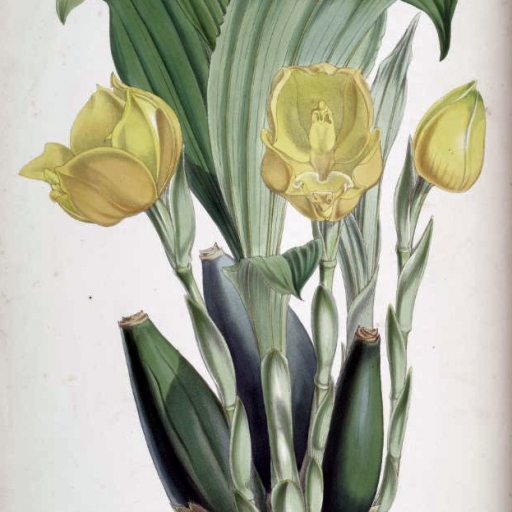
Known as the Tulip Orchid or the Cradle Orchid, this stunning Andean native is famous for its large, waxy yellow blossoms that resemble a closed tulip more than a traditional orchid. In its mountain home, it is often found growing in the mossy leaf litter of cloud forests. It’s a favorite among collectors not just for its architectural beauty, but for its intense, spicy fragrance that fills a room with the scent of cinnamon and wintergreen.
🔍 How to Identify
- 🌷 The Flower: The blooms are deep lemon-yellow, thick-textured, and cup-shaped. Unlike many orchids, the petals and sepals curve inward, hiding the "lip" (labellum) inside the flower.
- 🍃 The Foliage: It features large, pleated, emerald-green leaves that can grow quite tall, giving the plant a lush, palm-like appearance before it goes dormant.
- 🥔 The Pseudobulbs: At the base, you’ll find large, heavy, egg-shaped green bulbs. These act as water reservoirs, allowing the plant to survive its natural dry season.
🏡 In Your Garden
- 💤 The Winter Nap: This orchid is deciduous, meaning it will naturally lose its leaves after the growing season. Don't panic when they turn yellow and fall off! During this time, it needs very little water and a "cool rest" to trigger the next year's blooms.
- 🌬️ Air and Humidity: Coming from the high Andes, it loves high humidity but demands excellent air circulation. It prefers "intermediate" temperatures—not too hot, and never freezing.
- 🥤 Thirsty Growth: When the new leaves are actively growing in the spring and summer, the plant is a heavy feeder and needs consistent moisture. Just be careful not to get water trapped in the new, funnel-like leaf growth, as this can cause rot.
⚠️ Safety & Toxicity
- ✅ Safe Status: Anguloa clowesii is generally considered non-toxic to humans, cats, and dogs.
- 🧤 Sensitive Skin: While not poisonous, the sap from a broken pseudobulb or leaf can occasionally cause mild skin irritation in sensitive individuals. It is always a good idea to wash your hands after pruning or repotting.
✨ Fun Fact
The nickname "Cradle Orchid" comes from a unique botanical trick: the lip inside the flower is hinged. When a heavy bee lands on it to collect fragrance, the lip "rocks" back and forth like a cradle, gently bumping the bee against the pollen to ensure the orchid is successfully pollinated!

Detailed Care Instructions
To grow an Anguloa Clowesii plant, here are some steps to follow:
- Choose a suitable location: Anguloa Clowesii plants prefer bright, indirect light. Place them near a window where they can receive filtered sunlight or in a shady spot in your garden.
- Provide the right temperature and humidity: These plants thrive in temperatures ranging from 60°F to 80°F (15°C to 27°C). Maintain a humidity level of around 70-80%. You can increase humidity levels by placing a tray of water near the plant or using a humidifier.
- Select the right pot and soil: Use a pot with good drainage as the Anguloa Clowesii plant doesn't like to sit in waterlogged soil. A mix of orchid potting soil, perlite, and bark chips is suitable as it provides good drainage.
- Watering: Water the plant when the top inch of soil is dry. Be careful not to overwater, as it can lead to root rot. In general, Anguloa Clowesii plants prefer a slightly drier soil rather than being constantly wet.
- Fertilizer: Feed the plant every two weeks during the growing season (spring and summer) with a balanced orchid fertilizer. Reduce or stop fertilizing during the winter months.
- Repotting: Anguloa Clowesii plants generally don't require frequent repotting. Repot them every 2-3 years, using fresh orchid potting mix.
- Provide proper air circulation: Good air circulation helps prevent diseases and keeps the plant healthy. Avoid placing it in a stagnant or humid area.
- Pruning and maintenance: Remove any dead or yellowing leaves regularly. Prune any diseased or dead parts of the plant to maintain its health.
- Reproduction: Anguloa Clowesii plants can be propagated through division. This is best done during repotting when the plant has become too large for its pot.
By following these steps, you can successfully grow and care for an Anguloa Clowesii plant. Remember to observe and respond to the specific needs of your individual plant for the best results.
Anguloa Clowesii plant requires a specific watering routine to maintain its healthy growth. The watering frequency depends on various factors such as the plant's environment, soil type, and humidity levels. However, it's crucial not to overwater the plant as it can cause root rot.
To water the Anguloa Clowesii plant, pour water directly onto the potting mix until it's fully soaked. Allow the top inch of soil to dry out before the next watering. You should avoid splashing water onto the leaves and flowers as high humidity levels can cause damage. Furthermore, use lukewarm water instead of cold water, as cold water can shock the plant's root system.
It's essential to monitor the soil moisture levels by sticking your finger into the soil. If the soil feels dry at the depth of an inch, it's time to water the plant again. However, if the soil feels moist, then wait for a few more days.
In maintaining the plant's health, you can also mist the leaves during the daytime or place a humidifier near the plant to increase humidity levels.
To fertilize this plant, use a balanced liquid fertilizer with a ratio of 20-20-20. Apply the fertilizer once a month during the growing season, which is usually spring and summer. Dilute the fertilizer to half strength and spray it on the leaves and soil. Avoid getting the fertilizer on the flowers or buds as it may cause damage. During the dormant season, reduce fertilizer applications to once every two months. Always follow the manufacturer's instructions for proper dosage and application.
Anguloa Clowesii plants thrive in well-draining soil that is rich in organic matter. A suitable soil mix for this plant may consist of a combination of orchid bark, perlite, and sphagnum moss to ensure proper aeration and drainage. Additionally, adding some charcoal to the soil mix can help prevent root rot and maintain optimal soil conditions. It is important to use a soil mix that replicates the plant's natural habitat in the wild to promote healthy growth and blooming. Avoid using regular potting soil, as it may compact and retain too much moisture, which can lead to root rot and other issues.
The first step in propagating this plant is to carefully remove a healthy, mature pseudobulb from the parent plant using a sterile cutting tool. Make sure to avoid damaging the roots or the delicate new growths on the pseudobulb.
Next, prepare a pot with well-draining soil that is rich in organic matter and has good water retention. Plant the pseudobulb in the soil, making sure to bury it deep enough so that the new growths are covered.
Water the soil thoroughly, but be careful not to overwater as this can cause root rot. Keep the soil moist but not saturated, and make sure the plant receives bright, indirect light.
As the plant grows, keep an eye out for any new pseudobulbs or growths that can be removed and propagated in the same manner. With proper care, your Anguloa Clowesii plant should thrive and produce beautiful blooms year after year.








