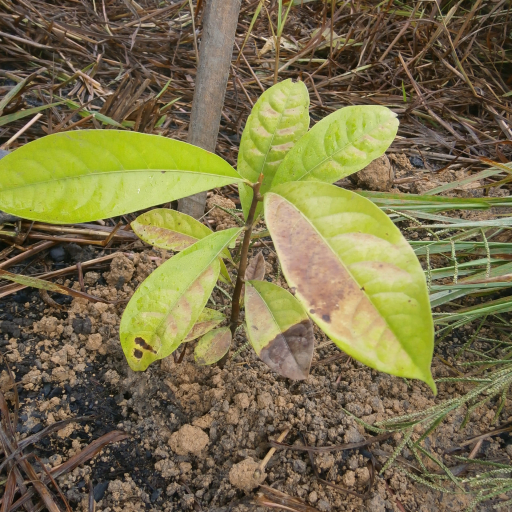
Plant Overview
Known as the "Perfumer’s Treasure," Aniba rosaeodora, or Brazilian Rosewood, is a legendary giant of the Amazon rainforest. For decades, it has been the secret backbone of the world’s most iconic fragrances, including the original Chanel No. 5, due to its incredibly high linalool content. Sadly, its popularity in the luxury market led to its status as an endangered species, making it a tree of great conservation importance today.
🔍 How to Identify
- 🍃 Leathery Foliage: The leaves are thick, evergreen, and lance-shaped, featuring a smooth, glossy texture that helps shed the heavy rains of the tropical canopy.
- 🌳 Towering Stature: In its natural habitat, this tree can reach heights of up to 30 meters (nearly 100 feet), sporting a straight, reddish-brown trunk that emits a spicy, floral scent even when the bark is intact.
- 🌼 Fragrant Blooms: It produces small, tubular yellow flowers that eventually give way to purple, berry-like fruits which are a favorite for local Amazonian birds.
🏡 Habitat & Conservation
- 🌧️ Rainforest Roots: This tree is a true child of the Amazon basin, thriving in well-drained but humid soils where the air is thick with moisture and the temperature remains consistently warm.
- 🌱 Slow & Steady Growth: Because it is a slow-growing hardwood, it does not respond well to mass harvesting. Modern sustainable efforts now focus on distilling oil from the leaves and twigs rather than felling the entire tree for its heartwood.
⚠️ Safety & Toxicity
- ✅ General Safety: The plant is generally non-toxic to touch, and its essential oil is widely used in aromatherapy.
- 🧴 Skin Sensitivity: While not "poisonous," the pure essential oil is extremely potent; it should always be diluted to avoid skin irritation or allergic reactions in humans and pets.
- 🛑 Environmental Warning: The primary "danger" associated with this plant is its endangered status. In many regions, it is illegal to trade or harvest wild Rosewood without strict CITES certification.
✨ Fun Fact
The scent of Aniba rosaeodora is so powerful that even the wood itself remains fragrant for decades after being cut. In the early 20th century, entire ships carrying the timber across the ocean were said to smell like a blooming rose garden long before they reached the harbor.

Detailed Care Instructions








