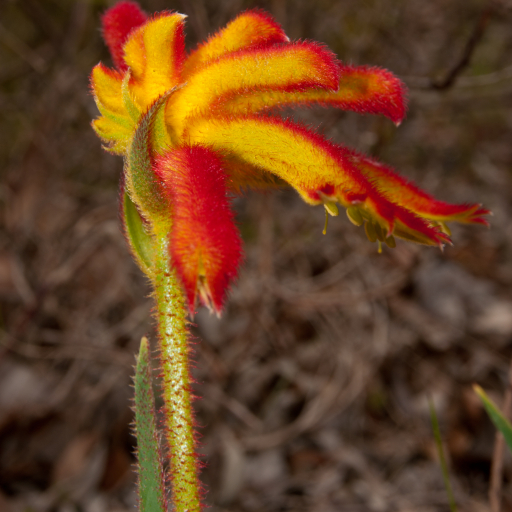
Plant Overview
Often called the Cat’s Paw, Anigozanthos humilis is the charming, smaller relative of the more famous Kangaroo Paw. Native to the coastal sands of Western Australia, this plant earns its name from the soft, velvet-like hairs that cover its uniquely shaped blossoms, which look like tiny feline feet. It’s a rugged survivor that brings a splash of sunset colors and a distinct architectural flair to sunny rockeries and patio pots.
🔍 How to Identify
- 🐾 The "Paw" Bloom: The flowers are curved and tubular, opening at the top like a tiny claw, usually appearing in vibrant gradients of yellow, orange, or burnt red.
- ☁️ Velvety Texture: Every part of the flower and its stalk is covered in dense, fuzzy hairs that feel like felt and help the plant reflect intense heat.
- 🌿 Low Rosette: Unlike its taller cousins, this species is "humble" (as its Latin name humilis suggests), featuring a low-growing tuft of narrow, sword-shaped green leaves.
🏡 In Your Garden
- 🏜️ Drainage Enthusiast: Because it evolved in sandy soils, this plant is highly susceptible to root rot. If you have heavy clay soil, it is best grown in raised beds or pots with a gritty, free-draining "native" potting mix.
- ☀️ Sun Seeker: To keep those iconic "paws" standing tall and bright, it needs a position with maximum sunlight; too much shade will lead to weak stems and fewer flowers.
- ✂️ The "Renew" Method: Once the flowers fade, the entire stalk should be cut back to the ground. This prevents the plant from wasting energy and encourages the underground rhizome to send up fresh, healthy foliage.
⚠️ Safety & Toxicity
- ✅ Non-Toxic Status: The Cat’s Paw is generally considered safe for humans, dogs, and cats, making it a worry-free addition to a family garden.
- 🧤 Minor Irritation: While not poisonous, the tiny hairs on the stems can sometimes act like "fiberglass" and cause a mild, itchy sensation on sensitive skin during pruning. Wearing gloves is recommended for those with allergies.
✨ Fun Fact
The sturdy flower stems aren't just for decoration—they are specifically evolved to serve as "landing perches" for Australian honeyeater birds. As the bird leans in to drink the nectar, the flower "taps" the bird on the head, perfectly depositing pollen to be carried to the next plant!

Detailed Care Instructions
To grow Anigozanthos humilis, also known as the dwarf kangaroo paw, you can follow these steps:
- Choose the right location: Select a spot that receives full sun to partial shade. The plant prefers well-draining soil and can tolerate both sandy and clay soils.
- Planting: Dig a hole about twice the size of the plant's root ball. Gently remove the plant from its container and place it in the hole. Make sure the top of the root ball is level with the soil surface. Backfill the hole with soil and firmly press down around the plant to eliminate air pockets.
- Watering: Initially, water the plant deeply to establish its root system. Once established, Anigozanthos humilis is drought tolerant, but it still needs regular watering during dry spells or in hot climates. Water deeply once a week or whenever the soil feels dry.
- Mulching: Apply a layer of organic mulch around the base of the plant to help retain moisture and control weeds. Keep the mulch a few inches away from the stems to avoid trapping moisture against the plant.
- Fertilizing: Kangaroo paws are relatively low-maintenance plants, but you can apply a slow-release, balanced fertilizer in spring to encourage healthy growth. Follow the instructions on the packaging for the correct dosage.
- Pruning: Remove any dead or damaged foliage as needed. Cut back the flowering stems once the flowers have finished blooming to encourage new growth.
- Pests and diseases: Kangaroo paws are generally resistant to pests and diseases. However, keeping the plants well-spaced and providing good airflow can help prevent issues like powdery mildew.
- Propagation: Anigozanthos humilis can be propagated through division or by collecting and planting the seeds. Divide the plant in early spring by carefully separating healthy sections of the rhizome. Sow seeds in early spring or autumn in a mixture of sandy soil and compost.
With proper care and favorable growing conditions, Anigozanthos humilis should thrive and produce its vibrant flowers, attracting pollinators to your garden.

Place in a bright room that is sun drenched almost all day. Or directly in a south-facing window.

To water this particular plant, it is important to check the soil moisture level before watering it. This can be done by sticking your finger into the soil to about an inch deep or by using a moisture meter. If the soil feels moist, then watering is not necessary.
However, if the soil is dry, the plant should be watered thoroughly until the excess water drains out of the pot. It is important to avoid leaving standing water in the saucer as it can cause root rot.
In general, the frequency of watering depends on various factors such as the size of the pot, the humidity levels, and the amount of sunlight the plant receives. It is important not to overwater or underwater the plant, as both can be harmful to its growth and health.
For optimal growth, your plant will require regular fertilization during its growing season. Use a balanced fertilizer that contains equal parts nitrogen, phosphorus, and potassium with micronutrients. You can apply this fertilizer every two weeks during the spring and summer months. Follow the recommended application rate on the label, usually one to two tablespoons per gallon of water. Avoid fertilizing during the plant's dormant season or when the soil is dry.
Anigozanthos Humilis plant thrives best in well-draining sandy soil with low to medium fertility levels. The soil pH should be slightly acidic to neutral, around 5.5 to 7.0. This plant prefers a soil that is rich in organic matter and has good water-holding capacity yet still drains well. It is recommended to mix in a peat moss or compost to improve soil quality. Avoid using heavy clay soils or soils that hold too much water, as they can cause root rot. It is important to ensure that the soil is well-drained and does not become waterlogged, as this can cause damage to the plant's root system.
Propagating this plant can be done through division. The plant should be lifted from the ground or pot and carefully divided into smaller sections. Each section should have healthy roots and shoots with at least two leaves. The smaller sections can then be potted in a well-draining potting mix and kept moist until established. It is important to keep the newly potted sections in a warm and bright place, but out of direct sunlight until they have taken root. Once rooted, the plant can be gradually acclimated to more direct sunlight and eventually transplanted back into the garden.








